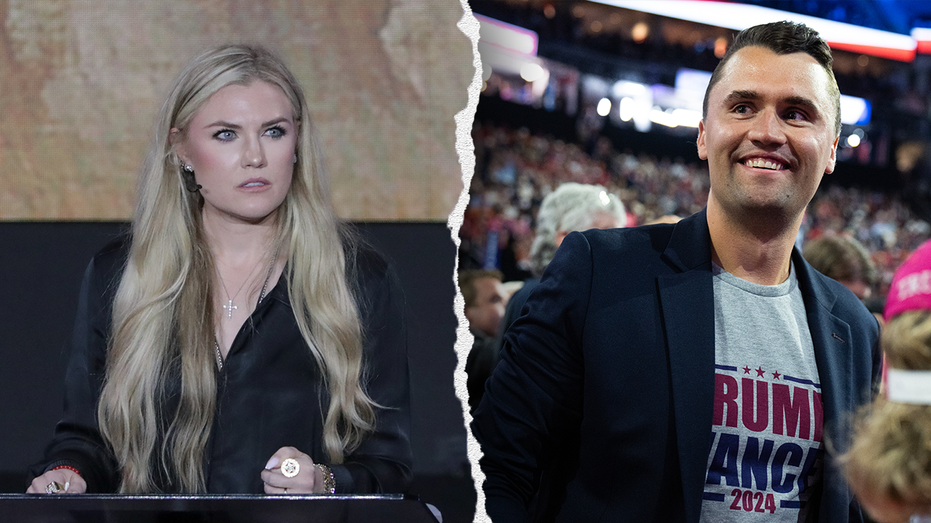
New York appeals court strikes down Nassau County's ban on transgender athletes in women's sports

A New York appeals court on Wednesday struck down Nassau County's law barring transgender girls and women from women's sports teams using county facilities, handing Attorney General Letitia James a victory in her legal battle with County Executive Bruce Blakeman.
A unanimous four-judge panel of the Appellate Division, Second Department, reversed a lower-court decision that had upheld the restrictions. The judges found that the county law conflicted with New York's statewide antidiscrimination protections.
The appeals court held that Nassau's permit restrictions were preempted by the state Human Rights Law and Civil Rights Law, which prohibit discrimination based on gender identity or expression. It directed the lower court to enter a judgment declaring the measure invalid under the state Constitution and the Municipal Home Rule Law.
Nassau County Attorney Thomas Adams indicated the county would continue fighting. In a statement he said the county is reviewing the decision with the intention of continuing the appeals process.
The decision came one day after Blakeman lost his gubernatorial challenge to Democratic Governor Kathy Hochul. James also won reelection on Tuesday.
All four judges who joined the ruling were elevated to the appellate court by Democratic governors. Former Governor Andrew Cuomo appointed Justice Betsy Barros in April 2014 and Justice Deborah Dowling in June 2021. Hochul appointed Justice Barry Warhit in May 2022 and announced Justice Lisa Ottley's selection earlier this year. State election records list Barros, Dowling and Warhit as Democratic candidates in their judicial election histories, while Ottley ran for state Supreme Court in 2018 on the Democratic, Republican and Conservative ballot lines, according to New York City's official voter guide.
In a statement after the ruling, James said nobody should have to fight to play the game they love. She said transgender athletes have the right to play on the court, field or roller rink like everyone else, and that the Second Department made clear Nassau County cannot ban them. She added that no one asked for what she called an illegal and exclusionary policy, that Blakeman was trying to stop athletes from playing with their teammates, and that she was pleased the court saw through it. James said that as long as she is attorney general, no New Yorker will be shut out of public life because of who they are.
The county law required organizations seeking permits for sporting events at county facilities to designate themselves as male, female or coed based on biological sex at birth. It prohibited permits for female events that allowed male competitors, while permitting female athletes in male and coed categories.
The restrictions did not prohibit transgender athletes from all sports participation. They prevented teams designated for women or girls from obtaining county permits if they included transgender female competitors. According to James's office, the measure affected more than 100 county facilities, including athletic fields, basketball and tennis courts, swimming pools and ice rinks.
Blakeman first imposed the policy through a February 2024 executive order. After a judge struck down that order on the grounds that he lacked authority to issue it, the county Legislature passed legislation reinstating the restrictions. Blakeman signed the law on July 15, 2024, prompting separate lawsuits from James and the New York Civil Liberties Union. The NYCLU represented the Long Island Roller Rebels, an adult women's roller derby league that welcomes transgender participants.
State Supreme Court Justice R. Bruce Cozzens upheld the law in October 2025, accepting the county's safety and fairness arguments and reasoning that transgender athletes could participate in coed leagues. The county also argued that Title IX supported its use of biological sex to separate athletic categories.
However, the Second Department separately granted the Roller Rebels a preliminary injunction in October 2025, reversing Cozzens's earlier refusal to temporarily block enforcement. In that decision, the appeals court found that limited access to private facilities had reduced the league's practice opportunities and hurt its ranking, and that requiring the league to identify as mixed-sex could jeopardize its governing-body status and its ability to find opponents.
The litigation unfolded alongside a broader national fight over transgender eligibility in female sports. Four states voted on ballot measures to ban transgender athletes from women's sports in the 2026 midterm elections; the measures passed in Arizona and Nebraska, while results in Colorado and Washington remain pending. In June, the U.S. Supreme Court upheld the challenged restrictions in West Virginia and Idaho, concluding that schools could determine eligibility for female teams by biological sex under Title IX and the Equal Protection Clause. That ruling did not require every state to adopt such restrictions. Nassau's case instead turned on whether the county could impose a permit policy that conflicted with New York state law.