After US Midterms, Tougher Data Centre Rules Loom as Poll Finds Three-Quarters of Voters Oppose a New Centre in Their Community
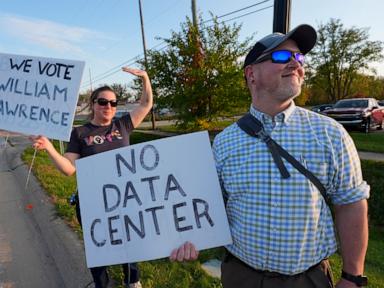
After the US midterm elections, tougher rules on data centre construction now look more likely. Many of the winning Democrats pledged to rein in the energy-hungry facilities, and voter polling found that about three-quarters of US voters oppose building a new data centre in their own community.
A voter poll for AP and a consortium of news organisations found 56% of voters said data centres were a 'crucial or major' factor in their vote, while 76% said they would oppose construction of a new data centre in their community. The hostile sentiment was considerably stronger among those who said they voted Democrat at this election.
The issue still ranked behind two larger concerns. In the poll, 90% of voters called government corruption a 'crucial or major' factor and 89% said the same of the cost of living. Another measure in the AP Voter Poll put the share calling AI data centres 'crucial' to their vote for Congress at about one-quarter, well below corruption or the cost of living.
Recent Pew Research polling showed a similar picture. About half of Americans think data centres are 'mostly bad' for the environment, home energy costs and quality of life, a big deterioration in favourability since January, according to that polling.
The issue was also large in campaign spending. According to AdImpact, campaigns large and small spent more than $380 million on television ads mentioning data centres, and Democrats outspent Republicans on the topic by more than three to one. Data centre regulation itself was not on most ballots, but hardline stances were woven into the platforms of many candidates.
Democrats upended longtime Republican control of the governorships in at least five states — Texas, Ohio, Georgia, Nevada and Iowa — many of them data centre hotspots. The party also took full control of state governments in Wisconsin, Minnesota, Pennsylvania, Nevada and Michigan. Texas, Georgia and Ohio, three key states in the US AI build-out, all elected Democratic senators and governors who had called for tighter regulation on data centres in one form or another.
Data Center Watch, a project of AI security consultancy 10a Labs, tracked winning candidates for Congress and governorships. Among governors, it found that 32 of the 34 victorious candidates in races where AP had called a winner support stronger regulation or restrictions, and 12 of the 34 support bans or moratoriums.
In Texas, Clayton Tucker became the first Democrat elected state agriculture commissioner since 1986. He said his pledge to fight data centre development was critical to his victory, and that everywhere he went, ranchers worried the centres posed an existential threat to dwindling water supplies. 'There is an old saying around here that whiskey is for drinking and water is for fighting,' Tucker told the Associated Press. 'And that is exactly what happened.'
Wisconsin Governor-elect David Crowley changed his position during the campaign under pressure from his Republican opponent, moving to a harder line. Initially opposed to any moratorium, he later said he supported one as well as abolishing the state's sales tax exemption for data centre operators and developers. In an interview on Thursday with AP, Crowley said he was discussing what he would propose once he takes office, including requiring developers to disclose more about water and energy consumption, ensuring a community supports a project before it can go forward, and insulating ratepayers and taxpayers from the energy costs of the projects.
Morgan Stanley called the Texas result the most important election result for data centre development. Democrat Gina Hinojosa was elected governor there and has said she would block a permit for a data centre if it was not a good deal for Texans or residents had not gotten a say. She defeated Republican Governor Greg Abbott, who had touted Texas as 'the epicentre of AI development' before trying to clamp down on it late in the campaign. In Ohio, Democrat Dr Amy Acton was elected governor after pledging to block a data centre project unless it meets certain standards, which Morgan Stanley said creates significant risk of project delays in the state.
The three flipped Senate states also stand out in scale. Texas has 595 data centres, Ohio 258 and Iowa 117, compared with a median of 55 across all 50 states. Texas alone has 31 ongoing data centre construction projects, the most of any state. According to a report by commercial real estate firm JLL, Texas is poised to overtake northern Virginia as the largest global data centre market by 2030.
BBC Verify cautioned that the data do not show how many votes or Senate seats data centre opposition directly delivered. Its analysis of state-level voter polling suggested states that swung to the Democrats either followed the national trend over data centre concerns or seemed less concerned, and other factors would also have been motivating voters in those states.
The sector's economic weight is also large. Official data show inflation-adjusted monthly spending on building data centres, excluding the IT hardware inside them, was $5 billion in August 2026 — five times higher than in 2023. Analysis by Columbia Business School suggests AI infrastructure investment in the US is currently larger as a share of the overall economy than spending on new railways was at the height of that boom in the 19th century.
On Thursday, OpenAI published a framework setting out new commitments to the communities where it develops data centres, saying it was asking federal, state and local policymakers to write clear rules for how the industry builds. OpenAI, which has a data centre in Texas and under-construction projects in Ohio, also pledged to ensure it fully paid for its own electricity, according to the BBC report. Dan Diorio of the industry association the Data Center Coalition said many midterm winners had vowed to impose a moratorium and should be expected to want to deliver on those promises, but warned of real-world consequences, including host communities missing out on tax revenue or payments from tech companies.
On Thursday, the Nasdaq, which is full of AI-related and other technology stocks, sank 11% below its all-time high amid worries that data centre construction may slow because it is getting costlier to borrow money. In an analyst report, Morgan Stanley said decisive results for Democrats carry greater expectations for data centre restrictions that, under new state regulations, could split the country into areas that are open to new data centres and those without.
Some analysts argue tighter rules would delay, not stop, construction. Heather West of the Eurasia Group said temporary bans and new regulations might delay the rollout but would not stop it entirely; projects already permitted or under construction will largely proceed, while delays affect the next wave of building. Cori Crider of the Future of Tech Institute said the industry should anticipate new state leaders putting conditions on, or even stopping, runaway data centre build. Seema Shah of Principal Asset Management said requiring developers to pay for additional grid investment, meet tougher standards on resources such as water, or give up tax incentives could raise development costs and slow new supply. Analysts at Oxford Economics, however, pointed to strong economic incentives for politicians to avoid policies that would severely disrupt construction, including the tax revenue and construction jobs the projects bring.