BNP announces seven-day programme for 7 November, prime minister to lead procession on Saturday
Today is the historic 7 November, National Revolution and Solidarity Day. The ruling party BNP has announced a seven-day programme to mark the day.
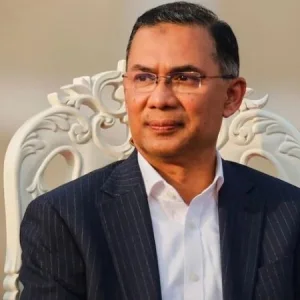
On the first day of the programme, on Saturday (7 November) at 8:30 am, Prime Minister Tarique Rahman and the party's central leaders will pay respects at the graves of BNP founder Ziaur Rahman and former prime minister Khaleda Zia at Sher-e-Bangla Nagar.
The prime minister will then lead a procession in front of the party office at Nayapaltan.
The procession will start from the BNP central office at Nayapaltan, turn right near the Chief Justice's residence at Kakrail, then pass in front of Hotel InterContinental and go through Banglamotor and Farmgate to end at Manik Mia Avenue.
The party's acting secretary general and the prime minister's political adviser Ruhul Kabir Rizvi confirmed the matter at a press conference at the BNP central office at Nayapaltan on Friday (6 November) noon.
Various state programmes have been taken up to mark the day. The BNP procession will be led by the party's chairman and Prime Minister Tarique Rahman.
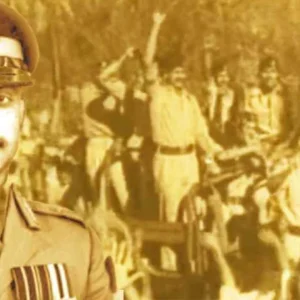
On this day in 1975, the sepoy-people's revolution changed the course of the country's politics at the time. General Ziaur Rahman came to the centre of state power that day. A review of history says that afterwards, amid coups and counter-coups inside and outside the army, Ziaur Rahman took the country towards stability.
The sequence of events says that, following the killing of then head of government Sheikh Mujibur Rahman on 15 August 1975 and the killing of the four national leaders in Dhaka Central Jail on 3 November, the then deputy chief of the army Brigadier General Khaled Mosharraf, with soldiers loyal to him, staged a coup and confined army chief Major General Ziaur Rahman in Dhaka Cantonment.
Declaring himself army chief, Khaled Mosharraf went to Bangabhaban on 6 November, arrested then president Khondaker Mostaq Ahmed and announced the dissolution of the cabinet and the Jatiya Sangsad. Chief Justice Abu Sadat Mohammad Sayem was placed in the office of president of the country.
That very night, ordinary sepoys of the army united and built resistance. The people of all levels came out on the streets in spontaneous support of that uprising. In the combined sepoy-people's revolution, Ziaur Rahman was freed from confinement. Khaled Mosharraf lost his life on the morning of 7 November along with several followers while trying to resist the counter-coup.