Pope Leo Begins 12-Day, Three-Country South America Tour After Cancer Surgery
Pope Leo XIV has left Rome for his first trip since lung cancer surgery, a 12-day visit to three South American countries: Uruguay, Argentina and Peru. The journey, running from November 6 to 17, is described as his furthest and longest trip yet.
Vatican officials say the 71-year-old pontiff is showing "fantastic" stamina. Along the way he will take 12 flights, including two helicopter rides, give 36 speeches and visit 10 cities including Cusco, Peru, which sits more than 11,000 feet above sea level, where even the heartiest travellers can experience altitude sickness and may require supplemental oxygen.
Last month Leo underwent surgery to remove the lower lobe of his right lung. The Vatican says he has completed the two-week recovery period and requires no further treatment. The Vatican's new communications chief Maria Montserrat Alvar said the pontiff was eager to begin the journey, adding: "His doctors are very confident and he'll have plenty of medical care on board should something happen."
The first leg is Uruguay. Leo spent two decades in Peru, first as a missionary and then as bishop of the coastal city of Chiclayo. Uruguay, a small nation of around 3.5 million people, is famously Latin America's most secular nation. Asked why go to Uruguay at all, communications chief Alvarado answered simply, "Why not?", adding that the Gospel is meant to go everywhere.
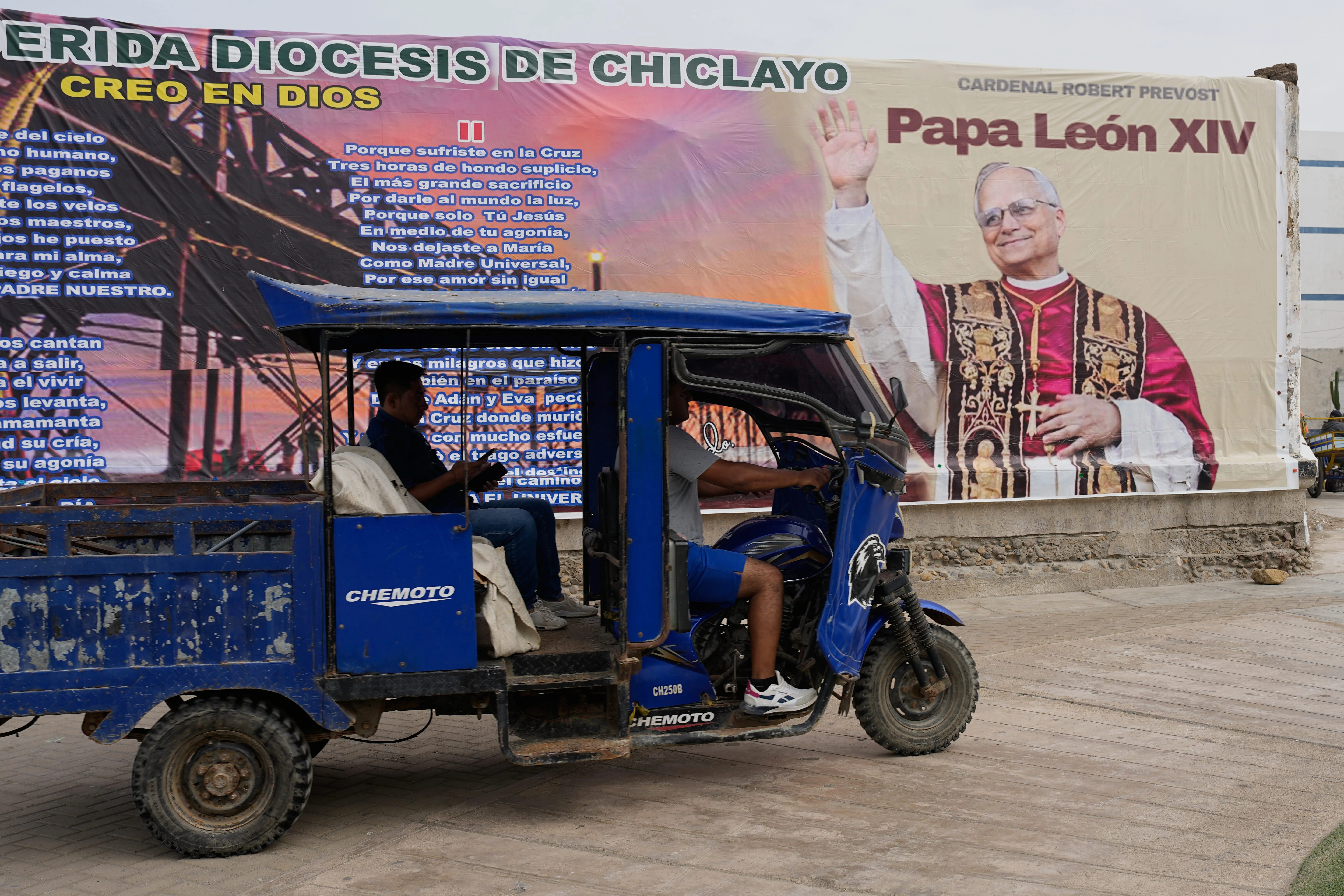
In the capital Montevideo, few welcome banners were seen except for large posters of a waving Pope Leo on city churches. Outside the Blessed Sacrament Church in the Pocitos neighbourhood, 70-year-old retiree Ana Maria Saprissa said she was thankful and glad that the pontiff remembered the tiny country with so many needs.
Uruguay's tradition of separating religion from government and public life dates back more than a century. Christmas has long been officially referred to as Family Day, while Easter week is called Tourism Week. According to political analyst Mariana Pomies, director of polling firm CIFRA, only about a third of Uruguayans identify as Catholics and even fewer say they practice the religion.
Dozens of volunteers cleaned streets, mowed lawns and erected a simple stage outside the Our Lady of Guadalupe Church in Casavalle, a working-class neighbourhood about half an hour north of Montevideo, where the pope is scheduled to visit on Saturday. Father Pablo Coimbra, the community's pastoral leader for the past six years, said he was happy and grateful that eyes had been set on people who live on the margins.
A proposed papal address to parliament triggered a swift rebuke from the public and politicians and was quickly scrapped. However, Uruguay's left-wing President Yamandu Orsi will oversee a welcome ceremony outside Montevideo's main cathedral, where Leo will later celebrate evening prayers with church leaders and laypeople. Sunday mass will take place in Florida, about an hour outside the capital.
By Sunday, Pope Leo will be in neighbouring Argentina, fulfilling a wish of his predecessor Pope Francis, who had hoped to return to his homeland but never made the trip. Before his death, Francis had said he did not want a papal visit to become entangled in Argentina's intensely polarized politics.
Leo's visit to Argentina offers an early test of how he will address the Catholic Church's differences with right-wing populist leaders gaining ground across Latin America. Far-right President Javier Milei's sweeping austerity measures, which have pushed millions of Argentines into poverty, could put him at odds with Leo, who has long championed the poor. Milei has also embraced a largely unfettered approach to artificial intelligence regulation, while Leo's inaugural encyclical called for ethical caution and safeguards to protect human dignity in the age of AI.
The final leg will take Leo back to Peru in what has been billed as a homecoming. As a missionary priest and later bishop of Chiclayo, he spent two decades in the country, became a naturalized Peruvian in 2015, and has said the country shaped his life more than anything else. He will visit several cities and towns where he lived and will meet President Keiko Fujimori.