Cost-of-living vote: neck-and-neck race in early New Zealand election results
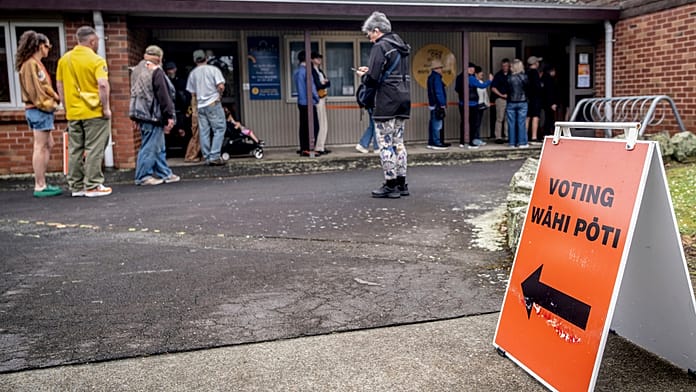
Early results in New Zealand's general election show a neck-and-neck race between the country's two main parties. The vote count has begun after a campaign centred on the cost of living and the economy.
Prime Minister Christopher Luxon and his National Party-led right-wing coalition are hoping to secure a second term in office. Their main challenger is Chris Hipkins of the Labour Party.
With polls closed and the vote count underway, the outcome is still too close to call. At the time of writing, Labour is edging ahead on 29.71 percent of votes, with National on 29.41 percent.
The Green Party is in third place on 13.96 percent of votes. Next come National Party coalition partner ACT New Zealand on 10.63 percent and the New Zealand First Party on 9.41 percent.
Just over 42 percent of votes have been counted so far. None of the parties on the ballot is expected to secure a majority in parliament.
In New Zealand, people cast two votes in a general election — a party vote and an electorate vote. With their electorate vote, voters choose a candidate to represent their local electorate in parliament. With the party vote, they vote for the party they want to see in government.
People of Maori descent are able to choose between the general roll and the Maori roll. Selecting the Maori roll means a voter picks a candidate in the Maori electorate where they live. If they opt for the general roll, they vote in the general electorate.
As an example, someone who lives in Rotorua on New Zealand's North Island and chose the Maori roll would vote in the Waiariki electorate. The candidate who won the most votes in the Maori electorate of Waiariki would become the local member of parliament.
If they chose the general roll, they would vote in the Rotorua electorate. The person who won the most votes in the general electorate of Rotorua would become the local member of parliament.
As the count progresses, the picture of the result will become clearer. With no party set to win a majority on its own, coalition talks after the election are likely to play a decisive role in determining the outcome.