Top UAE official cautiously optimistic on US-Iran nuclear talks, but does not rule out war
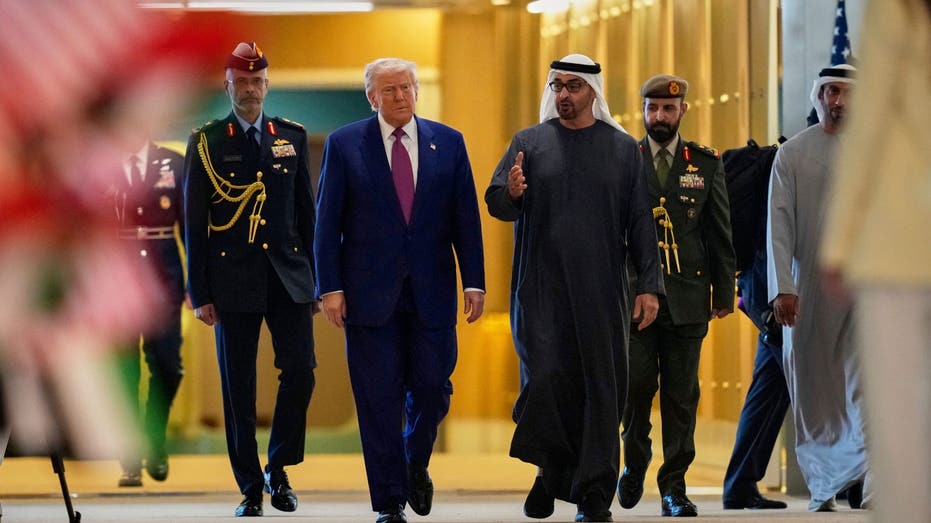
A senior United Arab Emirates official has expressed cautious optimism about nuclear talks between the United States and Iran, while not ruling out the possibility of war. He said he sees progress in the talks taking place through Qatari mediation.
Dr. Ali Rashid Al Nuaimi, chairman of the Defense, Interior and Foreign Affairs Committee of the UAE's Federal National Council, said: "We see some progress. ... We hope that both sides will be able to reach a point where they will start building trust and engaging in a way to avoid the war, to find a political solution. ... I am a little bit optimistic, but I don't exclude the other option."
Reuters reported that on Nov. 5 Iran submitted a new nuclear proposal to Washington through Qatar. Tehran, however, continued to insist that the U.S. meet seven conditions before negotiations could proceed, including sanctions relief and an end to the American naval blockade.
President Donald Trump has not ruled out further military operations, while Iran has threatened broader retaliation if fighting resumes.
The UAE has already paid a significant price for its proximity to the conflict. More than 3,000 Iranian missiles and drones targeted the Emirates during the war, according to figures cited by The Associated Press on Nov. 2. The attacks caused casualties and damage to civilian infrastructure. Although no new Iranian attacks had targeted the UAE since May, the threat of renewed confrontation has kept the country on alert.
Al Nuaimi said: "We plan for the worst. We hope for the best. ... We always make sure that we are ready to deal with all the challenges or the threats."
He emphasised that while the UAE considers itself a nation committed to peace, it will not hesitate to protect its population. In his words: "Every nation, when it is attacked, [has] the right to defend their people, their sovereignty, their nation."
Drawing a clear distinction between the Iranian regime and the Iranian people, who are repressed by the regime, Al Nuaimi said: "The Iranian people deserve to be respected, accepted. They have great values, great civilization, and they are our neighbor."
Despite the uncertainty, daily life in Dubai appeared remarkably normal. In the evening, restaurant terraces in the city centre were packed, tourists filled the streets and crowds gathered around a fountain show. In Abu Dhabi, delegates from around the world gathered for the opening of ADIPEC 2026, one of the world's largest energy conferences.
Days before the conference, however, ExxonMobil and Chevron executives had canceled their planned appearances because of security concerns, Reuters reported on Oct. 29. Yet inside the exhibition halls, delegates discussed investment, announced partnerships and explored technological solutions to the energy crisis.
Al Nuaimi made clear that the UAE's relationship with Washington should not be judged primarily through the current conflict or any particular U.S. administration. In his words: "We don't see our relationship with the United States through these conflicts, through security and defense. No, it's a partnership. It's a strategic partnership. It is a sustainable partnership. ... Our main partnership is with the United States as a nation, with the American people."
He said the relationship extends across education, medicine, technology, energy and investment, and is intended to endure political changes in Washington. "We don't look at the United States through a certain administration. Our engagement and partnership with the United States ... [is] with the nation. It's with the people. ... We have the flexibility and the ability to [adapt] and engage with any administration."
The comments come at a sensitive time for Gulf governments, whose security relationships with Washington have become more consequential as Iran threatens regional infrastructure and international shipping.