
Netanyahu rival Eisenkot asked to form Israel's next government, but coalition math looks tough
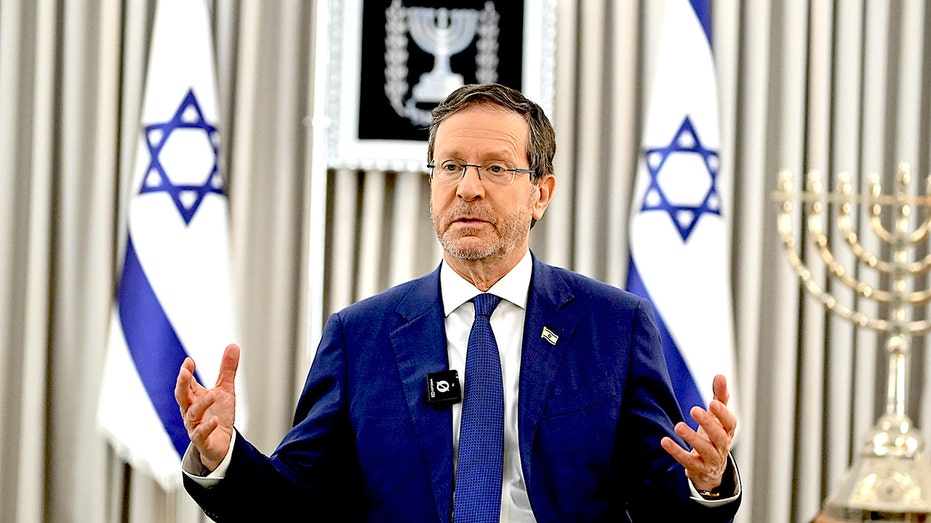
Israeli President Isaac Herzog on Saturday chose opposition leader Gadi Eisenkot to form the country's next government. The decision hands Prime Minister Benjamin Netanyahu's chief rival the first opportunity to build a coalition following an inconclusive national election held on October 27.
Herzog announced his decision on November 7, but the formal presentation of the mandate is scheduled for Sunday, November 8, at 5 p.m. Israeli time. Eisenkot will then have 28 days to assemble a government, with a possible 14-day extension.
After two days of consultations with Israel's newly elected parliament, Herzog announced on Thursday that factions representing 67 of the Knesset's 120 members had recommended Eisenkot, chairman of the Yashar party, to form the next government. Netanyahu received the backing of 46 lawmakers, while seven members of the ultra-Orthodox United Torah Judaism party declined to endorse either candidate.
In the October 27 election, Netanyahu's Likud emerged as the largest single party with 27 seats, while his wider political bloc won 53. The four-party alliance seeking to replace him secured just 48 seats.
The remaining endorsements for Eisenkot came from two Arab-led parties, the Joint List and Ra'am, which together hold 19 seats. Although both recommended Eisenkot to the president, their support presents a dilemma for some of his prospective coalition partners, who have ruled out depending on Arab parties to establish a government.
In a lengthy statement on Friday, Eisenkot outlined his plan to establish what he called a National Emergency Government, initially based on the four parties committed to replacing Netanyahu, while leaving the door open for additional parties and lawmakers to join.
"Israel is facing a genuine, tangible and dangerous national emergency," Eisenkot said. He accused the outgoing government of threatening Israeli democracy and warned that continued political instability could deepen the country's security and diplomatic challenges.
His proposed government would be based on four founding principles: recognition of Israel as a Jewish and democratic state; acceptance of the values of Israel's Declaration of Independence; universal military, national or civilian service; and recognition of Hamas as a terrorist organization, alongside a commitment to dismantle its military and governing capabilities.
One potentially significant development came on Friday, when Avigdor Lieberman, leader of the secular nationalist Yisrael Beitenu party, signaled a willingness to compromise on military conscription for ultra-Orthodox Jews, reversing a position that had long prevented political cooperation with religious parties.
In a statement posted on X, Lieberman argued that preventing another election and ending Netanyahu's time in office would require difficult political compromises. He identified three conditions: ending the Netanyahu era, avoiding another election and refusing to establish a government dependent on the abstention of the Joint List and Ra'am.
United Torah Judaism leader Yaakov Asher welcomed Lieberman's flexibility on Friday, but said his party had not yet received a concrete proposal and that any agreement would require approval from its religious leadership.
The numbers remain difficult for Eisenkot. A parliamentary majority requires 61 seats. Even bringing United Torah Judaism into the four-party opposition bloc would leave him at 55 seats, still short of a majority. The religious Shas party, which holds six seats, recommended Netanyahu to Herzog.
A different possibility would be a minority government established with the help of abstentions from parties outside the coalition, an option discussed by Eisenkot's allies but explicitly rejected by Lieberman if it depends on the Arab factions.
Meanwhile, Netanyahu remains caretaker prime minister as the political negotiations continue. He has also challenged aspects of the election results amid an investigation into suspected voting irregularities. However, Israel's Central Elections Committee said the integrity of the election had not been compromised, according to Reuters on November 5.
For Eisenkot, receiving the presidential mandate would be an important political milestone. But turning his broad parliamentary endorsement into a functioning government will require agreements among parties divided over some of Israel's most contentious domestic issues, particularly military service and cooperation with Arab lawmakers. Failure to bridge those divisions could leave Israel facing further political deadlock, and potentially another election.

