South Korean city turns to Great Books education to rebuild reading and thinking in the age of AI
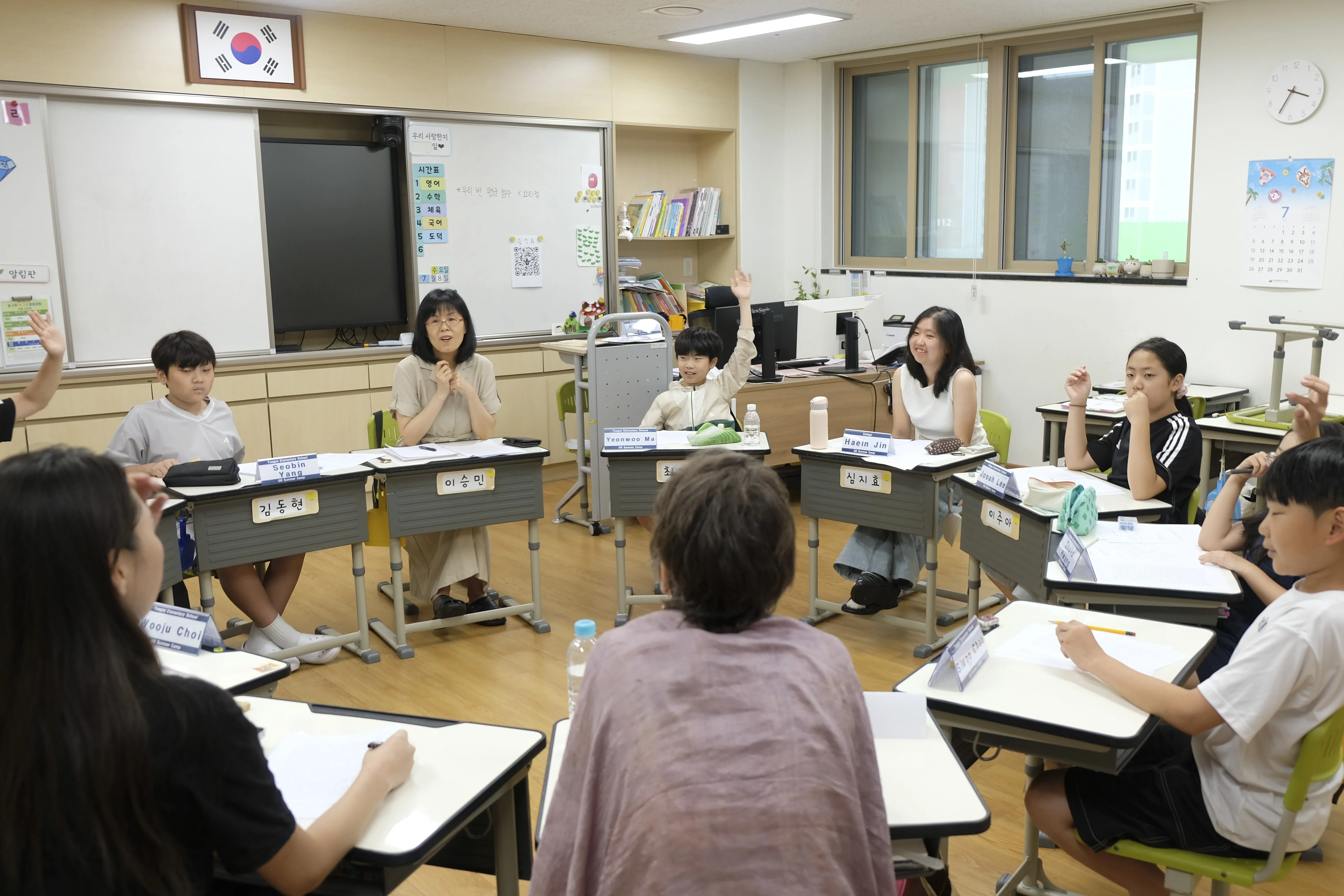
At a public elementary school in the South Korean city of Chuncheon, students are discussing Mary Shelley's novel 'Frankenstein'. The teacher asks, 'Is the Frankenstein monster human?' and the students search for answers with their own reasoning. The 'Great Books' teaching method of St. John's College in the United States is now finding a place in this city's schools.
The discussion was taking place at the Toegye public elementary school in Chuncheon, about 50 miles east of Seoul. Teacher Han Kyoung-min was leading the discussion, and student Ma Yeonwoo answered that the monster could be called 'a human being with no soul'.
The discussion then moved to the question of whether artificial intelligence is human. Ma Yeonwoo's answer was 'No', because humans created AI; although it is intelligent, 'it has no creativity'.
The Toegye school has adopted the 'Great Books' educational model used by St. John's College, whose main campus is in Annapolis, Maryland. In this model, teachers do not lecture; they only guide discussions. There are no majors or elective courses. Students do not seek answers from outside sources such as the internet; they rely only on their readings, their own reasoning and class discussions with their peers.
Ma Yeonwoo said he enjoys debating with his classmates. In his words, 'If only the teacher talks we can have one idea, but if we all debate together, we can get many ideas together.'
This new educational movement is a response to several worrying trends. One is that international tests such as PISA have shown a post-COVID drop in South Korean reading skills, even though for decades South Korean and other East Asian students outperformed their American counterparts.
Another trend is the rapid adoption of AI in education. According to figures from the Organization for Economic Cooperation and Development (OECD), 51 percent of South Korean students say they use AI chatbots to study at least once a week.
Students face intense competition to pass college entrance exams, and that pressure starts from the pre-school level. Many families send their children to cram schools, or to schools abroad to escape the system.
Professor Lee Yonghwa of Incheon National University guides a Great Books summer camp seminar at Chuncheon High School. Lee, a St. John's College graduate, established South Korea's first Great Books programme at his university in 2019.
Lee, a professor of English language and literature, said, 'We all feel that this system leaves students with no time to read and think, because they are too busy memorizing facts to pass tests.'
But now, Lee laments, Korean students are 'even losing their old capacity to memorize facts because they collect facts and ideas mainly from A.I.'
He added that if students cannot reason and think independently, they cannot judge the quality of information either.