
122% duty on fruit, big tax relief for tobacco raw materials — two opposite policies in one budget
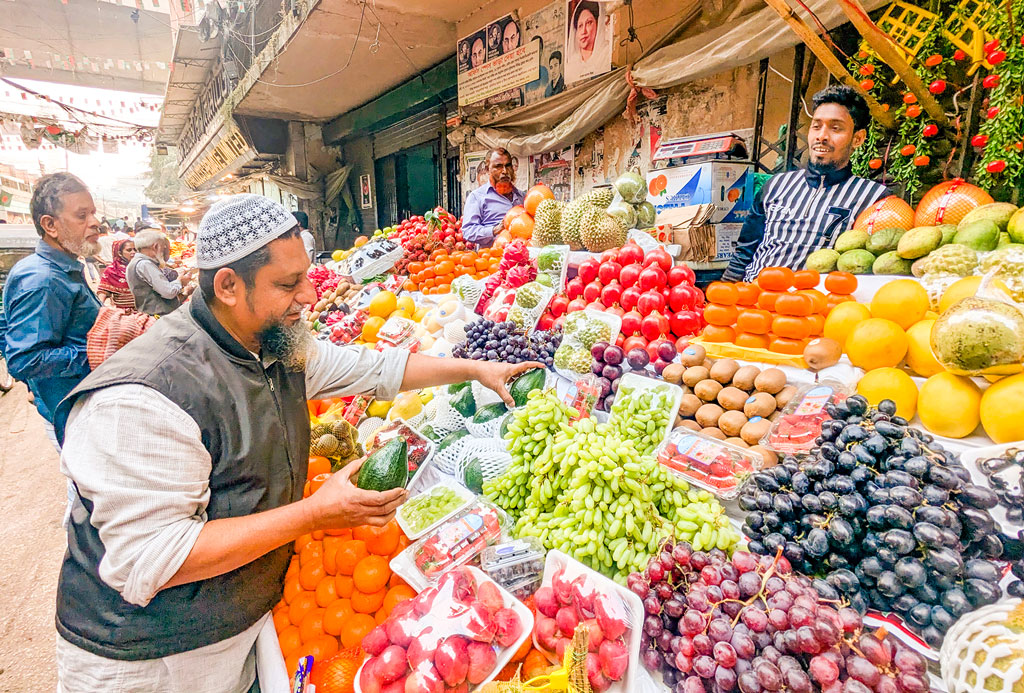
Recently, after finishing my daily shopping at a large market in Dhaka, I asked the shopkeeper the prices of different fruits. The answer came instantly: oranges 550 taka per kg, apples 400 taka, pomegranates 540 taka — and that was the fixed price. Yet just a month ago, these same fruits were at least 100 to 280 taka cheaper per kg.
Hearing the price list, the question arose: why has the price of fruit, so beneficial for the body, risen so abnormally? Another customer standing beside me said, 'Why wouldn't the price rise? Importing fruit attracts duty of up to 122 percent.' Yet instead of reducing this duty to bring fruit prices within the reach of ordinary people, the government gave a large tax relief to the raw materials of tobacco products, which harm people's health.
Let us first look at the arithmetic of fruit. Fruit worth 100 taka imported into the country becomes 222 taka by the time it reaches the importer, after duty is added. By the time it reaches the consumer, transport costs, spoilage and other related expenses plus profit make that price double or more.
It is worth noting that the 136 percent duty set during the interim government was reduced slightly to 122 percent — but has this reduction brought any relief to consumers? Is fruit really a luxury item, or a harmful product, that such a heavy tax burden should be imposed on it? In the words of doctors, it is rather an essential food item for the body.
Over the last three to four years, fruit prices in the market have risen at such an abnormal rate that several media reports have said sales have halved. The reality is that many poor fathers cannot afford to feed their children fruit regularly, and many children with limited incomes cannot fulfil their wish to feed fruit to their elderly parents even when they want to.
At this very time, the government gave a large tax relief on imported raw materials needed to manufacture tobacco products — a completely contradictory decision by the government. Notably, in the Finance Bill passed with amendments in the national parliament for the proposed 2026-27 budget, the proposed supplementary duty on cellulose acetate, the raw material for making cigarette filters, was reduced from 100 percent to 30 percent. That is, the imposed duty is less than one-third of the proposed duty.
Similarly, for granules, the raw material of nicotine pouches newly brought under tax, the proposed import duty was reduced from 100 percent to 60 percent, and the duty at the production stage from 40 percent to 35 percent.
The government's argument behind this relief is that illegal cigarette sales have risen in the market, so revenue collection has fallen below target. Yet despite several tax increases, legal amendments and various tobacco-control measures over the last 20 years, annual financial reports show that the companies' profit growth continued. At the same time, according to National Board of Revenue data, the government's revenue income also increased.
That is, in light of these actual outcomes, the long-standing risk of tobacco companies exerting influence at the government's policy-making level deserves fresh discussion. A long-standing argument of tobacco companies is that raising taxes may expand the illegal market. But recent research in Bangladesh says that although an illegal market exists, the scope for using it as a simple argument against tax increases is limited.
First, this publicity is hardly seen at other times of the year, but right before and after the national budget announcement — when initiatives to raise tobacco taxes are taken — the fear of rising smuggling is presented in an exaggerated way in some media. A study by S. M. Abdullah, assistant professor of economics at Dhaka University, found that in the Bangladeshi context the share of such illegal or smuggled cigarettes is 5.6 percent.
Moreover, since cigarette prices in neighbouring countries are higher than in Bangladesh, the argument that the product enters the country's market through smuggling at an extra cost is quite illogical and laughable. So before using the fear of smuggling as a simple argument against raising tobacco taxes, its real extent, sources and economic logic must be verified independently.
The revenue board's own argument can be used to support reducing the tax burden on fruit. The fear shown in the tobacco sector is that excessive tax shrinks the legal market, expands the illegal market and thereby reduces revenue. The same argument applies equally to fruit. With a duty burden of around 122 percent discouraging legal fruit imports, the risk of fruit coming through smuggling or informal channels cannot be ruled out.
A state's budget policy reveals its priorities. By giving relief to a harmful product and keeping the tax burden on a beneficial product, what message of priority is Bangladesh really sending? Now is the time to raise that question before the policymakers.

