Chalan Beel's Floating Boat Markets Have Vanished, and the Call of the Clay-Pot Sellers Is Heard No More
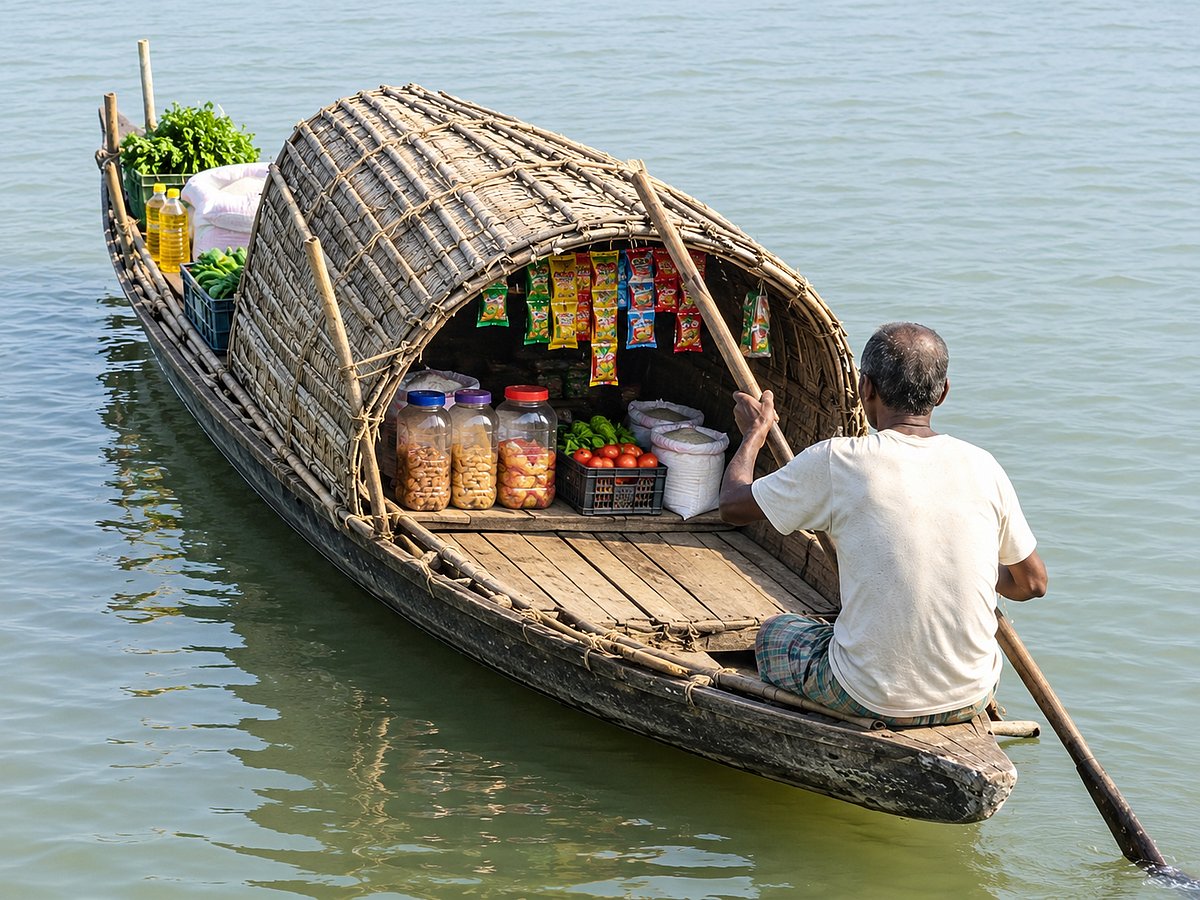
"Clay pots, anyone? Clay pots! Household goods, anyone?" — calls like this once rang out across the vast waters of Chalan Beel in rural Bangladesh. Boatmen travelled from landing to landing with earthen pots, pitchers, plates and bowls arranged in rows on the deck. Hearing the call, homemakers would rush out of their houses and curious children would gather around the boat. The boat was then not merely a means of transport; it was a floating market that arrived at people's doorsteps. That familiar scene of two or three decades ago has now almost disappeared.
Life in Chalan Beel was once centred on water. When the monsoon came, the vast wetland filled with water and the villages that stayed above it looked like scattered islands. Travelling from one village to another, visiting relatives or reaching a market was all difficult. There were mud tracks in places, deep water in others, and waist-deep water elsewhere. Boats were also a mainstay for children going to school and for taking sick patients to hospital.
A culture of travelling trade grew up around this water-dependent life. Small traders turned their boats into moving shops. The boats were loaded with earthen pots, pitchers, plates, cooking utensils and everyday household goods. They would moor at village landings and lay out their wares. Sometimes the seller's familiar cry carried across the water, and sometimes buyers called out from the bank asking to see a chosen item.
For families who could not easily reach a distant market, these floating shops were something of a blessing. Essentials could be bought close to home, saving time and the hardship of travel. Earthenware was an indispensable part of rural households, widely used for cooking, storing water and serving food. Traders loaded goods made in the potters' quarters onto boats and delivered them to remote villages of the beel where no regular market sat.
Many people's livelihoods were tied to a single boat. The potter made the earthenware, the trader collected it and loaded it onto the boat, the boatman rowed it from village to village, and the people of the beel shore bought the goods for their households. In this way a small but important commercial chain of rural economy grew around one boat, linking the potter, the small trader, the boatman and the buyer.
Local resident and trader Nabir Uddin Sardar recalled that traders once sold pots and other essentials from boats, going from village to village. As soon as people heard their call, they would rush to the landing. That scene is no longer seen. With the change of time, a familiar tradition of rural life has been lost.
But times have changed, and so has life in Chalan Beel. The spread of road communication, motorcycles, CNG-run auto-rickshaws, vans and auto-rickshaws has made travel easier. New shops and markets have sprung up in the villages. Goods for which people once had to wait for a boat are now available at a shop near home.
The piece notes that change cannot be denied — better communications have made life easier and widened shopping opportunities. But the ways of life and folk traditions lost in this march of development also need to be remembered. The boat shops of Chalan Beel were not just a method of trade; they were a unique example of the struggle for life, creativity, adaptability and mutual dependence of a wetland people.
The piece calls for steps to preserve the tradition now. An evidence-based archive of Chalan Beel's vanishing way of life could be built by collecting the memories of elderly people, old photographs, local history and folk materials. If local educational institutions, cultural organisations, researchers and public representatives come forward, these memories can be passed to future generations. A replica of a traditional boat shop could also find a place in a local museum or cultural exhibition.
The author of the piece, Md Mazem Ali Molin, is an assistant professor and head of the sociology department at Rozi Mozammel Mahila Honors College in Gurudaspur, Natore. In his words, this memory is not mere nostalgia; it is an important document of a region's history, culture and economic evolution. The boat shops may have been lost to the current of time, but their history must not be allowed to be lost.