Bangladesh Selected for Up to $30 Million in Climate Adaptation Financing

The Climate Investment Funds (CIF) has selected Bangladesh for up to 30 million US dollars in financing to tackle climate change risks. The money is planned to strengthen coastal protection, restore mangrove forests and build the adaptation capacity of communities facing climate risks.
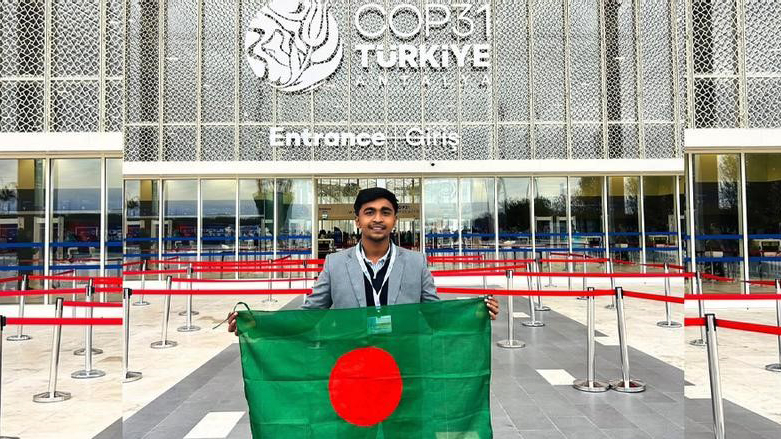
CIF announced the selection on Thursday (12 November) during the UN climate conference COP31 in Antalya, Türkiye. Bangladesh is among five countries, plus one regional project, chosen for the first phase of CIF's new-generation climate resilience programme, ARISE.
ARISE stands for Accelerating Resilience Investments and Innovations for Sustainable Economies. Under the programme, each selected country can prepare an investment plan for up to 30 million dollars in financing, while the regional project can seek up to 40 million dollars.
Alongside Bangladesh, the first phase selected the Kyrgyz Republic, Haiti, Morocco and Sierra Leone, with a regional programme covering Malawi and Mozambique.
CIF said it received more than 700 million dollars' worth of potential investment proposals from different countries for the programme, of which 25 were identified as investment-ready. The opportunities span agriculture and food systems, water security, infrastructure, energy, coastal protection, the ocean economy, natural resources and social protection.
Sheikh Faridul Islam, Bangladesh's state minister for environment, forest and climate change, said at an event at the climate conference on Thursday that Bangladesh welcomed being one of the partner countries in the first phase of CIF's ARISE programme.
He said that under Prime Minister Tarique Rahman, the government's goal is to build a climate-resilient Bangladesh where economic development and environmental protection advance side by side, and that ARISE would strengthen coastal defences, restore mangroves at scale and ensure adaptation investment for the most at-risk communities.
CIF said the ARISE programme was launched last year at COP30, with Germany, Spain and Ireland initially pledging more than 100 million dollars. The United Kingdom has recently joined, deciding to channel up to 128 million dollars over the coming years from returns on investments in CIF's existing climate resilience programme into ARISE.
CIF chief executive Tariye Gbadegesin said developing countries had put forward more than 700 million dollars in urgently implementable investment proposals to protect food, water, electricity, forests and coasts, and that the selected countries would receive the necessary financing with support from Germany, Spain and Ireland.
Noel O'Brien, a director in the Asian Development Bank's climate change and sustainable development department, said ARISE had created an important opportunity for climate-vulnerable countries in Asia and the Pacific, expressing satisfaction at the selection of Bangladesh and the Kyrgyz Republic and saying the ADB would work with them on long-term investment plans to build climate resilience.
Germany's minister for economic cooperation and development, Reem Alabali Radovan, said climate resilience must be made part of government planning and infrastructure built to withstand climate risks, noting that CIF financing had already helped increase the climate resilience of 65 million people.
According to CIF, ARISE will use low-interest, concessional financing strategically to attract larger public and private investment. Its goal is not only to tackle climate risks but also to protect people's livelihoods, strengthen key sectors and ensure long-term economic growth.