The world's fastest ocean liner sinks in five hours to become the largest artificial reef
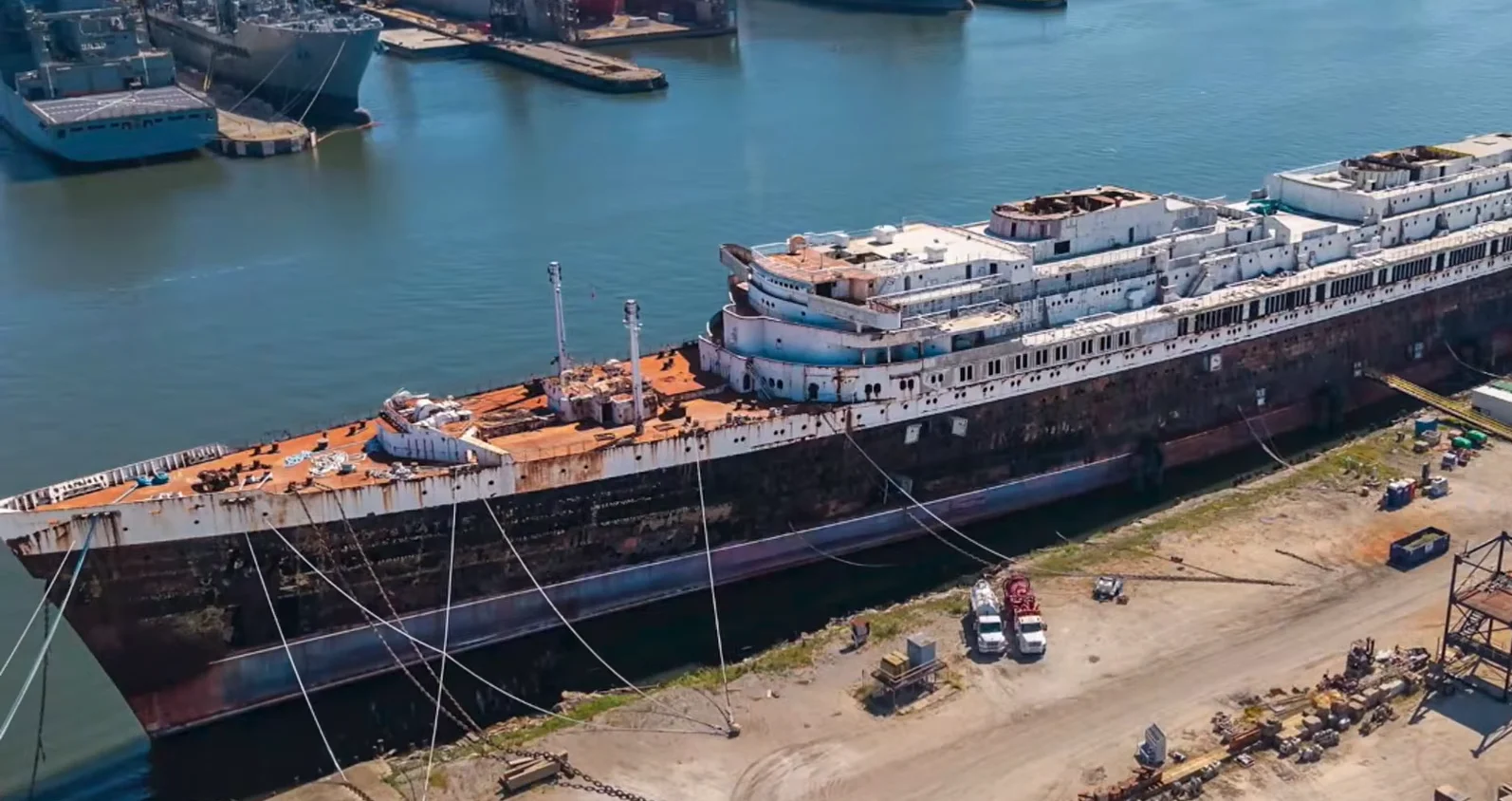
The SS United States, once the fastest passenger liner in the world and able to cross the Atlantic in less than four days, sank off the Florida coast on Wednesday. The nearly 1,000-foot ship took about five hours to go down, and from now on it will be known as the world's largest artificial reef.
The vessel was longer than the RMS Titanic. After entering service in the early 1950s, it set a transatlantic speed record on its maiden voyage. Over 17 years of operation it carried thousands of passengers, among them four US presidents, the Mona Lisa and a slate of 20th-century movie stars. It was retired in 1969.
Wednesday's deployment began at about 2.40pm Eastern Time, with the sinking process itself starting shortly before 5pm. No explosives were used; crews removed plugs and used openings cut into the hull to let the water in. Filling gradually over several hours, the ship reached the bottom of the Gulf of Mexico at around 10pm.
The ship now rests at a depth of about 180 feet, just over 20 nautical miles from the beaches of Destin. Its upper decks sit about 55 feet below the surface, which organisers say keeps them within recreational diving limits.
Before the sinking, the ship was hollowed out and stripped of toxic materials and bulky components. Officials expect the structure to provide a new habitat for marine life including red snapper, grouper, amberjack, mackerel and tuna.
For years the liner remained docked in Philadelphia while various efforts were made to save and restore it. The rising cost of maintaining the ageing vessel complicated those efforts, and in 2021 port authorities raised the daily dockage fee to $1,700, a cost the non-profit SS United States Conservancy could no longer afford.
In 2024, Florida's Okaloosa County bought the ship for $1 million with plans to transform it into the world's largest artificial reef. The county's tourism director, Jennifer Adams, said it is the biggest vessel the county has sunk. The county has sunk hundreds of artificial reefs, many of them ships or boats.
Adams said the reefs bring in roughly $10 million to $12 million in annual economic benefits for the county. She expects that figure to climb now, and for the county to recoup its $10 million investment in the ship within a couple of years. Plans are already in the works, she told reporters, to sink five or six additional artificial reefs after this one.
For divers, the ship is a major draw. Karen Flynn of the Maryland-based Atlantic Wreck Divers club said that for ship lovers it was far more tragic to watch the vessel rust away at the dock. Her club booked tickets and a charter boat just days after a date for the sinking was set.
The SS United States now joins the USS Oriskany, an 888-foot aircraft carrier sunk by the US Navy off Pensacola in 2006. Organisers say the area is now home to the first and second largest artificial reefs in the world. Florida alone has created more than 4,000 artificial reefs since 1940.
University of Florida economist Andrew Ropicki cautioned, however, that overinvestment in reefing could eventually bring diminishing returns if visitor interests shift or travellers become overwhelmed by choice. He said Okaloosa and its surrounding counties have built a critical mass of planned shipwrecks that lets them capture more tourism spending than other areas.
Susan Gibbs, head of the Conservancy and granddaughter of the ship's designer William Francis Gibbs, said before the sinking that she felt a complex mix of sorrow, gratitude, pride and hope. Her grandfather, she said, would joke that he loved the ship a thousand times more than her grandmother. For Gibbs, reefing was a far more dignified fate than the scrapyard, and a land-based museum and visitor experience will honour the ship's history.