Scientists find evidence of a vast water reservoir in the Kuiper Belt
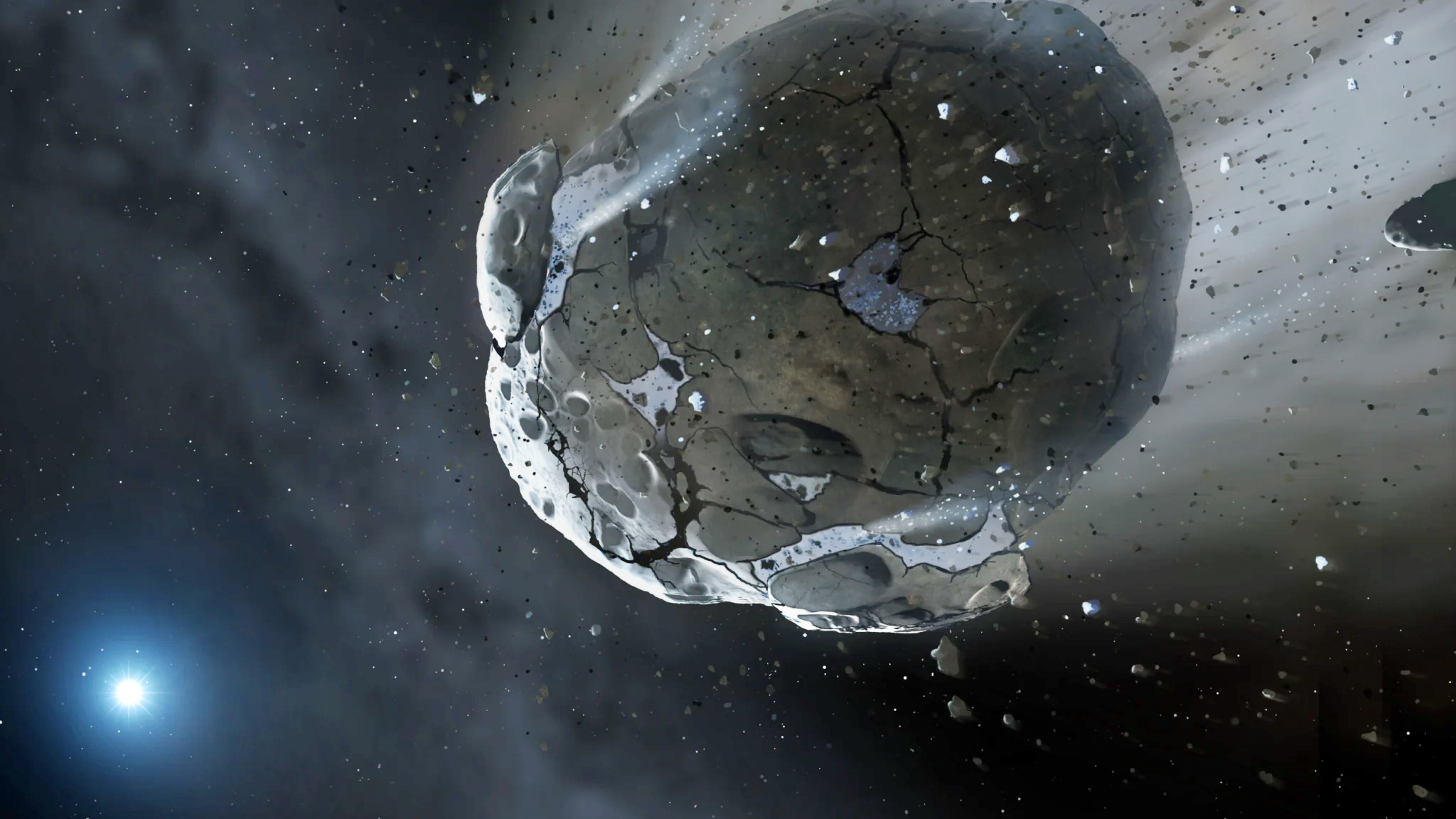
Scientists have found evidence of a huge quantity of water in the Kuiper Belt, located at the edge of the solar system beyond the orbit of Neptune. They obtained the evidence by identifying, in cosmic dust that reached Earth, the chemical signature of water from billions of years ago.
The study found that the composition of that water is different from Earth's water and from water found in the inner regions of the solar system. It provides new information about a separate, almost isolated reservoir of water that existed in the outer regions in the solar system's early phase.
Although most of Earth's surface is covered by water, that is only a small share of the solar system's total water. Many moons of the giant planets hold huge quantities of water frozen as ice, and ice is especially abundant in the outer regions far from the Sun.
The Kuiper Belt, stretching beyond Neptune's orbit, is thought to contain an estimated several million ice-covered objects, which may hold a vast amount of stored water.
In the study, led by planetary scientist Lindsay Keller of NASA's Johnson Space Center, researchers analysed 12 tiny dust grains that came from the Kuiper Belt. Each grain measured 10 to 30 micrometres. The grains were found in material collected from Earth's stratosphere using NASA's high-altitude aircraft.
According to the researchers, the grains contain minerals that were once formed through chemical reactions with liquid water. Traces of the oxygen isotopes of that ancient water are still preserved in those minerals.
Isotope analysis showed that the water contained an unusually high amount of heavy oxygen — a characteristic that sets it apart from water in the inner solar system.
The study says a large reservoir of heavy water existed beyond the orbits of the gas giant planets. That reservoir mixed very little with material from the inner solar system, so its original chemical characteristics remained intact for a long time.
The Kuiper Belt lies about 30 astronomical units from the Sun — roughly 30 times the Earth-Sun distance. Only a very few human-made spacecraft have ever reached this cold, dark region. Landing a probe there or bringing samples back to Earth is technically extremely difficult and expensive, so examining Kuiper Belt objects directly remains a major challenge.
Scientists believe the Kuiper Belt's chunks of ice and rock are among the least-changed remnants of the solar system's earliest period. They have remained relatively unchanged since the solar system formed about 4.5 billion years ago from the primordial cloud of gas and dust around the Sun.
Not all Kuiper Belt material stays there, however. Cosmic dust is spread throughout the solar system, and an estimated 5,200 metric tons of it falls to Earth every year. Part of it travels a long way from the solar system's distant regions to reach Earth.
Identifying that a dust grain collected from the upper atmosphere actually came from beyond Neptune is not easy. For that, scientists analyse radiation damage tracks inside the grains. In interplanetary space there is no atmosphere to shield against the Sun's powerful radiation, so high-energy solar particles affect the dust and, as they pass through, leave distinctive tracks in the mineral crystal structure.