Evening clashes in Spain strike, 73 arrested; about four million workers took part
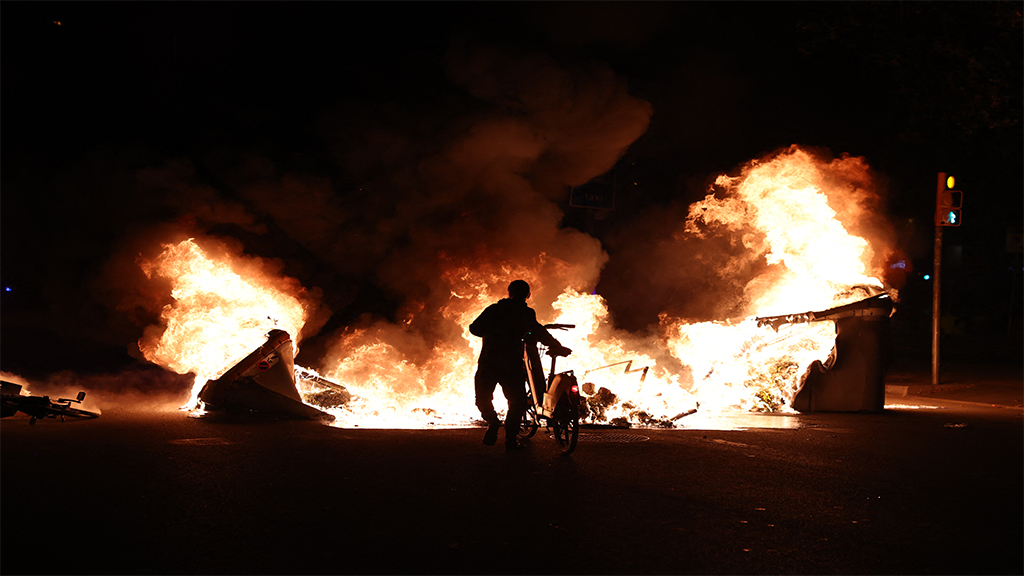
About four million workers observed a strike in Spain on Wednesday in protest at the housing crisis and rising rents. After day-long demonstrations, protesters clashed with police in the evening in the capital Madrid and in Barcelona. Seventy-three people were arrested.
Reuters reported that the strike spread to various cities less than three weeks before a general election in the country. Workers took to the streets ignoring stormy weather.
They picketed and marched in Madrid, Barcelona and other cities. Members of various tenants' organisations also joined the strike. Their main demands were rent control, lower housing costs and homes for ordinary people.
The strike remained peaceful for most of the day, but the situation heated up towards evening. Clashes began in Barcelona between police and a section of protesters. Reuters video showed furniture left on the road being set on fire after the main march ended.
Tension also spread between protesters and police in Madrid. A Reuters eyewitness said riot police used foam bullets, tear gas and pepper spray to disperse protesters in the central Plaza de España area.
According to police, at least 1,044 incidents of disorder took place across the country over the strike. Seventy-three people were arrested in those incidents by 9pm GMT on Wednesday. Blockades at offices and industrial areas and dustbins being set on fire were also reported.
The strike also affected Gran Vía, one of Madrid's main shopping areas. Amid a heavy riot police presence, stores of brands such as Primark, H&M and Pull&Bear closed. Protesters were seen jingling bunches of house keys as they chanted slogans. Many shops in Barcelona were also kept closed for fear of clashes.
Spain's housing crisis is becoming more severe by the day. According to the central bank, the country currently has a shortage of about 750,000 homes, and the shortage could exceed one million by 2028. Unable to afford to buy homes, many people now depend on rented housing.
According to Spain's Youth Council, the average monthly rent in the country is 1,176 euros, or $1,315. That rent is about 98.7 percent of a young person's average monthly income — meaning almost the whole month's income goes on rent.
Jesús González, 36, a Madrid resident, also joined the strike because of this crisis. He works in the IT department of a hospital. González said: 'I am 36 years old, yet I still cannot live in my own home. Rents and house prices keep rising day by day. In such a situation, buying my own home is almost impossible.'
Spain's two largest unions, the General Union of Workers (UGT) and the Workers' Commissions (CCOO), backed the strike. Together they represent more than one million workers. It is the country's first general strike since workers walked out in 2012 in protest at austerity during the eurozone debt crisis.
The unions say participation was highest in coastal areas, where the impact of the housing crisis is also comparatively greater. Tenants' organisations hoped participation would reach five million by the end of the day. According to the National Statistics Institute, Spain has about 23 million workers in total.
UGT and CCOO said participation in ports and the car industry reached 90 percent. Production was completely stopped at factories including Volkswagen in Navarre and SEAT in Barcelona. Red Eléctrica, the operator of Spain's electricity system, said power demand in the country fell 15.5 percent between 10am and 11am on Wednesday.
But Ángela de Miguel, vice-president of Spain's main business organisation CEOE, criticised the strike. In her view, the strike will not solve the housing crisis; instead small businesses are being harmed further, and the lack of homes is also making it hard for firms to hire workers. In an interview with state broadcaster TVE she said more homes must be built to solve the crisis, and taxes on building and buying homes must be cut.
Meanwhile, two powerful storms named Charles and Bruna forced unions to postpone protest programmes in several cities in southern Spain, including the southern port city of Cádiz.
With less than three weeks to go before an early general election, the strike over the housing crisis has created fresh political pressure for Prime Minister Pedro Sánchez's government. The government also faces criticism over a deadly migration incident in Ceuta and last month's train accident. Opinion polls put his Socialist Party behind.