Mir Mosharraf Hossain memorial centre in Padmadi falls into decay, renovation demanded on birth anniversary
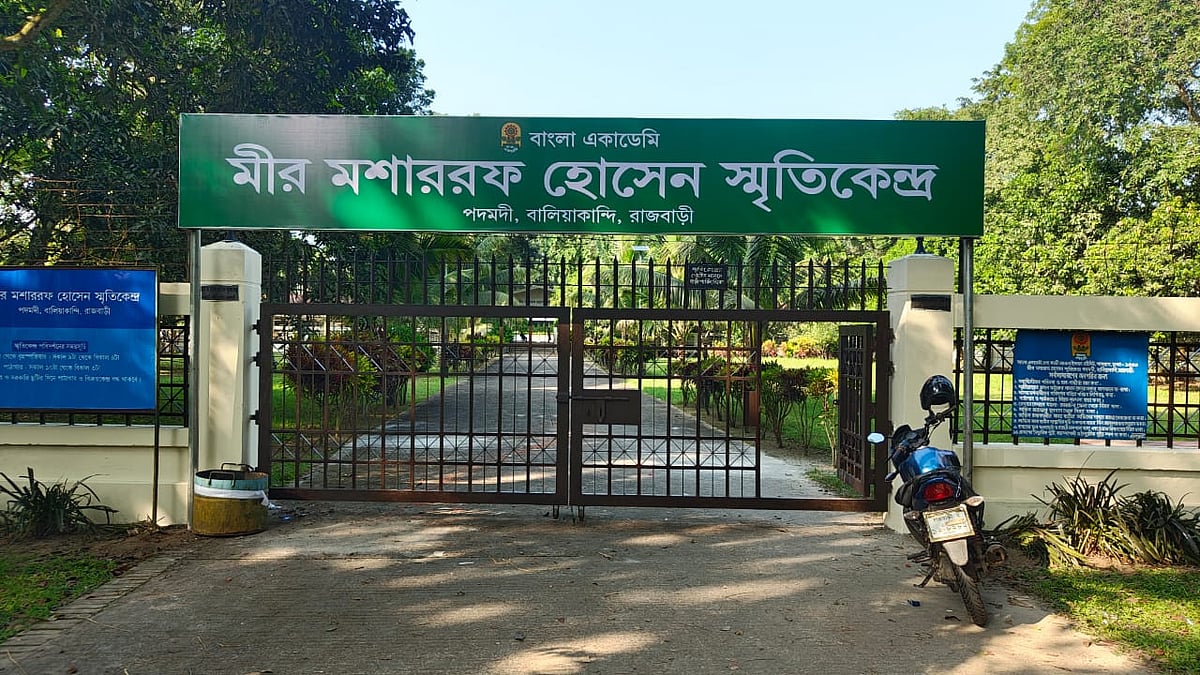
The memorial centre built in Padmadi village, in Rajbari's Baliakandi upazila, to preserve the memory of Mir Mosharraf Hossain, the author of 'Bishad-Sindhu', is itself losing its memory more than two decades on, for want of maintenance and supervision.
The centre is under the Ministry of Cultural Affairs and is run by Bangla Academy. There is no suitable environment there for writing or literary practice. Local literature lovers complain the important institution is losing importance by the day. They also allege most visitors and students who come with their families on holidays cannot see the centre, although the authorities say only the sales centre and the library stay closed on holidays while the memorial centre itself remains open.
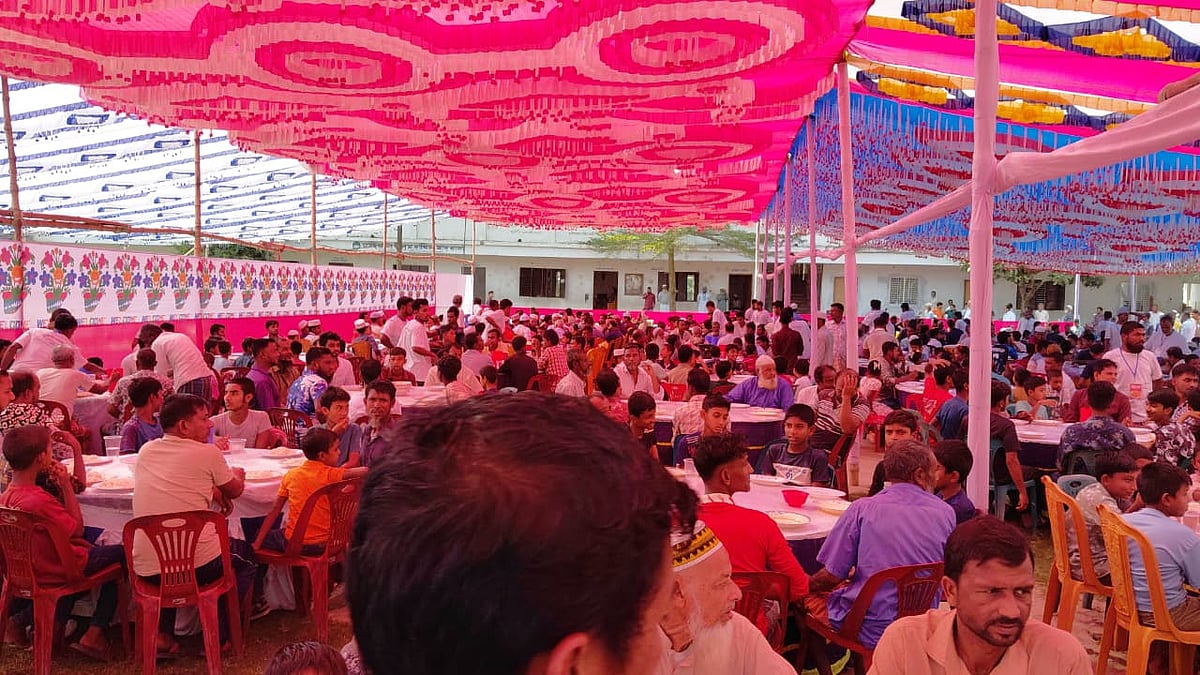
Today, 13 November, is Mir Mosharraf Hossain's 179th birth anniversary. To mark it, Bangla Academy has arranged a discussion, a cultural programme, a day-long Mir Mela for the first time, and painting and quiz competitions at the Padmadi centre. Local people, however, ask whether preserving the writer's memory will remain limited to a one-day birthday observance each year.
A visit to the centre last Tuesday found few visitors. Cracks have appeared in places in the building, paint and plaster have peeled off in others, the lamps on both sides of the main entrance are gone, and dirt has gathered on the benches in the grounds. A few hundred of Mir Mosharraf Hossain's books are arranged on the library shelves. Cleaning and painting work at the centre has begun for the birth anniversary.
Mir Mosharraf Hossain was born on 13 November 1847 at his maternal grandparents' home in Lahinipara village in Kushtia district. His ancestral home is Padmadi village in Baliakandi upazila of Rajbari. He began his schooling in Kushtia and also studied at the school in Padmadi village, before his education ended in Krishnanagar and Kolkata. Much of his working life was spent in service at the Faridpur Nawab Estate, and he also served as a nayeb at the Delduar estate in Tangail.
Construction of the memorial centre began in July 1999 on 84 shatak of land at a cost of Tk 2,48,03,000. The centre was established on 19 April 2001 and opened to visitors in 2005. It has a museum, a 100-seat seminar room, an office, a library, a guest room, a dining room, a kitchen and toilets, but many of those facilities are now dilapidated.
The writer died in Padmadi on 19 December 1912. In accordance with his last wish, he was buried beside his wife Kulsum in Padmadi village.
At one time his grave too was lost through neglect. The matter came to the notice of the cultural affairs ministry after a report on it was aired in Bangladesh Television's 'Kathamala' magazine programme. The Mir Mosharraf Hossain Memorial Centre was then built there under the supervision of Bangla Academy.
Masudur Rahman, a visitor from Faridpur, said the museum was supposed to hold artefacts relating to Mir Mosharraf Hossain's literary works and life from the time of its founding, but in reality they are not there. There had been talk of a tourism centre and a full university around the centre, but there is no visible progress, and the writer's birth anniversary is observed only nominally each year, he said.
Rajbari's deputy commissioner Afroza Parveen recently visited the centre. She said that as it is under Bangla Academy, its development and maintenance are for the academy to look after, and that she has spoken to the academy about several matters including the manpower shortage, bench repairs, painting the walls and internet connection.
An initiative has been taken to arrange scholarships for research on Mir Mosharraf Hossain, said Rezaur Rahman, a Bangla Academy deputy director and the officer in charge of the centre. He said there are plans to renovate the centre quickly, build a modern museum and a rich library, and recruit the necessary manpower.
Local literature lovers and concerned residents demand that the centre be built into an effective cultural and research centre, not limited to a birth-anniversary observance, so that Mir Mosharraf Hossain's literary works and philosophy are presented to the new generation.