
Christian Family in Chhattisgarh Forced to Move Father's Body Out of Village, as 140 Families Petition Supreme Court
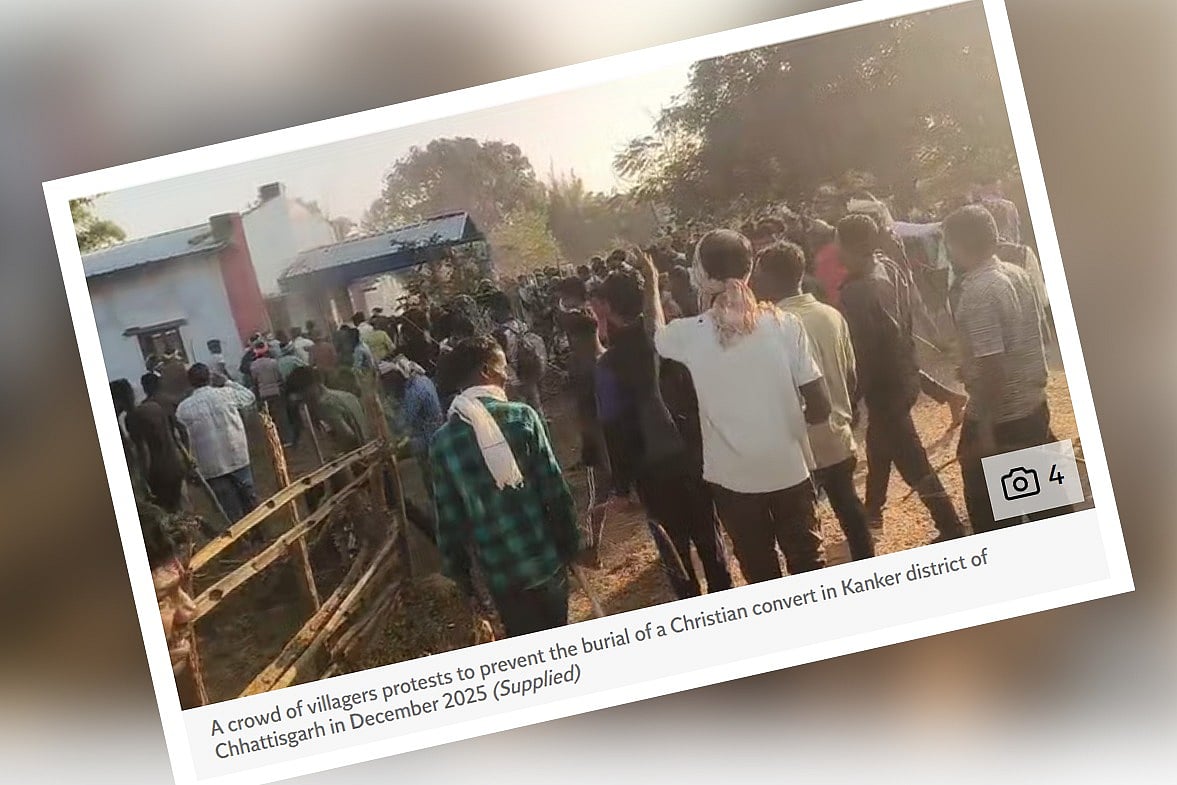
In Eradah village in Kanker district of Chhattisgarh in central India, farmer Patiram Thappa remained buried in his own village for only a few hours. He died in hospital on 10 August 2023 at the age of 50, and his family brought the body home and buried it early the next morning. Within a short time of the burial, however, a large group of villagers arrived and demanded that the body be dug up and taken outside the village.
According to his daughter Simla Thappa, between 200 and 250 people came to their home that day. The family had converted to Christianity, and Simla says that was the real reason for the objection to the burial, because everyone in their small ethnic community is buried.
Simla said 20 to 25 people entered the house and surrounded four members of the family. Those four included her minor sister and a brother who serves in the Border Security Force, the BSF. She also alleged that several women mistreated her mother.
After pressure throughout the day, the family gave in at around 5pm. Simla said they agreed not because they accepted the argument, but because they feared for their own safety. They were afraid the villagers might attack them, beat them, or even lynch them.
The family then hired a vehicle and took the body towards the nearby town of Kanker. Simla herself did not leave the village with her father's body. By then the family was exhausted after facing the agitated crowd all day.
In a statement filed in the Supreme Court, Simla's mother Mangotin Thappa said police did not allow them to bury him at the Christian cemetery in Kanker town either. In the end Patiram was buried on the bank of the Dudh river, about 15 kilometres away. Several local officials were present when the body was moved.
Simla, who is 22, said the family converted to Christianity in 2016. They had been drawn to the way of life of local Christians, which seemed more peaceful to them, she said.
Simla's grandfather and other relatives are buried in the Eradah village graveyard. In her words, no villager there had ever before been forced to be buried outside the village.
By Simla's count, at least 19 of the village's 105 to 110 families are Christian. She said two more converted Christians have died since her father's death, and claimed both were buried outside the village out of fear.
Simla alleged that the family went to the police but received little help. Kanker police were contacted for comment but did not respond. Chhattisgarh's home department was also asked for comment and did not reply.
The matter is now before India's Supreme Court. Simla's mother is one of the intervening petitioners in a case filed by the Chhattisgarh Association for Justice and Equality. The petition is based on testimony from more than 140 families, who allege that village councils and police prevented them from burying their relatives in local burial grounds.
The petition also cites a February 2024 decision by the Takraguda village council in Bastar that banned burying people from outside the Hindu community on village land. The petitioners further allege that around 50 pastors in the state have been arrested and jailed for conducting funeral rites.
Earlier, when Ramesh Baghel's father, a Christian pastor, died in January 2025, a legal fight followed over burying him in Chhindawada village in Bastar, and the body lay in a morgue for three weeks. In the end the court ordered him to be buried at a Christian cemetery in Karkapal, about 50 kilometres from his village. The petitioners claim the state government told the court Karkapal was 20 to 25 kilometres away, when the actual distance is 60 kilometres.
On 18 February this year, a Supreme Court bench of Justices Vikram Nath, Sandeep Mehta and N V Anjaria directed that until the petition is decided, no buried body may be exhumed. Even so, in July a demand was reported in Dhekuna village in north Bastar to dig up the body of a Christian resident.
India Hate Lab, a project of the Washington-based Center for the Study of Organized Hate, documented more than 1,300 in-person hate speech events targeting religious minorities across India in 2025. Nearly all targeted Muslims, and Christians were also targeted at more than 160 events. According to the 2011 census, Muslims make up 14.2 percent of India's population, Christians 2.3 percent, and Hindus about 80 percent.

