HSC pass rate falls to 51.62 percent, raising question whether blame lies only with students
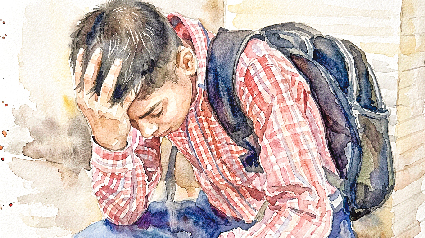
In the recent HSC examination results, the pass rate has fallen to 51.62 percent. Last year the rate was 57.12 percent. In one year, the pass rate has dropped by about five and a half percentage points.
The number of students achieving GPA-5 has also fallen by a large margin. Last year 63,219 students achieved GPA-5; this year that number has fallen to 35,948.
The result is being viewed not merely as a higher-secondary-level statistic but as a reflection of a crisis across the whole education system. The question raised is whether students are losing interest in study, or whether weaknesses of educational institutions and long-standing mismanagement of the education system are pushing them away from study.
In this year's results, most students failed in English. After studying English for so many years, the fact that a huge number of students could not achieve the expected proficiency in the subject has raised the question of whether it is right to place the blame only on students. It has been suggested that because of faulty methods of teaching English, students cannot properly master the language.
The picture of teacher shortage has also come forward in this discussion. According to the Directorate of Secondary and Higher Education (DSHE), the number of vacant teacher posts in 316 government colleges in the country is 2,178. Besides, more than 2,000 lecturer posts are vacant in nationalised colleges.
Officials of the Non-Government Teachers' Registration and Certification Authority (NTRCA) have said about 70,000 teacher posts are vacant in educational institutions across the country. This time, demand was received for 77,799 vacant posts from across the country. After scrutiny, approval of the Ministry of Education has been sought for recruitment to 69,577 posts.
Shortcomings in teaching and supervision have also been raised. Many institutions have gaps in regular teaching and supervision; in some places a teacher shortage, in others the influence of a coaching-dependent education system. Dependence on coaching and private tuition is growing over classroom teaching.
The question of students' attention has also come into the discussion. Once, textbooks were the main medium of acquiring knowledge; now for many, study has become limited to passing examinations, obtaining certificates or competing for good results. The tendency to attend class regularly, study on one's own initiative and acquire subject-based skills is weakening. Social media, online entertainment and gaming are also taking away the attention of many students, it has been noted.
Questions have also been raised about the role of parents. In many families, children are pressured to achieve good results, but an environment for regular study is not created. Smartphones are put in children's hands but their use is not monitored; anxiety over results rises before examinations, but no inquiry is made about study progress through the year, it has been suggested.
In this situation, emphasis has been placed on ensuring regular classes in every institution, identifying students' weak subjects and arranging special support, ensuring teachers' accountability and regularly evaluating the quality of teaching.
This HSC result has been described as a warning signal. If action is not taken now, the crisis may grow further in the coming days; calls have been raised to remove students' reluctance to study, for teachers to be responsible, for parents to be aware and to bring the education system under accountability.