HSC supplementary exams on 1–15 December: second chance for 422,905 students who failed up to two subjects, with standards debate
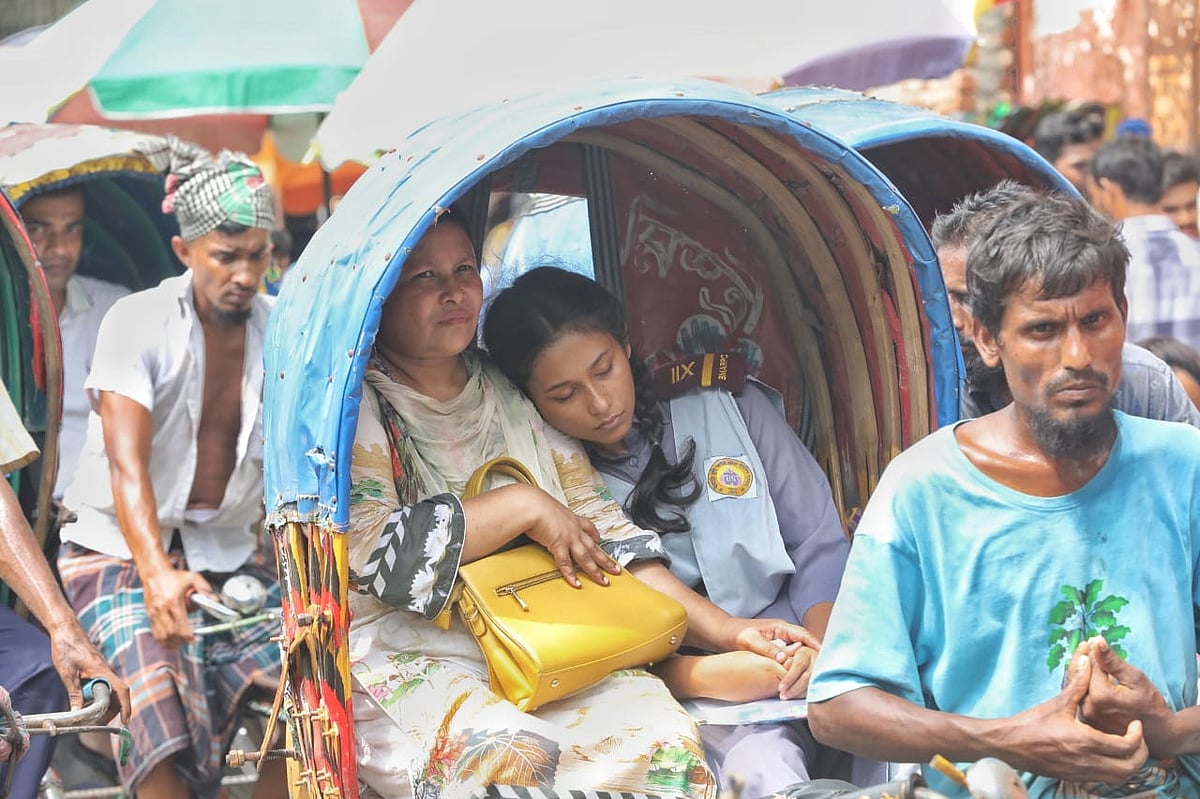
A decision has been taken to introduce supplementary examinations in Bangladesh's education system. Students who failed in up to two subjects in the 2026 Higher Secondary Certificate (HSC) and equivalent examinations will be able to sit the supplementary exams.
The supplementary examinations will run from 1 December to 15 December.
In this year's HSC and equivalent examinations, the pass rate across 11 education boards stood at 52.12 percent. A total of 594,113 candidates failed.
Of those who failed, 422,905 failed in only one or two subjects. The supplementary examination therefore creates an opportunity for this large number of students.
For a long time, students who failed in one or two subjects had to wait almost an entire academic year. Supporters of the decision argue that the new initiative can reduce that unnecessary delay. A student may do well in several subjects yet fail in one; having to wait for the next academic year over a single subject wastes time, money and mental energy, and for students from financially disadvantaged families losing a year creates a major crisis.
However, discussion of the move has stressed that a supplementary examination does not mean relaxing the standard for passing. Rather, it gives a student who failed to reach the set standard a chance to prove their ability again. The success of the initiative will therefore depend on its implementation, the quality of assessment and its long-term policy basis.
The discussion has also noted that supplementary exams can restore students' confidence and reduce unnecessary delay in entering higher education. If results are published within a set time, many students will be able to enrol in the next academic year. Coordination with the admission schedules of universities and the National University is, however, essential, it has been argued.
Students in various other countries also have opportunities to retake examinations. India's Central Board of Secondary Education (CBSE), Pakistan's Federal Board of Intermediate and Secondary Education (FBISE) and Nepal's National Examinations Board (NEB) have re-examination arrangements at different levels. But Bangladesh needs its own policy aligned with its education system, curriculum and academic year, the discussion added.
The biggest concern raised is that the system should not make students careless about the regular examination. If the idea takes hold that another chance will come even without good preparation for the main exam, attention to regular study and the classroom may decline.
It has also been said that there should not be a large difference in difficulty between the main examination questions and the supplementary examination questions. If supplementary questions are made easier to raise the pass rate, questions will arise about the acceptability of the same certificate.
The discussion also warned that rushing question setting, centre management and answer-script evaluation in order to hold the exam quickly could create scope for irregularities. A lack of coordination among multiple education boards could create discrimination among students.
As a proposal, it has been suggested that although this year's supplementary exam is starting as an immediate initiative, it should not be left as an isolated decision; the education ministry should formulate a permanent and uniform supplementary examination policy. The proposal calls for clearly setting out eligibility and participation conditions for students who failed in up to two subjects, with separate provisions for results cancelled due to absence, expulsion or disciplinary reasons.
Another proposal is to set a target of holding the supplementary exam within 45 to 60 days of the main results and publishing its results within 30 days where possible. It has also been proposed that students should not be forced to retake all subjects, only those they failed.
On exam centres, the proposal says supplementary exams could be held at around 150 selected centres across the country, instead of using every educational institution, so that regular academic activities are not disrupted. Centres should also be kept in major and important upazila headquarters alongside district headquarters, so that students' travel is easier.
The same discussion proposed keeping exam fees reasonable and arranging fee waivers or special support for poor and disadvantaged students. It also proposed that education boards publish reports every year analysing subject-wise failure rates and participation and pass rates in supplementary exams.
Finally, it stressed that the most important task is to investigate why students fail — whether because of not understanding a subject, exam anxiety, illness, the pattern of questions or evaluation-related problems. A supplementary exam can give an immediate solution, but it cannot remove the fundamental weaknesses of education, the discussion noted.