No Closed Factory May Be Left Unused, Governor Mostakur Rahman Tells Bankers
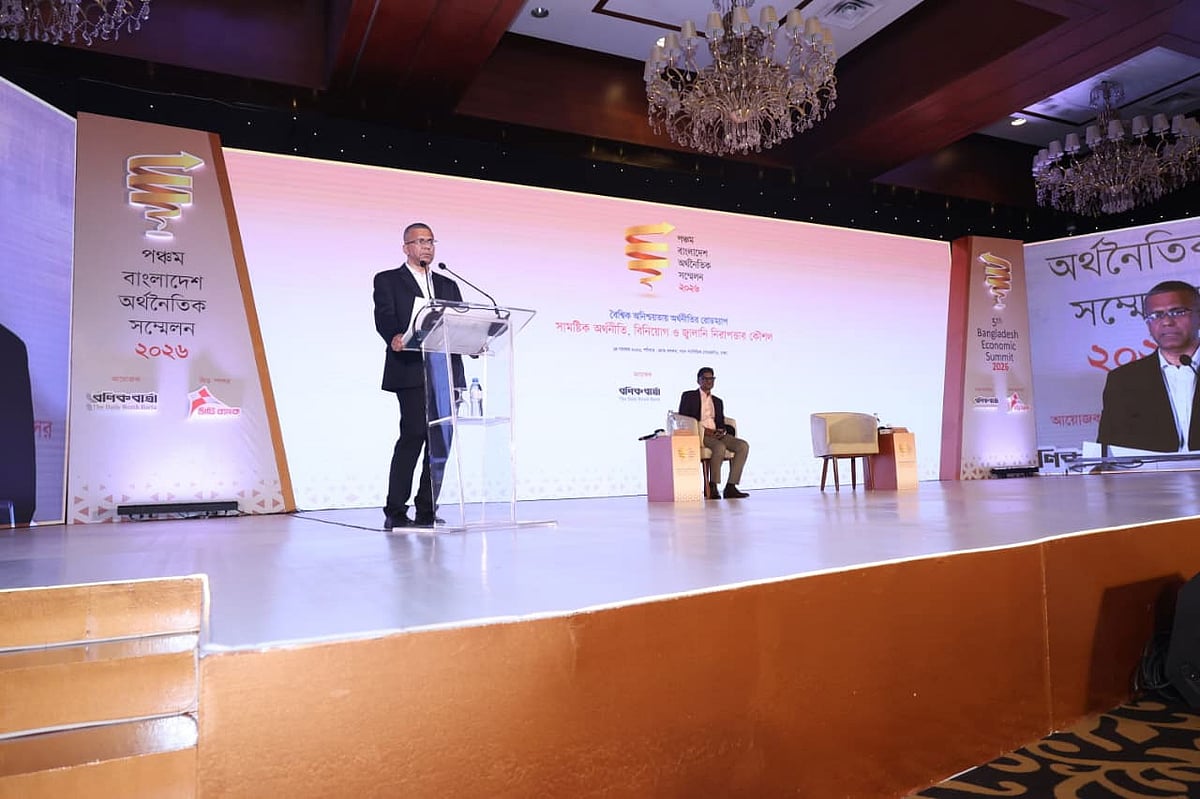
Bangladesh Bank Governor Mostakur Rahman has said no closed factory or national asset in the country may be left unused. Addressing bankers, he said: 'If all the machines of a factory are ruined, throw them away and sit on that floor sewing quilts; even so, an economic activity must be kept running in that place. It cannot be kept closed.'
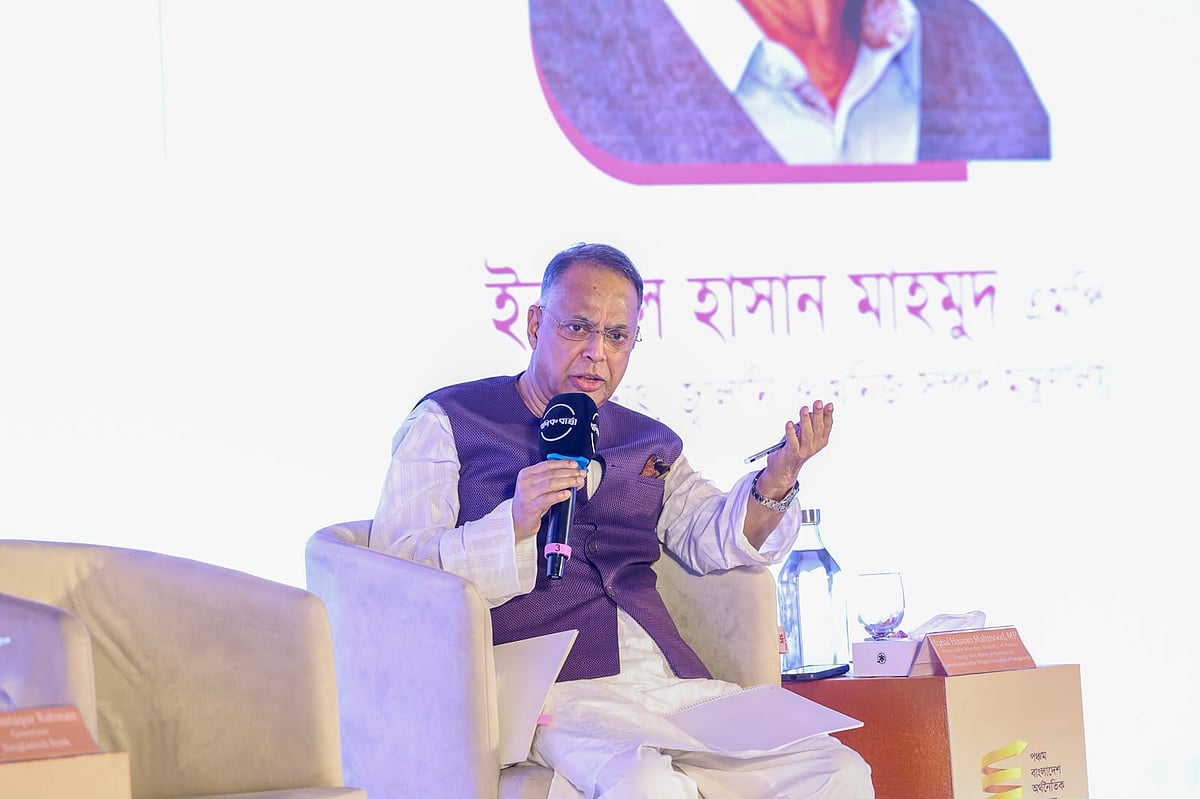
The governor spoke on Saturday evening at the Fifth Bangladesh Economic Conference, organised by the daily Bonik Barta at the Sonargaon Hotel in the capital. Power, Energy and Mineral Resources Minister Iqbal Hasan Mahmud was also a guest at the event, which was moderated by Bonik Barta editor Dewan Hanif Mahmud.
The governor said that last week, four specific pieces of information were sought from all banks about defaulting customers in order to reactivate closed factories. The information covers whether the factory can be run by its current owners, whether it can be sold through discussion with the current owners and handed to another qualified entrepreneur, whether it can be kept running by renting it out, and whether another economic activity can be conducted at the site.
The governor said these factories, built by spending the people's reserve money and dollars, are national assets, and they must be kept active.
At the event, the governor also said the country's credit flow has become concentrated in specific sectors over the past 10 years. Corporate loans now stand at 70 to 80 percent of total loans, which should not be the case. Commercial banks were not licensed only for corporate loans, he said, urging banks to be careful in lending.
Giving the example of one sector, the governor said that while total demand in the country for that sector is 5 million tonnes, production capacity of 12.5 million tonnes has already been built.
Governor Mostakur Rahman said: 'One-third of the banking sector's money has been stolen. I have requested the government to provide at least Tk 60,000 crore a year from the revenue budget for the next five to eight years for banking sector reform and capital restructuring.'
The governor said the environment for doing business easily has been created to increase domestic and foreign investment, and various payment processes, including remittances, have been simplified. Giving an example, he said not even an air ambulance had been paid for through legal channels. For that reason, payments for treatment abroad have been simplified, as has the process for e-commerce and freelancers to bring money into the country.
Speaking for entrepreneurs, Meghna Group of Industries (MGI) chairman Mostafa Kamal said: 'We change policies frequently; this is a big obstacle to industrialisation.' He also requested increasing the size of the renewable energy and energy efficiency fund.
Walton Hi-Tech Industries managing director S M Mahbubul Alam said that after the garment sector, the electronics sector has created the biggest potential in exports, and that policy support and export facilities for this sector need to increase for it to survive competition with world-class companies.
Universal Medical College Hospital chairman Priti Chakraborty said 5 to 6 billion US dollars go out of the country every year for treatment. To stop this outflow, the investment environment in the health sector needs to be made easier, she said.
Outlining the government's plan to stop money going abroad for treatment, the governor said the government plans, under public-private partnership (PPP), to buy 500 surgeries from private hospitals at a government-set price. A specialised hospital has already shown interest in contracting with the government on this.
NRB Bank chairman Iqbal Ahmed raised before the governor the need for special incentives to create small and medium entrepreneurs (SMEs) alongside large institutions. The economic conference was divided into two parts; in the second part, Power, Energy and Mineral Resources Minister Iqbal Hasan Mahmud discussed energy security strategy.