Garment Workers Demand Tk 32,000 as Owners Prepare Wage Board Proposal for Monday
Garment workers and factory owners are again facing off over wages. Facing a workers' movement, the government formed a minimum wage board on 1 November. At the board's second meeting last Monday, the workers' representative proposed a minimum wage of Tk 32,000. The board's third meeting will be held next Monday, and the owners' representative will present a proposal at that meeting.
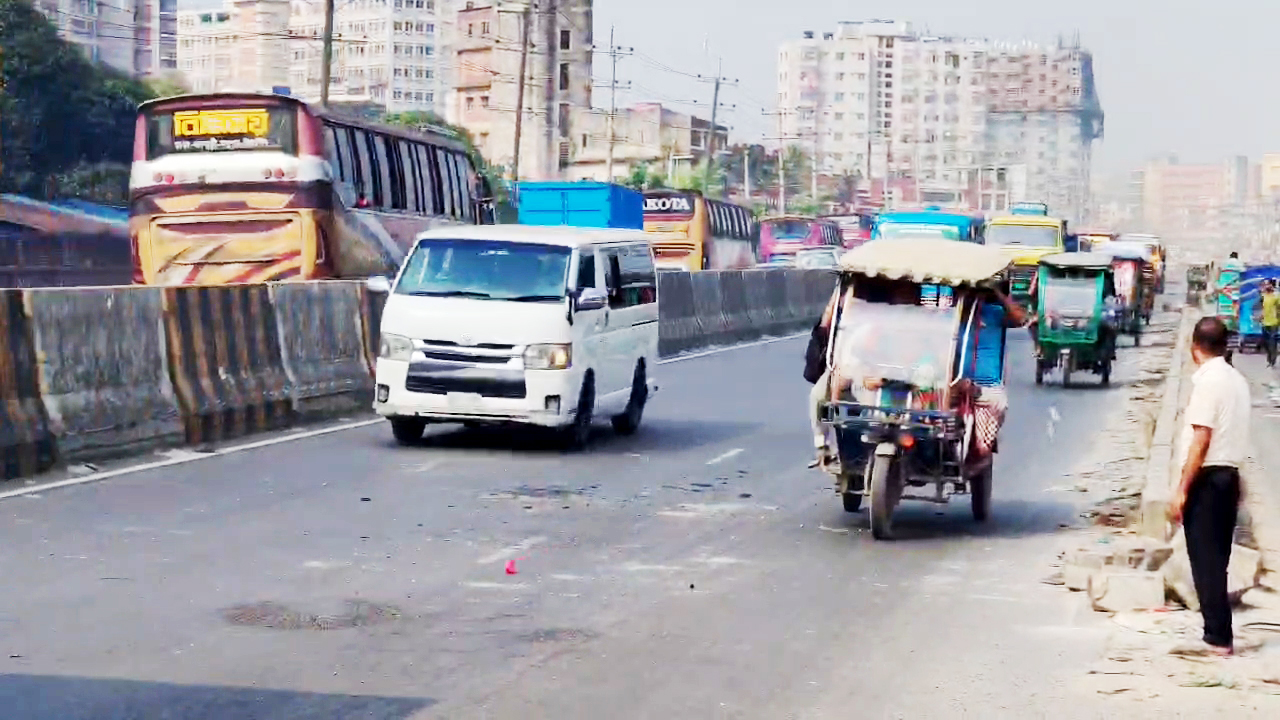
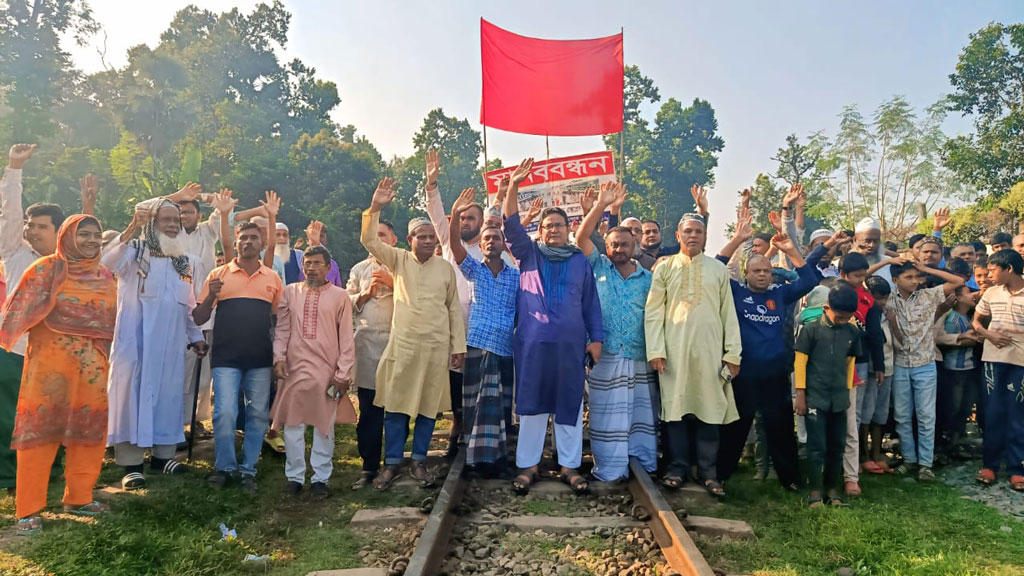
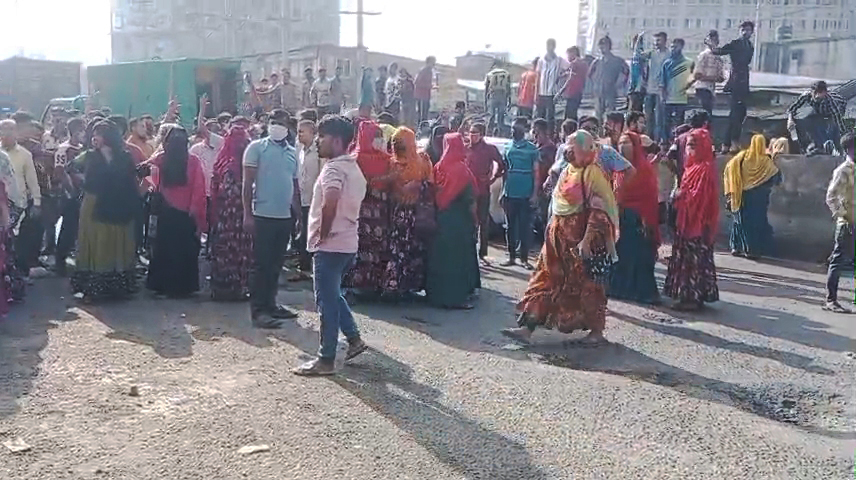
Garment workers have been protesting since last month demanding a wage increase. Although the situation in industrial areas has improved somewhat since wage board talks began, it has not fully calmed. Protests took place in the Savar-Ashulia area on every day last week, disrupting production at several factories each day. Gazipur was mostly calm on the other days of the week except Thursday. In Narayanganj, after two days of labour unrest in the first week of this month, the situation has since been calm.
The owners have not yet finalised their wage proposal. However, according to several owners, they will follow the old strategy in the wage proposal — starting negotiations with a low wage offer. As always, the limited capacity of small and medium businesses will be brought to the fore, while workers' cost-of-living needs will remain largely secondary.
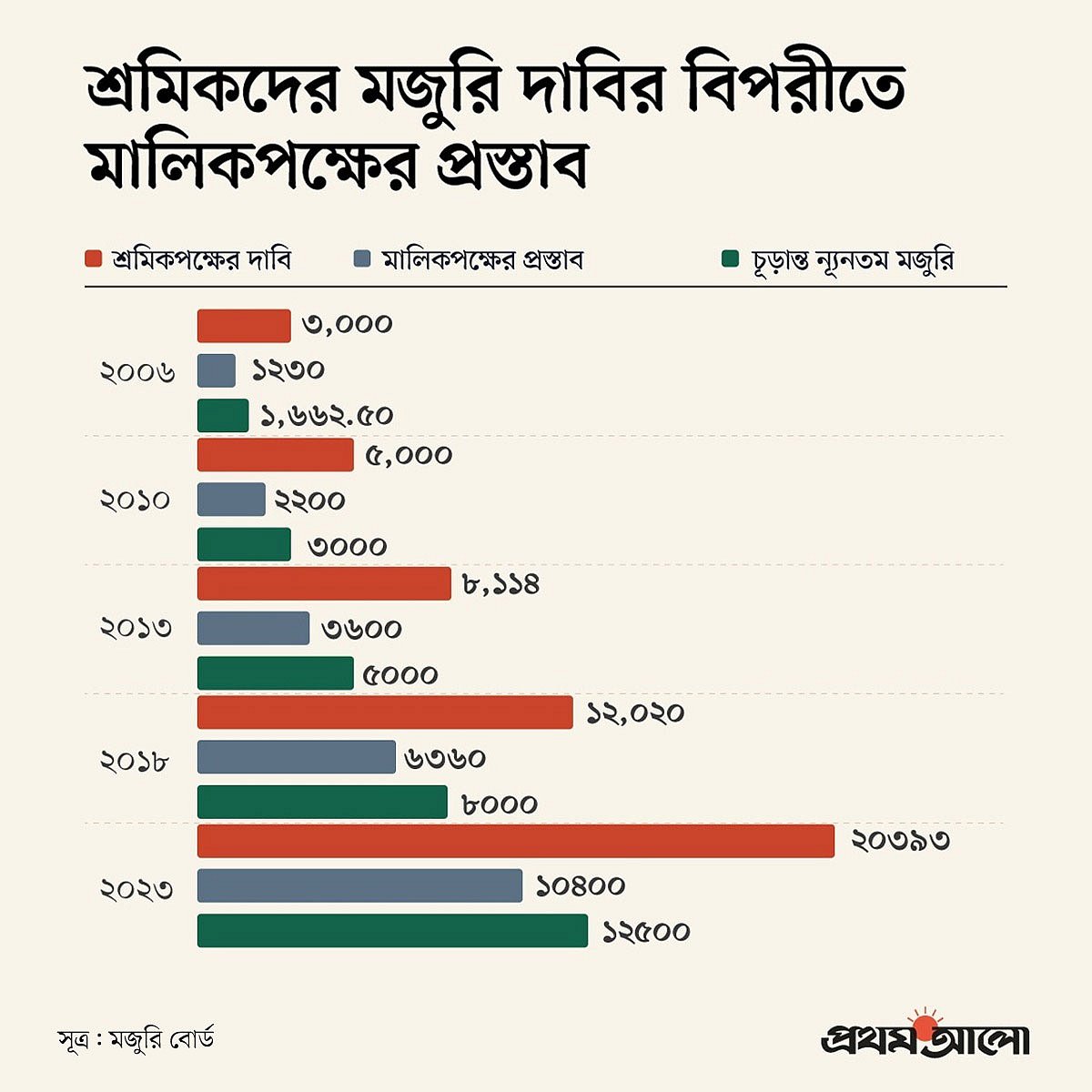
The same kind of situation arose in the previous two rounds as well. In September 2013, the owners proposed raising the minimum wage by only Tk 600 at the minimum wage board. Angered by such a small increase, workers in all industrial areas took to the streets in protest. Factories and vehicles were vandalised and roads blocked. In Gazipur, protesters attacked an Ansar camp, snatched four rifles and set them on fire. More than a hundred workers were injured in clashes with police.
Many protesting workers at the time said all their salary was spent on house rent and food, and that after inhuman labour this pay could not be accepted under any circumstances. In their words, by proposing a Tk 600 increase, the BGMEA had mocked the workers.
Faced with several days of continuous protest that year, the owners agreed to raise wages. In the end, that wage board set the minimum wage at Tk 5,000. After the Rana Plaza collapse, amid criticism at home and abroad over garment workers' low wages, the government had formed the wage board ahead of the scheduled time.
A minimum wage board was formed again in January 2018 to set garment workers' wages. Before that, various workers' organisations had been campaigning for a minimum wage of Tk 16,000. Ignoring the organisations' demand, the workers' representative on the board drew criticism by proposing Tk 12,020, while the owners became controversial by proposing Tk 6,360. In the end, with the intervention of then prime minister Sheikh Hasina, the minimum wage was set at Tk 8,000. The labour ministry issued the gazette for the new wage structure on 25 November, and it took effect in December.
After the gazette was issued, workers of more than a hundred factories protested first in Narayanganj and later in Gazipur and Ashulia. The reason was that although the wage for the lowest, seventh grade rose by Tk 2,700, workers in the upper grades (grades 3, 4 and 5) already received close to that amount through a 5 percent annual increment, so the new structure did little to improve senior workers' fortunes.
In the second week of April 2023, the government formed a wage board through the labour ministry. Although the board met three times over the following six months, neither side made a proposal. After criticism, at the fourth meeting on 22 October both workers and owners presented proposals. The workers' representative proposed a minimum wage of Tk 20,393, while the owners proposed roughly half that, Tk 10,400.
Workers began protesting the day after the owners made that low proposal. The movement spread across Mirpur, Narayanganj, Savar-Ashulia and Gazipur. On 30 October, a worker named Russell Hawlader, injured in clashes with police in Gazipur, died. As news of his death spread, a factory was set on fire. Owners later tried to control the situation by closing 200 factories.
In the workers' three-week movement over wages, three more garment workers — Imran, Jalal Uddin and Anjuara Khatun — died besides Russell Hawlader. When the situation spiralled out of control, the owners decided to make a new proposal. On 7 November, the owners raised their earlier proposal by Tk 2,100 and proposed Tk 12,500, which was later finalised. The new wage structure took effect on 1 December.
This round also matches the previous ones — each time the owners' proposal was far below workers' expectations, and that proposal itself sparked a large movement. In this time of high inflation, if the owners ultimately make a low wage proposal, a repeat of 2013 or 2023 would not be surprising.