
Writer and scientist Purabi Basu dies in Florida at 77
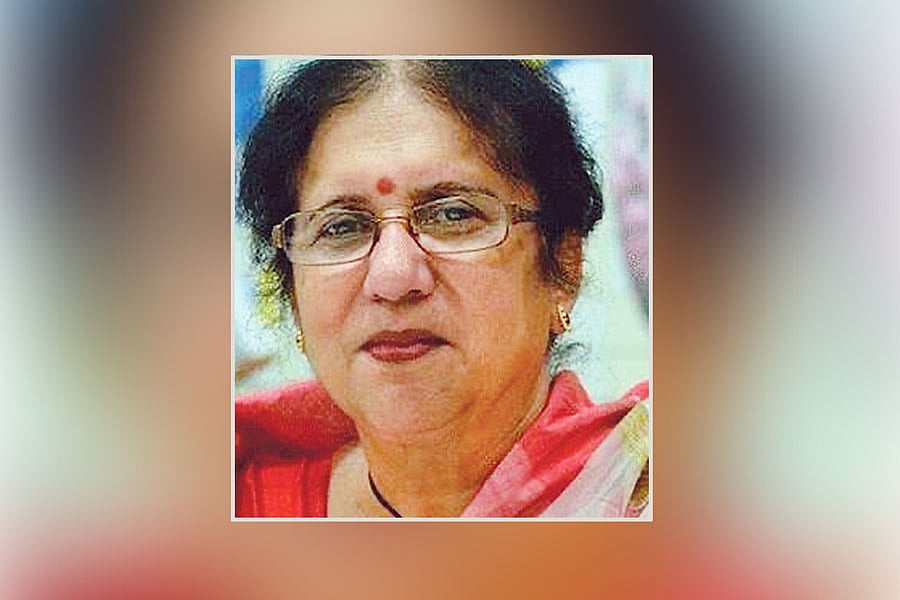
Noted fiction writer Purabi Basu has died. She breathed her last on Friday local time at her home in Florida in the United States. She had been ill for several years.
Purabi Basu was 77. Her death was confirmed by her husband, writer Jyotiprakash Dutta. Besides her husband, her daughter Joyisha Dutta and son Dipan Dutta were beside her when she died.
Purabi Basu had long suffered from various illnesses. She had been living with Parkinson's disease for more than 10 years. A few years ago she was seriously injured in a road accident. Later, after a stroke, her mobility became limited.
Jyotiprakash Dutta said that in her final months Purabi Basu spent her time tending the garden at her Florida home.
Purabi Basu was born in 1949 in Munshiganj, Bangladesh. She spent most of her life in the United States. After a bachelor's degree in pharmacy from the University of Dhaka, she earned a master's degree in biochemistry from Pennsylvania. She then obtained a PhD in nutrition science from the University of Missouri.
Most of her working life was spent in research. She served as a scientist at Cornell University and at the Sloan Kettering Cancer Center in New York. In between, she also worked for some years at Beximco and BRAC in Bangladesh.
Although a scientist, Purabi Basu loved to introduce herself as a writer. Though known as a feminist writer, she refused to be confined to any label. In a 2007 interview she said women's rights were undoubtedly extremely important to her, but any violation of any human being's human rights could become the inspiration for her stories.
Although she spent most of her life abroad, Bangladesh remained the backdrop and emotional centre of her fiction, as seen in the story collections 'Ajamma Parabasi', 'Jochhna Korechhe Ari' and 'Dinratrir Chhayaghar'. Her notable science books include 'Nari, Srishti O Bigyan' and 'Amar E Dehkhani'.
A central theme of Purabi Basu's literary thought was non-communal consciousness. She was deeply concerned about the steady decline of communal harmony in Bangladesh.
To inspire expatriate writers with non-communal values, she founded the 'Bishwa Bangla Sahitya Samabesh' together with Jyotiprakash Dutta. Earlier, while living in New York, they also organised monthly literary gatherings of immigrant Bengali writers, from which many of today's renowned Bangladeshi writers emerged.
