Nearly 33 of every 100 taka in loans are in default and the capital ratio has turned negative, Knowledge Hub report finds

Nearly 33 taka of every 100 taka lent by Bangladesh's banking sector has fallen into default. According to a report by the Knowledge Hub Institute, non-performing loans stood at 32.78 percent of total loans at the end of June 2026.
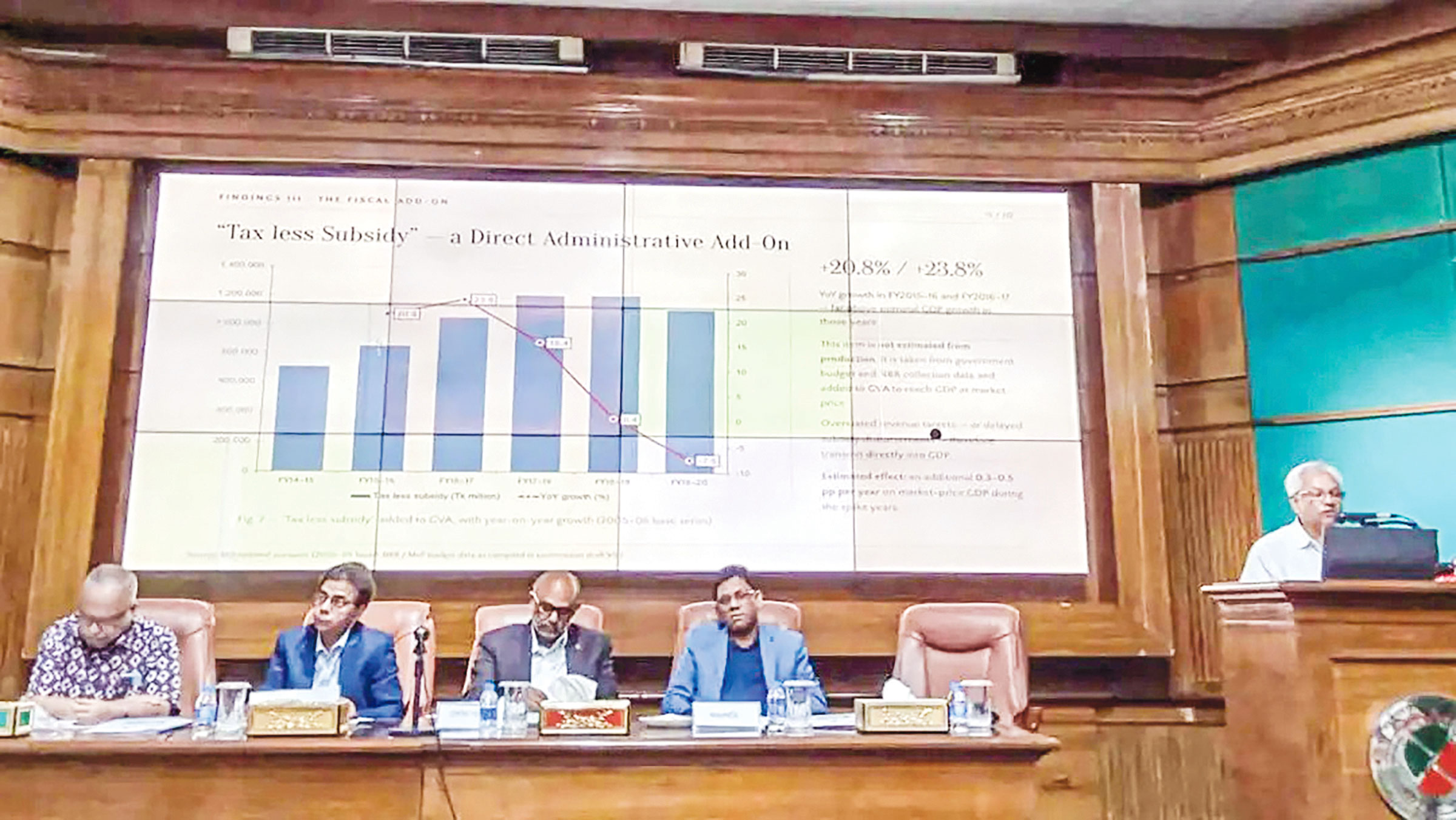
The report, titled 'Banking Sector Assessment and Policy Review: January-September 2026', was released on Saturday at Shyamoli in the capital. Noor Yana Jannat, a research associate at Knowledge Hub, presented the findings at the event.
The report said banks have been unable to set aside the required provisions against this huge volume of defaulted loans, leaving a provision shortfall of 191,441 crore taka. Banks also lack the capital to absorb the potential losses; the capital conservation ratio for the banking sector as a whole has fallen to negative 2.64 percent.
The report also noted that loans worth 182,419 crore taka remain stuck because of court stay orders in 845 cases.
Speaking at the event, Knowledge Hub component lead Shah Md. Ahsan Habib said a large part of the defaulted loans has turned into doubtful and bad loans, and that there is almost no chance of recovering money from bad loans in particular. In his assessment, 80 to 90 percent of the defaulted loans face uncertainty over recovery.
Shah Md. Ahsan Habib said: 'My personal assessment is that less than 10 percent of this 33 percent in defaulted loans falls under genuine loan risk. Operational risk, irregularities and crime are involved in the rest. Banks cannot tackle these crimes alone. The government and the central bank will have to play a role here.'
By type of bank, the default rate was 43.2 percent at state-owned banks, 31.6 percent at private banks and 6.5 percent at foreign banks. Full-fledged Islamic banks were in the worst position, with a default rate of 58.9 percent. Deposits at those banks fell by 1.7 percent over the same period, while their loan-to-deposit ratio rose to 127.7 percent.
According to the report, deposits in the banking sector grew but private-sector credit flow remained stagnant. Deposit growth was 11.96 percent in August, while private-sector credit growth was only 4.75 percent. In September it fell further to 4.09 percent. Inflation that month was 8.34 percent. In that situation, Bangladesh Bank kept the policy interest rate unchanged at 9.50 percent.
The report also said excess liquidity in the banking sector stood at 441,954 crore taka in August. Despite that large overall liquidity, however, the crisis at weak banks has not eased.
In this situation, Knowledge Hub recommended an independent review of loan quality at risky banks and bank-specific capital recovery plans. It said the loan review should be completed by December and a decision taken by March 2027 on capital recovery or resolution.