Mark Rober Left NASA and Apple to Become a YouTuber: 'I Always Keep the Failures in My Videos So Children Learn Not to Give Up'
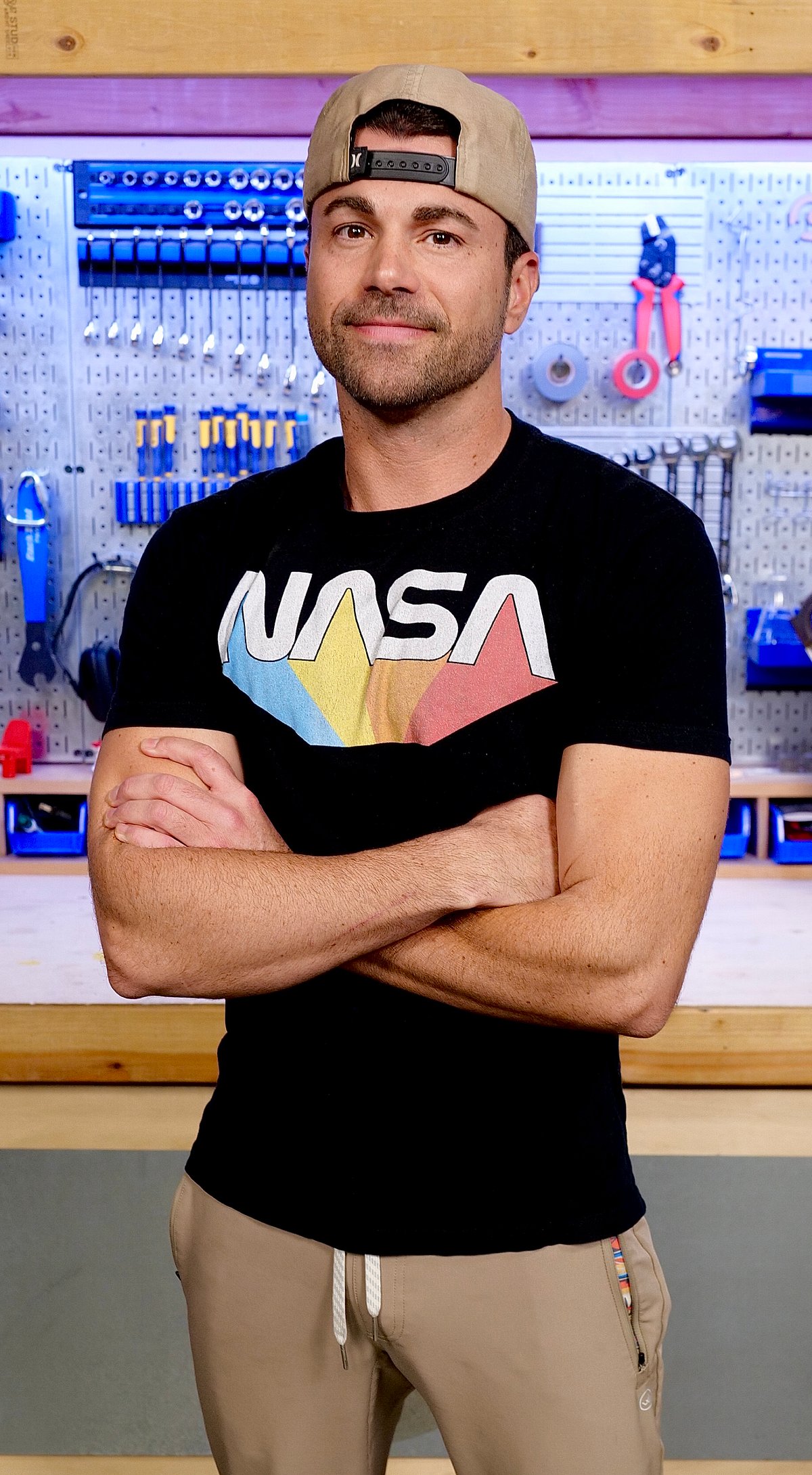
American content creator Mark Rober left jobs at NASA and Apple and is now a full-time YouTuber, using his engineering skills to make entertaining videos. In an essay about his work and life, he says he always keeps scenes of failure in his videos.
Rober writes that as a child his head was full of crazy, outlandish ideas, and it still is. But as a mechanical engineer he now has skills that let him turn those ideas into reality. As a child he loved sending a Slinky, the spring-like toy, down the stairs; as an adult he built a moving staircase down which a Slinky descends endlessly.
He calls engineering a superpower: with willpower and skill alone, he says, imagination can be turned into reality. That is what he wants to show children — that they should be curious, experience failure and connect more with the world around them.
He says he never thought very much about which path his career would take, and instead simply followed the work that genuinely attracted him. At high school he liked physics class and making videos, though he had little good equipment then. He did not like speaking in front of people, but he enjoyed preparing what he had to say.
While working as a mechanical engineer at NASA, the US space agency, he also made animations at night and on holidays. Those hobby projects eventually turned into decorative work that NASA used for its Mars rover.
At NASA he learned to break a big problem into small parts and solve them — a skill he says he now uses in making toys.
In his view, making toys is harder than being a space engineer. At NASA, he says, there is plenty of money to spend solving a problem, whereas toys have to be built within many constraints. Making something fun within those constraints is, for him, more challenging than sending a rover to Mars.
Writing about his son, Rober says his son is 19 and autistic. For years, every night, they have followed the same routine with his toy dolls; his son likes doing the same thing over and over, so Rober's old jokes make him laugh the same way every night. As a father, he asks, what more could he want.
He also sets out his definition of success: not a person's contribution to GDP, but whether they leave the world a little better than they found it. People who are highly successful by conventional measures but do not leave the world better are not an inspiration to him.
Rober writes that they never shed a tear because his son is autistic and instead embraced it. If someone offered him a button that would remove his son's autism and give him a billion dollars with it, he says he would not go within 100 feet of that button.
His mother also features in the essay. His mother, Caroline, had amyotrophic lateral sclerosis, or ALS, a serious and rare disease of the nervous system. She died about 15 years ago, six months before he made his first YouTube video. A proverb she loved held that a society becomes beautiful when elders plant trees in whose shade they themselves will never sit. Rober writes that his mother never got to sit in the shade of the trees she planted, yet her influence on his life is greater than anyone else's.
In this age of AI, awakening curiosity in children is more important than ever, he argues, because the devices in their pockets can now answer any question. He wants a child who watches his video to look around the home, have a question arise, build something and experiment. If the first attempt fails, the child should still try; if everything works first time, he says, it means not enough risk is being taken.
That is why he always keeps failure scenes in his videos. Every time, something goes wrong, and children need to see that his own work does not always work first time either — it is part of the whole process. As a child playing Super Mario Bros, when his character died he did not give up; he learned from his mistakes and tried again, an attitude he says matters for life's challenges too. Failure, in his words, is not incompetence; it makes a situation more challenging and gives another chance to try.