Hasina's return needs talks alongside the legal route, says Dr Touhidul Haq
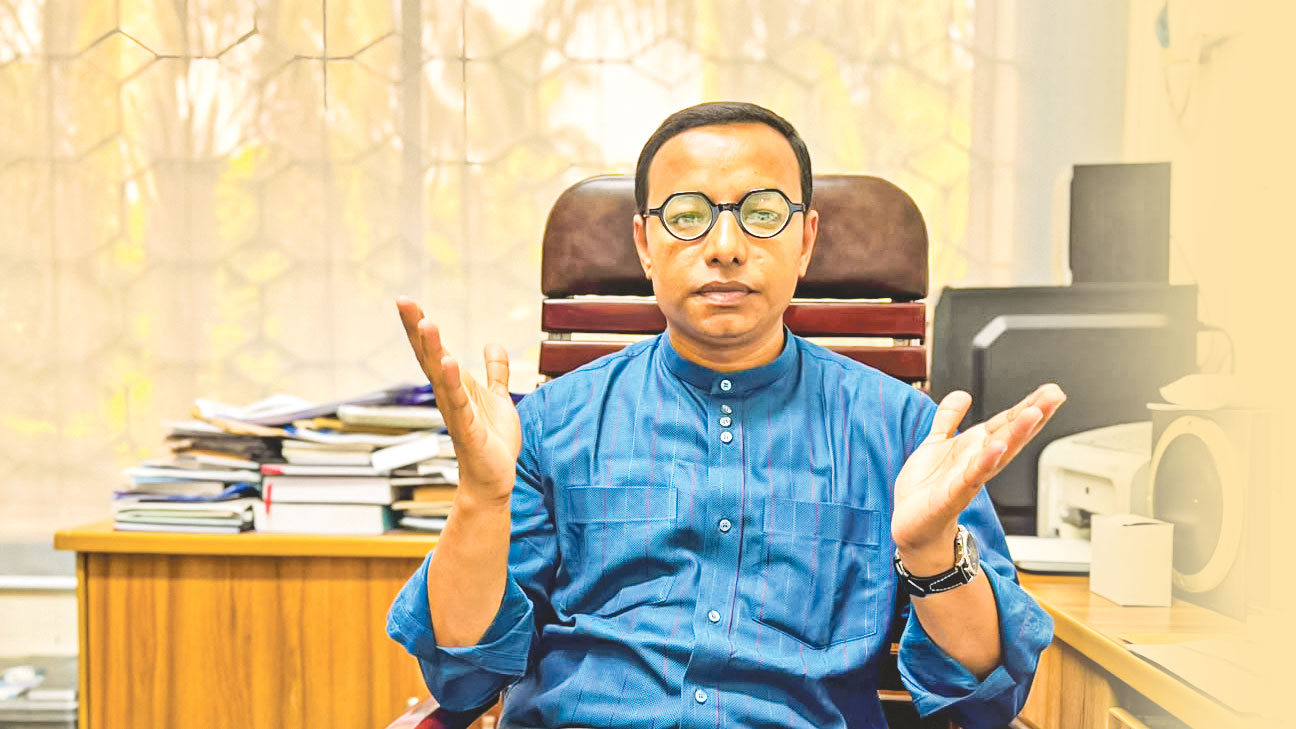
Sheikh Hasina's announcement that she will return has raised a range of concerns in the country. Dr Touhidul Haq, an associate professor at the University of Dhaka's Institute of Social Welfare and Research, discussed the situation with Masud Rana of Ajker Patrika. A specialist on society and crime, he researches crime, the economics of crime, collective solutions to crime and the transformation of crime. In his view, Hasina's return will not be settled by the legal process alone; talks will also be needed.
Dr Touhidul Haq said the government has one position on the matter and the opposition parties have their own. Yet after the mass uprising, despite differences on various issues, a minimum unity is visible on one point: the Awami League, while in power, committed injustice during the July 2024 movement and used state force to kill and oppress ordinary people. But that unity, he observed, remains largely confined to verbal discussion, explanations, statements and speeches, with little reflection in practice.
On whether she would be extradited or return through a formal process, he said there are cases against Sheikh Hasina and verdicts have been delivered in one or two of them. Had there been no cases, there could have been room to discuss bringing her back formally through a passport or national identity card. Now the legal process of the 2013 extradition treaty must be followed, and not only the current government — whichever government were in office would have had to take the same path, he said.
Drawing on Bangladesh's past experience, however, he said political crises are not always resolved through the law. Narratives are built with the law and the courts in front, but crises have mainly been resolved in two ways — through discussion, or through the use of force. He called the culture of force undemocratic and outside democratic values, something that cannot be supported and on which the general public also has mixed reactions.
On India's role, Dr Touhidul Haq said that, in the context of relations during the Awami League's time in power, India still wants to view the Awami League and Sheikh Hasina from a position of advantage, which is nothing new. If political and social balance and a stable situation are wanted, he said, a solution must be reached through the legal process while also talking to the people and countries involved in or active behind the process. Otherwise, incidents such as conflict, violence, arson and cocktail explosions will keep happening, and however Hasina returns, the reality is that the whole matter will not unfold easily or peacefully.
He added that laws are made with a particular context in mind, but exceptional events do occur and not every event can be resolved with laws already in place. He sees Sheikh Hasina's case as exceptional. Here, more important than the law are the goodwill of the governments of India and Bangladesh and reaching a solution through mutual discussion. Because that space for a solution is not being created, the legal process is being discussed more, suspicion is deepening and debate is growing, he said.
He also noted that two sides have formed in this situation. Some say the clauses of the 2013 treaty contain flaws and do not fully match this event. In his words, not every event always fits the law, and exceptional events must be resolved through discussion alongside the law. Talks may be happening internally, but no public form of them is visible. So however Hasina returns, it will not be very comfortable, nor will it happen with all democratic and state courtesies maintained; she will have to return through coordination on many things, and the government will also have to coordinate in taking its measures.
Speaking about political practice in the country, he said whoever has power tries to extract any decision by force rather than by law or democratic values, and to keep the situation in their favour. Efforts are made to create public suffering and to spread fear and anxiety so that the government becomes unsettled or develops a mindset favourable to accepting a decision. Cocktail explosions, arson attacks, attacks on law enforcement and vandalising their vehicles are nothing new, he remarked.
On the spread of violence, he said unrest was first seen in two or three districts, but on November 10 conflict and violence occurred in more than 20 districts. Law enforcement could not fully control the situation everywhere. They are trying to be strict through the legal process, but those committing the violence, or getting others to commit it from behind, are turning so violent that even the police are struggling.
In his view, a major weakness of the country is placing the burden of a political crisis on law enforcement and the courts and seeking a solution from them, although the sole responsibility for resolving a crisis is not in their hands; they can only apply the legal part of it. Ending a crisis requires political steps on a broad scale. Ensuring people's safety and keeping society and the state safe from instability is the government's responsibility, because people voted for the government so that they could live well. He said the government is not seen to be discharging that responsibility very successfully, although where incidents occur there is no delay in taking action and goodwill is visible.
His comment on the political parties was that their biggest achievement is that they have succeeded in dividing the people into many parts. Each party has ideologically divided its leaders, activists and followers in such a way that no one easily accepts an opposing ideology. In other words, the system is democratic, but undemocratic practice prevails more in mindset and application. Support cannot be built by creating conflict and violence in a democratic process, but some or most activists of those doing this believe there is no alternative to violence, and this path is taken when no prospect of a full resolution of the crisis is seen.
He also spoke about the reaction of a divided public: a large section of followers of the ousted Awami League, whose activities are banned, somehow support the violence, while those who view the events of 2024 in the context of people's rights and a non-discriminatory relationship between the state and its people do not support it. In the past, too, this divided population never united around any event in the interest of society, the state and the people. On Sheikh Hasina's return as well, the currently active political parties speak in the same tone publicly while a different reality exists inside; the government and the opposition are blaming each other, and both sides claim to have specific intelligence about who is colluding with whom — which, in his words, points to a dark chapter contrary to the aspirations of 2024 and of the people.
On determining responsibility for the violence, Dr Touhidul Haq said there is still no clear documentary evidence to say that a specific leader or activist of a particular party did these things. Observing the districts where violence occurred — which party has more support there in past elections or in the current political reality, and whose leaders and activists are more active — it can be said that a section of leaders and activists of the banned Awami League and its affiliated organisations is involved. But the government should clarify the matter and identify those involved and bring them under the law. He also spoke of money being invested behind the violence: a group spends money to engage criminals at various levels to create conflict, and people hired for rallies are also used for vandalism and arson, with parties sometimes using their own activists and sometimes these hired groups.
Condemning the arson attack on the home of a coordinator of the mass uprising, he said the victim will naturally voice suspicion based on assumptions about political opponents, but the government should investigate the information, talk to the victim, find evidence and act on the basis of that evidence. When a culture of blaming each other after every incident grows, criminals escape and the main accused moves beyond reach. The government needed to give the matter more importance, looking not only at one coordinator's house being burned but at its symbolic impact, and to find those involved through intelligence activity, he remarked.