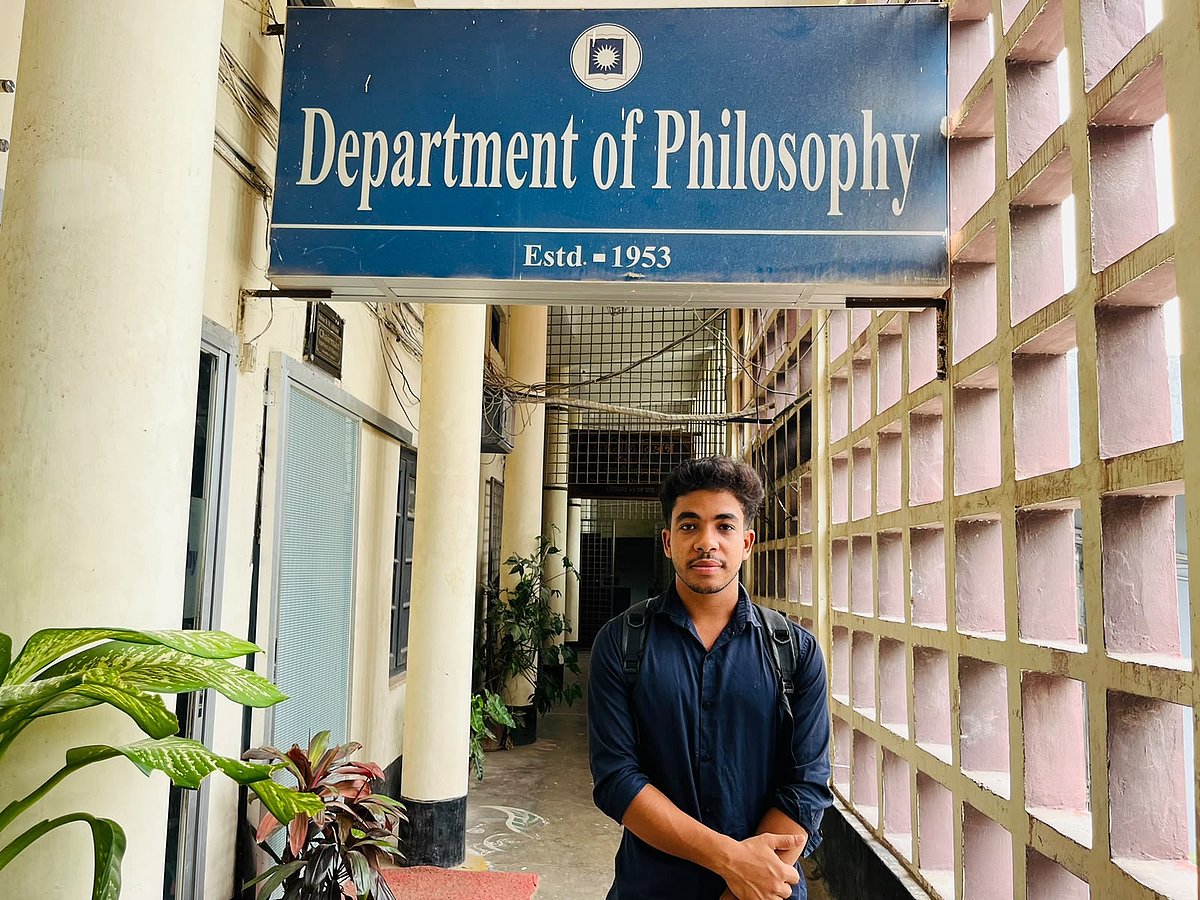
From Madrasa to First at Dhaka University: Abdullah Al Mamun Becomes a Civil Judge at His Second Attempt

Abdullah Al Mamun began his education at a madrasa and went on to place first in the Dhaka University admission test. He has now been recommended as a civil judge in the 18th Bangladesh Judicial Service (BJS) examination, at his second attempt. He did not give up after failing in the 17th BJS the first time.
Mamun studied for his dakhil at Al Markazul Islami As Salafi Madrasa in Rajshahi. He passed his alim from Tamirul Millat Kamil Madrasa at Tongi in Gazipur.
He then placed first from the humanities group in the 'Gha' unit and 11th in the 'Kha' unit of the Dhaka University admission test, and enrolled in the law department under the 'Kha' unit. His dream of becoming a judge began there.
Mamun did not spend very much time preparing for the preliminary examination. With a strong command of multiple-choice questions, he set his strategy by analysing previous years' questions.
In his assessment, the constitution and family law sections offer comparatively easy marks. He therefore aimed to score 18-19 out of the 20 marks in those two sections. His plan was to take 15-20 marks from the Bangla, English, general knowledge, mathematics and science sections and the marks he needed from the 40-mark law section to pass. The strategy carried him through the preliminaries of both the 17th and the 18th BJS.
For the 17th BJS he followed law study aid books, but before the 18th BJS he relied more on artificial intelligence. He collected the original texts of laws from the Law Ministry's website and had ChatGPT or Gemini build multiple-choice questions with 15-20 options. In his view, supplying the original legal text improves the accuracy of AI-generated questions.
For the written examination he prioritised the bare acts and previous years' questions. When he struggled to understand the explanation of a section, he took AI's help. He also used the technology to improve his own writing: he wrote answers to various questions, photographed them and sent them to AI, and learned where corrections were needed and how an answer could be made better.
He did not read reference books very much, because their detailed discussions make finding the answer to a specific question time-consuming. He found it more effective to understand what was needed in limited time and to practise and revise repeatedly. While studying, he compiled the necessary material with AI's help into PDFs, printed them, read them and revised them before the examination.
For the viva he read the book 'Viva Booster' and took an idea of the board's question patterns from real viva questions and experiences. He also practised viva regularly with AI, holding conversations as if he were truly sitting before a viva board, and practised word choice, sentence construction and etiquette in a formal setting.
The biggest strength behind Mamun's success was patience and an unwavering focus on his goal. He had dreamed of joining the judicial service since enrolling in Dhaka University's law department. Even after graduating he did not try for an alternative profession. He was determined to keep trying as many times as needed up to the maximum BJS application age of 32. He did not have to wait long: the dream came true at his second attempt.
His advice to newcomers is that every government job examination is competitive. Success comes easily neither in the judiciary nor in the BCS. The path requires long preparation, hard work and patience. Dreaming alone is not enough; one must also accept the necessary sacrifices and keep trying over a long period.