Tendulkar and Waqar Debuted in the Same Test; Their Duel Ended in Just Four Tests
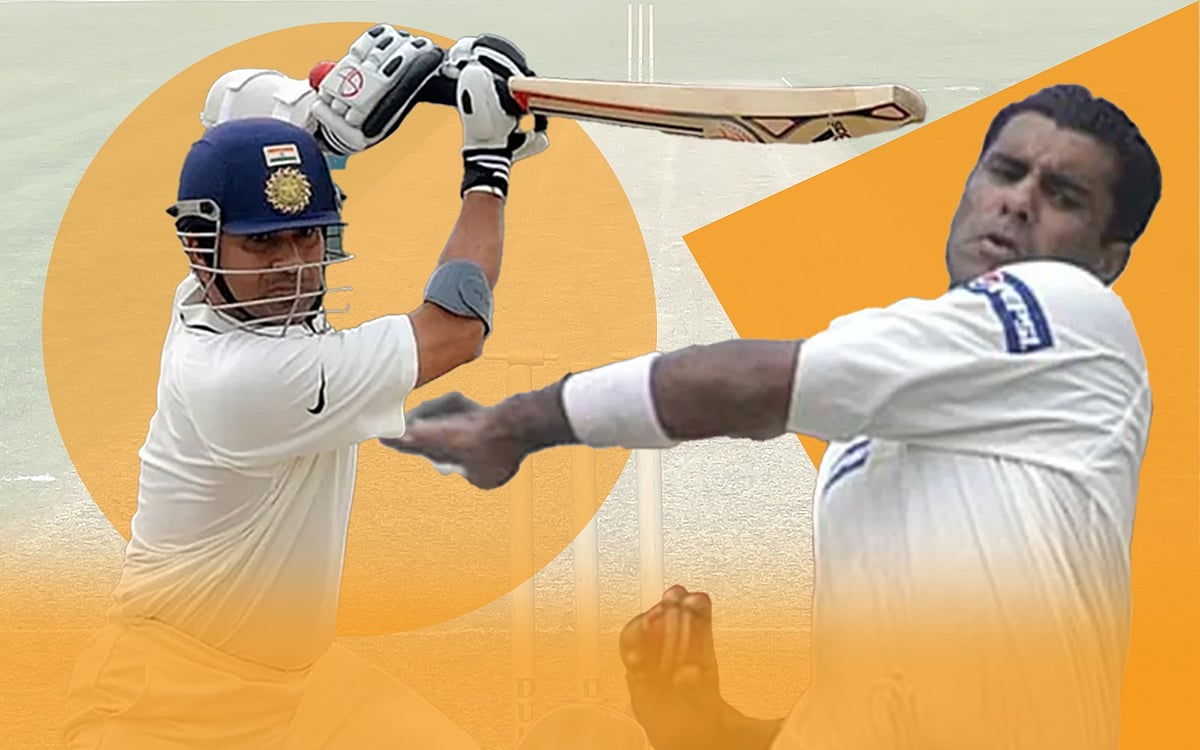
Thirty-seven years ago on this day, two greats of the modern game made their Test debuts in the same match. On 15 November 1989 in Karachi, Sachin Tendulkar and Waqar Younis played their first Test. They faced each other in two Tests in that series. Their Test duel then ended in just four matches in total, which remains one of cricket's great regrets.
Every year when 15 November arrives, the Indian media invariably recalls that Tendulkar made his Test debut on this day so many years ago. Alongside it, almost as a footnote, comes another fact: Waqar Younis, another great of the modern game, also made his Test debut on the same day.
Their Test debuts were not only on the same day but in the same Test. On the day the Karachi Test began, Tendulkar was 16 years and 205 days old and Waqar was 17 years and 364 days old. Both were teenagers, and as batter and bowler they were direct opponents on debut.
The winner of that contest was Waqar Younis. Tendulkar himself has said many times how dark everything seemed when he batted in a Test for the first time. The man whose career would end 24 years later with the feat of a double century of Test appearances felt his first Test might turn out to be his last.
It was Waqar who freed Tendulkar from that ordeal, bowling him with the inswinger that would soon become a nightmare for batters. Even in that innings of 15 runs off 24 balls, though, there were two fours in Tendulkar's on-drives.
Although their Test debuts came together, in terms of introduction to international cricket Waqar was senior by about a month. He had spent much of his adolescence in Sharjah, where his father worked, and made his ODI debut there. He generated such pace there that umpire Dickie Bird recognised him as the fastest bowler in the world. In the West Indies team at that same tournament were Malcolm Marshall, Ian Bishop, Curtly Ambrose and Courtney Walsh.
Before his Test debut, Waqar had already played eight ODIs. After the Sharjah tournament he had also toured India for the Nehru Cup. But injury, the constant companion of express fast bowlers, had begun to appear. After his Test debut he had to sit out the next two Tests of that series.
Tendulkar played both of those Tests and scored his first half-century in the second. He met Waqar again in the final Test of the series at Sialkot. With the first three Tests drawn, Pakistan had prepared a green, grass-covered wicket there to unleash their pace attack.
It was at Sialkot that the first chapter of the Tendulkar story was written, with Waqar in it too. His bouncer struck Tendulkar on the nose and drew blood. Tendulkar wiped the blood away, decided to keep batting, and hit a boundary off the very next ball.
Waqar too understood that the batter who had not seemed 'anything special' at first sight was made of different material, and that he would have to battle him many more times in future. But who could have thought their next meeting in a Test match would come 10 years later?
That is where the regret lies. The contest that should have been seen — Tendulkar at the peak of his form against the two Ws, Wasim Akram and Waqar Younis — was never really seen, because relations between the two countries broke down after that series. While runs flowed from Tendulkar's bat, the two Ws were shaking batters with reverse swing at the same time; but they simply did not meet in Test cricket.
When they finally did, on that 1999 tour of India, Tendulkar was still shining, but the sun of Waqar's career was setting. A body weary from years of bowling at express pace was leaving its mark on his bowling. On that tour, after taking only two wickets in the first two Tests, Waqar was dropped from the team for the third Test.
By the time the two met again in a Test in Chennai after Sialkot, Waqar had played 53 more Tests and Tendulkar 64. Waqar's 275 wickets at an average of 21.57 in 55 Tests had earned him a place among the greatest fast bowlers of all time. Tendulkar's 4,820 runs at 54.77 in 64 Tests had put him on the road to immortality as well.
In one-day cricket they met more often. Waqar faced Tendulkar in 23 ODI matches and dismissed him four times.
But the Test count stops at just four — two Tests in 1989 and two more in 1999. Two great careers that began together and ran in parallel crossed each other only those few times.