50-kilowatt rooftop solar plant opens at Jhalokathi DC office, expected to save about Tk 90,000 a month
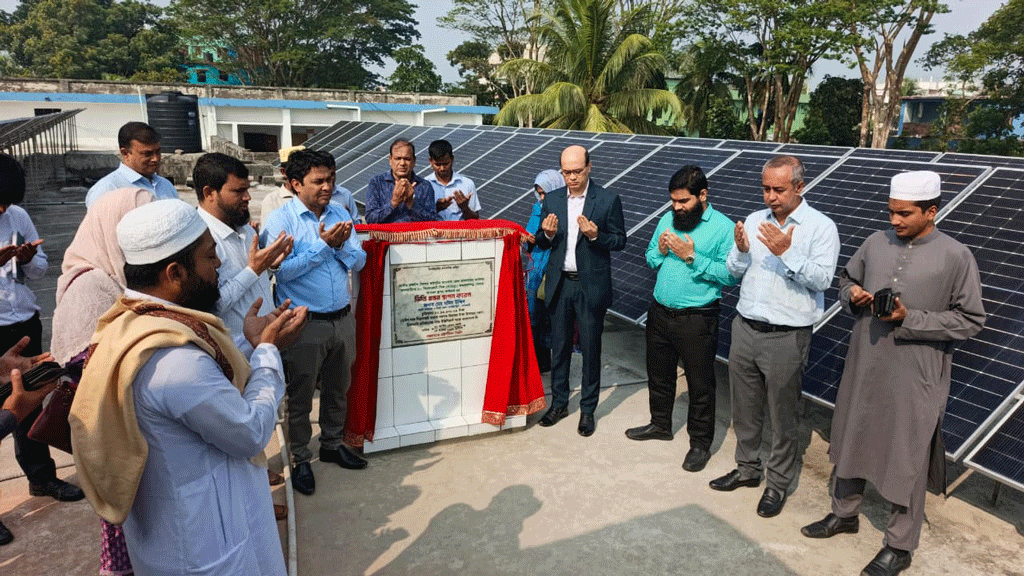
A 50 kilowatt-peak rooftop solar plant has been inaugurated at the Jhalokathi Deputy Commissioner's office. Installed under the national rooftop solar programme, the plant has a target of producing about 200 units of electricity a day.
District Commissioner Md Momin Uddin inaugurated the plant, installed on the roof of the three-storey office building, at 9:30am on Sunday (15 November).
According to the DC office, the project was taken up under the national rooftop solar programme, implemented by the Cabinet Division. The contract value was set at Tk 22,99,976.69 and Engineers Pack Bangladesh Limited worked as the contractor.
Alongside meeting the office's own electricity demand, surplus power from the plant can be supplied to the national grid. Officials expect it to save about Tk 90,000 a month in electricity bills.
Under the net metering system, surplus electricity can be supplied to the national grid at Tk 10.50 per unit, and under the rules the money will be paid into the customer's bank account every three months.
Local government branch deputy director Julia Sukaina, Additional Deputy Commissioner (General) Md Kawsar Hossain, Ozopadico executive engineer Md Matiur Rahman, youth development department deputy director Md Alauddin and environment department assistant director Anjuman Nesa, along with officials from various government offices, attended the inauguration.
Under the programme, new entrepreneurs can also apply to be listed as rooftop solar service providers. Applicants must submit a trade licence, TIN, a bank solvency certificate of Tk 10 lakh and an updated tax certificate; the application fee is Tk 500 and listing will remain valid until 31 December 2028.
To receive special incentive benefits, a solar system must be commissioned by 28 February 2027, and the benefit will remain effective until 28 February 2030. Officials believe expanding solar power use in government institutions will cut electricity costs and promote renewable energy.