Sri Lanka Rises to Upper-Middle Income Status, but Families Still Feel the Squeeze
By the World Bank's reckoning, Sri Lanka is now an upper-middle income country. Last July it was moved up from the lower-middle income list to the upper-middle income list.
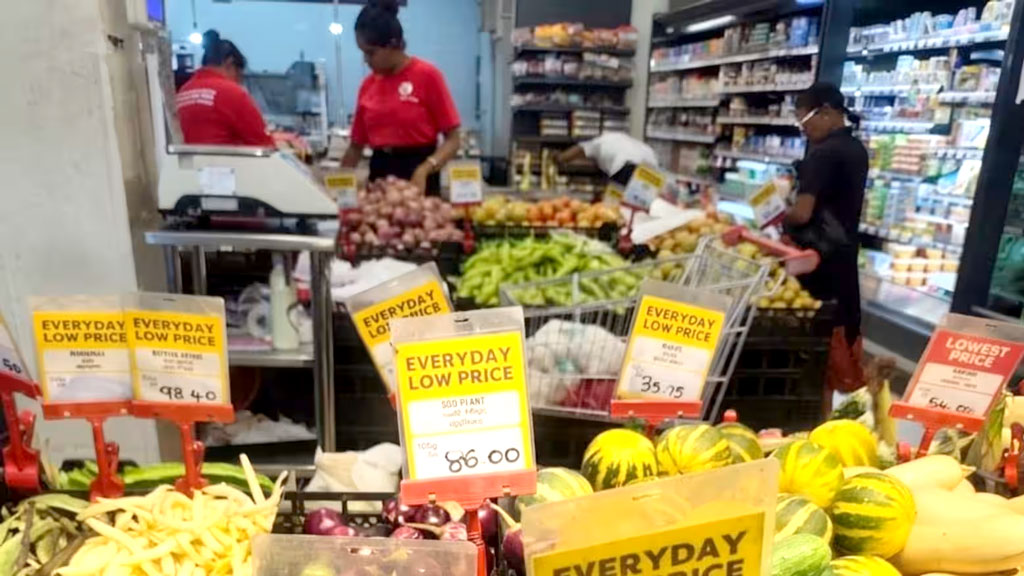
But that recognition does not match the real lives of ordinary people in the country. With inflation, a rising cost of living and falling purchasing power, hundreds of thousands of people are still struggling under the pressure of the economic crisis.
A report by the Japan-based outlet Nikkei Asia tells the story of Susantha Jayabira, a 53-year-old three-wheeler (tuk-tuk) driver in the capital Colombo. Before the economic crisis his monthly income was more than 140,000 rupees; it has now fallen to about 100,000 rupees.
According to the report, because fuel and other costs have risen, people are avoiding tuk-tuks even for short distances, travelling by bus or walking instead. That has cut the drivers' passengers.
Salaried families face the same situation. Kushani Joseph, the sole earner in a five-member family with two children and elderly parents, earns 185,000 rupees a month yet cannot save anything.
To meet household expenses, their food list has had to shrink as well. Where every meal once had four kinds of vegetables and meat, they are now limited to two kinds of vegetables. Fish or chicken is possible at most twice a week.
By the World Bank's figures, Sri Lanka's per capita gross national income (GNI) was 3,870 dollars in 2024 and rose to 4,670 dollars in 2025. The threshold for upper-middle income countries is 4,636 dollars — meaning the country moved up by a margin of just 34 dollars.
Economists say, however, that this rise in national income does not reflect an improvement in ordinary people's living standards. Asanka Wijesinghe, a researcher at Sri Lanka's Institute of Policy Studies, says that after adjusting for inflation, household consumption spending in 2025 was 7.9 percent higher than in 2019, but real labour income fell by more than 40 percent between 2019 and 2023 — a loss that has not yet been fully recovered.
World Bank senior economist Jacob Engel says the country's poverty rate doubled during the crisis and is still higher than before it. Real wages are also about 12 percent lower than in 2019.
Former central bank deputy governor W. A. Wijewardena has described the graduation as a 'technical promotion'. In his view, a population decline of about 0.7 percent also played a role in raising per capita national income.
There are also fears that Sri Lanka's export benefits in the European Union and United Kingdom markets may shrink in future. About 30 percent of the country's merchandise exports go to those two markets. Tariffs on garments in particular could rise from zero to about 12 percent.
In Kushani Joseph's words: 'They call it an upper-middle income country, but we see no improvement in our daily lives. For ordinary people it is a meaningless label. Our lives are getting harder day by day.'