Plan to bring in several hundred investors for essential imports, commerce minister tells parliament
Commerce Minister Khandaker Abdul Muktadir has announced a plan to bring several hundred investors into the import trade for essential goods, in order to reduce the control of a few large firms. Under a public-private partnership (PPP), the Trading Corporation of Bangladesh (TCB) will import goods together with private investors. The goods will be sold at market prices and the investors will receive a share of the profit.
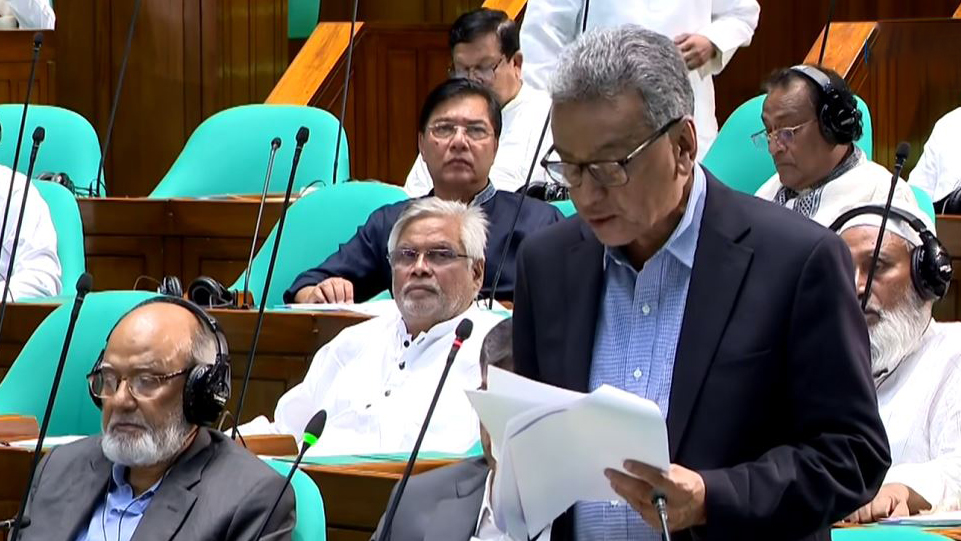
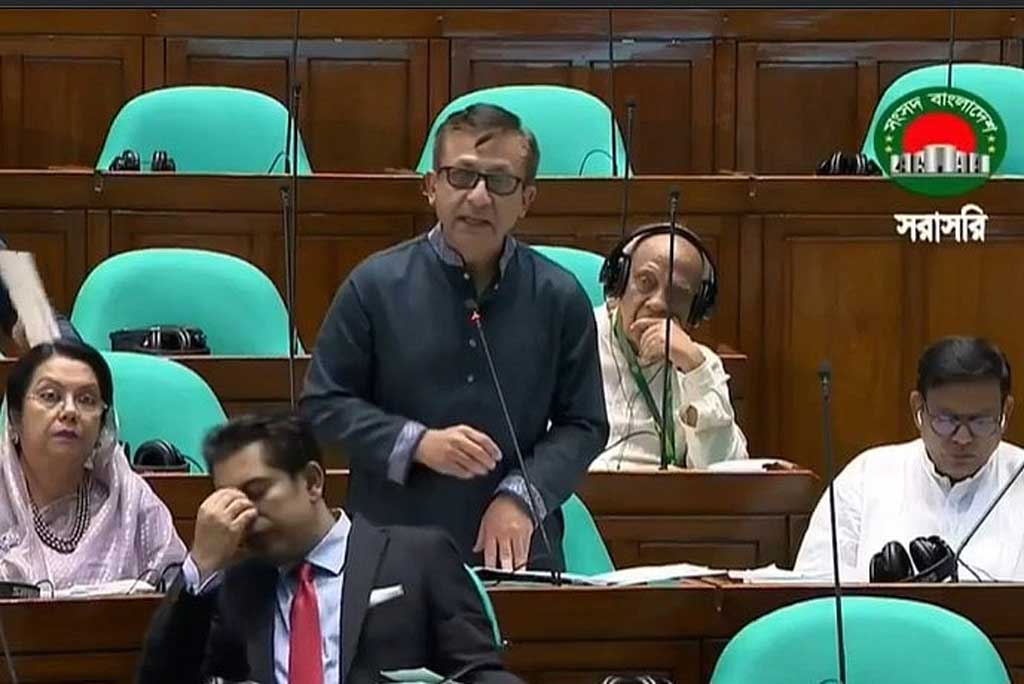
The commerce minister announced the plan in parliament on Sunday in reply to a question from Jamaat member of parliament Nazmun Nahar on a matter of urgent public importance under Rule 71 of the Rules of Procedure.
The commerce minister said importing some essentials, including sugar and edible oil, requires huge amounts of money. Importing a single ship's cargo requires an investment of more than Tk 100 crore. For that reason, it is difficult for ordinary traders to enter the import business for these goods, he said.
Abdul Muktadir said that, because of the huge investment required, the import business for essentials has long remained confined to a handful of firms. The government is planning to launch a new arrangement under TCB to change this situation, he said.
In his remarks, the commerce minister said a PPP trading activity will be conducted under TCB in the coming days to address this long-standing monopoly, or people's concern about it.
Explaining the plan, the commerce minister gave the example of a sugar consignment. He said, suppose TCB imports sugar worth Tk 200 crore. For that, 200 or 400 investors will be invited from the private sector. Each will be able to take part in importing that consignment by investing Tk 50 lakh or Tk 1 crore.
Under the example, TCB will import the goods and sell them at market prices. The investors will then receive their due share of the profit.
The commerce minister said the import business for essentials that require huge capital has long been confined to eight, 10 or 15 business groups. Under the new arrangement, the government wants to bring at least several hundred investors into this business, he said.
However, the minister did not give details of when this arrangement will be launched, or what the rules will be for selecting investors and distributing profits.
In the same discussion, the commerce minister stated the goal of raising TCB's benefit coverage to one crore families. He said about 78 lakh families are currently being given rice, lentils, oil and sugar at subsidised prices every month through TCB. The government wants to reach one crore families with this benefit. There is also a plan to increase the number of products supplied through TCB in future, he said.
Earlier, Nazmun Nahar said the prices of rice, lentils, edible oil, onions, eggs, fish and meat are moving beyond people's purchasing power. She noted that bearing the cost of essentials has become difficult especially for low- and middle-income families, working people and elderly people on limited incomes. She asked what steps the government is taking to stop artificial crises, illegal hoarding and manipulation in the market.
In reply, the commerce minister said the Directorate of National Consumer Rights Protection is conducting regular monitoring so that the market does not fall under the control of any particular group. He also compared the market prices of several essentials on November 12 in 2024, 2025 and 2026.
The minister said large-grain lentils cost Tk 105 to 110 per kg on November 12, 2024, Tk 90 to 110 in 2025, and Tk 90 to 100 on the same day this year. Sugar cost Tk 128 to 135 per kg in 2024, Tk 95 to 110 in 2025, and Tk 110 to 115 this year. However, he also said the price of ordinary-quality dates has risen from Tk 250 in 2024 to Tk 350 at present.
In a supplementary question, Nazmun Nahar asked about the government's steps to reduce the price gap between farmers and consumers, and its plan to keep essential prices tolerable during Ramadan. In reply, the commerce minister said the main way to keep essential prices stable is to ensure supply according to demand. He expressed hope that the supply of essential goods will be satisfactory during the coming Ramadan.