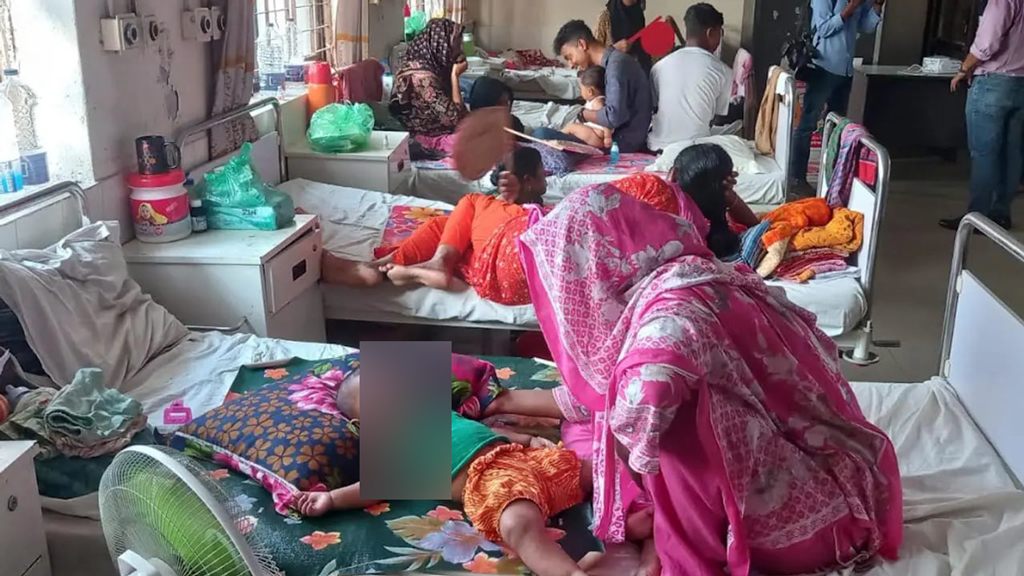
Measles returns through vaccination gaps, deaths in Bangladesh pass 1,300 with nearly 250,000 suspected cases

Measles had once been brought under control through a successful vaccination programme. But gaps in vaccination continuity, vaccine supply shortages and weaknesses in public health management have brought the highly contagious disease back in a severe form, and the situation in Bangladesh is now especially worrying.
Eight more people have died with measles symptoms in the country. From 15 March this year to Sunday (15 November), deaths from measles and measles symptoms have reached 1,314.
Of them, 1,209 died with measles symptoms and 105 died after testing confirmed measles.
According to the Directorate General of Health Services' latest figures, measles symptoms have newly appeared in 1,414 people in the country. In the same period, 158 people tested positive for measles.
In total, from 15 March to date, suspected cases stand at 248,060 and confirmed cases at 25,269.
The World Health Organization (WHO) recommends that at least 95 percent of a population receive two doses to keep measles under control. Yet in 2025 only 84 percent of children worldwide received a first dose and 77 percent a second dose, leaving a huge number of children unprotected.
According to the US Centers for Disease Control and Prevention (CDC), 5,412 measles cases had been detected in the United States by 12 November, compared with 2,289 cases in 2025. Ninety-six percent of those infected had not been vaccinated or their vaccination status was unknown. The Pan American Health Organization counted 57,666 measles cases in 17 countries and territories of the Americas from January to October 2026.
For Bangladesh, a study published in November 2026 in the CDC journal Emerging Infectious Diseases identified several causes. Analysis by researchers from the health directorate and IEDCR found that MR vaccine stocks running out in 2024-25, gaps in routine vaccination and the suspension of nationwide supplementary vaccination left many children unprotected.
The study said using old population figures to set vaccination targets hid the real gap. Official coverage therefore looked satisfactory while many children in reality received no vaccine. The government has formed a three-member commission to investigate allegations of delay, irregularity and administrative failure in vaccine purchase and distribution, with instructions to report within 60 working days on responsibility for the period from 8 August 2024 to 17 February 2026.
Public health expert Dr Mushtaq Hossain said that while vaccination gaps raised infections, an over-centralised treatment system is one reason for the higher death rate. Strengthening primary care at community level and ensuring proper isolation could have prevented many deaths. He advised treating the outbreak as a public health emergency and increasing field-level services and funding.
Dr Md Mostafizur Rahman, senior director of icddr,b's infectious diseases division, believes immunity gaps, weak surveillance and management limits are behind the situation. Progress on the first dose but a gap in the second dose has created an at-risk population among children under five, he said. He stressed genome sequencing of samples from every outbreak, adequate vaccine stocks and an accurate list of unvaccinated children.
Children in Bangladesh are usually given the MR vaccine at nine and 15 months. Considering infections among babies under nine months, the government has adopted a programme to vaccinate from six months. Children with measles can develop complications such as pneumonia, diarrhoea and brain inflammation, and malnourished children face higher risk. WHO estimates measles vaccination saved about 59 million lives from 2000 to 2024, yet about 95,000 people died of measles worldwide in 2024 alone, most of them children under five.