Arab Leader Ahmad Tibi Elected Knesset Deputy Speaker Despite Far-Right Opposition
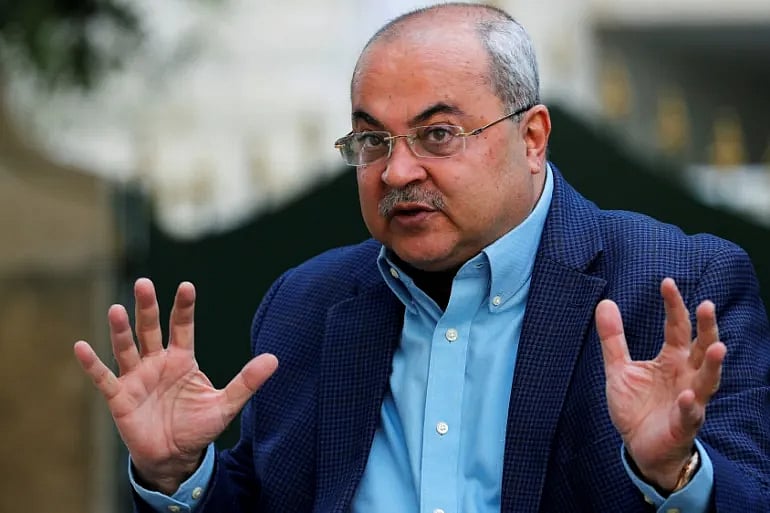
Israeli Arab leader Ahmad Tibi has been elected deputy speaker of Israel’s parliament, the Knesset, overcoming opposition from the hard right. A physician turned politician, Tibi once served as an adviser to Palestinian leader Yasser Arafat; now, from inside Israel’s parliament, he is demanding that the country become ‘a state of all its citizens’.
After his election in the recent vote, Tibi told Al Jazeera: ‘The Likud party and Itamar Ben Gvir tried to prevent my election as deputy. But despite reckless incitement, they failed.’ Tibi sees the failure of Prime Minister Benjamin Netanyahu’s Likud party and hard-right National Security Minister Itamar Ben Gvir as a political victory.
Referring to the Joint List, the alliance of Israel’s Arab-majority parties, Tibi said: ‘This is a fair achievement for the Joint List, which won 11 seats.’ Tibi chairs the Arab Movement for Renewal, known as Ta’al, and has long represented Israel’s Palestinian citizens.
The deputy speaker’s post is not new to Tibi. According to his profile at the European Council on Foreign Relations (ECFR), he also held the position from 2006 to 2013.
Tibi was born on 19 December 1958 in Tayibe, in the north of what was then Palestinian territory. His family was displaced from Jaffa during the 1948 Nakba, and he was born into that refugee family.
Tibi first chose medicine as his profession. In 1983 he graduated with honours in medicine from the Hebrew University of Jerusalem. Over time, however, his political activism came to overshadow his identity as a doctor.
In 1984, Tibi met Palestine Liberation Organization (PLO) leader Yasser Arafat in Tunis, the Tunisian capital. At the time, Israeli law treated the PLO as a ‘terrorist organization’. On his return home, Israeli police questioned Tibi, but no formal charges were brought against him.
Tibi served as Arafat’s political adviser from 1993 to 1999. At the 1998 Wye River conference in Maryland, in the United States, he served as spokesman for the Palestinian delegation. Netanyahu was then in his first term as Israel’s prime minister; at the conference Israel agreed to withdraw troops from parts of the occupied West Bank, while the Palestinian Authority agreed to step up its campaign against armed groups resisting the occupation. According to Al Jazeera’s report, like other agreements, Israel abandoned the Wye River accord within a short time.
In 1996, Tibi founded Ta’al together with a group of Arab academics. Three years later, in 1999, he was elected to the Knesset for the first time, contesting on the Balad-led Joint List. He later resigned from Balad and rebuilt Ta’al.
Describing his own identity, Tibi says he is an ‘Arab Palestinian with Israeli citizenship’. He supports the right of Palestinian refugees to return to Israel and a two-state solution. Opposing the definition of Israel as a ‘Jewish state’, he calls it a ‘racist state’ and demands that it become ‘a state of all its citizens’.
Because of his outspoken positions and street-level activism, Tibi has repeatedly been targeted by the Israeli government and violent far-right activists. During the second intifada, in September 2000, his right arm was broken as he opposed Ariel Sharon’s entry into the Al-Aqsa Mosque compound.