Dhaka-Sylhet highway to become an expressway, cost rising by Tk 4,023 crore
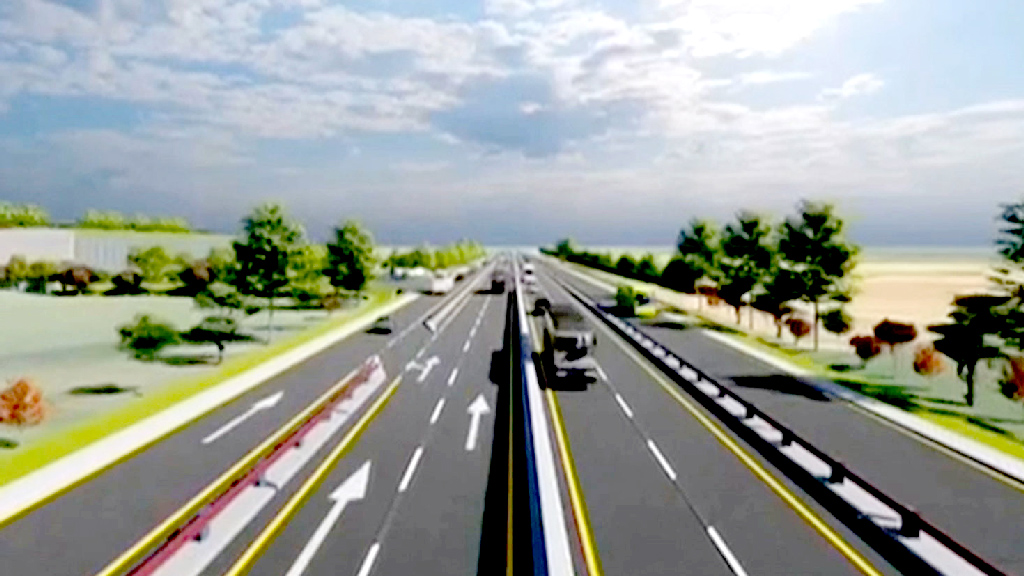
The Dhaka-Sylhet highway is being converted into a six-lane expressway. The project authority has sent the first revised development project proposal (DPP) for the ongoing six-lane highway project to the Planning Commission through the Road Transport and Highways Division, sources in the division said.
The cost will rise by Tk 4,023 crore, from the originally approved Tk 16,918 crore to Tk 20,941 crore. The implementation deadline is also proposed to be extended from December 2026 to December 2029. Costs are rising by about 23 percent because new infrastructure has been added; however, under the project's original plan, the cost of building the 209 kilometres of road, bridges and flyovers is not rising.
Under the proposal, the 209.328-kilometre expressway from Kanchpur in Dhaka-Narayanganj to Pir Habib Rahman Chattar in Sylhet will have controlled entry and exit facilities. The original project planned to upgrade the two-lane highway to six lanes with separate service lanes on both sides. The road length remains unchanged in the revised DPP.
The 22 overpasses and 27 underpasses that were dropped from the original project to cut costs have been re-added in the revised DPP, along with flyovers. Sources said overpasses, underpasses, flyovers and pedestrian underpasses are being added following a road safety review and to remove design limitations.
The revised DPP proposes 17 flyovers and rail overpasses, 22 underpasses for vehicles, 34 underpasses for light vehicles, 89 pedestrian underpasses, 15 cattle underpasses and 2 wildlife underpasses. The number of foot overbridges is proposed to rise from 26 to 45. The original DPP had 13 flyovers and rail overpasses.
Project documents say that if the revised design is implemented, travel from Dhaka (Kanchpur) to Sylhet will take about three hours. Travel time will fall by an average of two hours compared with the existing design. Vehicle speed, road capacity and travel-time reliability will also increase, while accident tendency and air pollution will fall, the documents say.
According to the documents, the original design was prepared in 2015 and reviewed in 2020. The 22 overpasses and 27 underpasses recommended by the feasibility study were dropped to cut costs. That limited safe crossing and turning opportunities on the highway and created risks to achieving the desired vehicle speed. A consultancy service called 'Value Addition in Road Safety' (VARS) was then added. Analysing vehicle movement data and local residents' opinions, it recommended safety infrastructure at important junctions, markets, industrial areas and economic zones. The Bangladesh University of Engineering and Technology (BUET) reviewed those recommendations. A stakeholder consultation meeting in 2025 then concluded that road safety must not be compromised.
The revised project proposes pedestrian crossings every 500 metres, U-turns every 800 metres for local and slow vehicles and every 4 kilometres for heavy vehicles. It also plans controlled entry and exit, footpaths, service lanes, high New Jersey barriers, bus bays, truck lay-bys and stands for CNG-run auto-rickshaws and rickshaws.
Slow land acquisition and utility shifting are among the main reasons for proposing a deadline extension. According to project documents, land acquisition work is under way under a support project approved in 2018. So far land acquisition progress is 55 percent, road construction progress is 30 percent and about 50 percent of utility shifting has been done. As a result, field construction was obstructed even after contractors were appointed. Work was also disrupted for the first year and a half because of the coronavirus pandemic, lockdowns and limited office activity.
The project documents also say there has been no major maintenance on the Dhaka-Sylhet highway since 2020, damaging the surface layer and, in places, the base layer. Because of the delay, the existing highway will need maintenance for two more years, and that cost has been added to the revised DPP.
Under the revised proposal, government financing rises from Tk 3,673.89 crore to Tk 5,003.82 crore. Asian Development Bank (ADB) financing is proposed to rise from Tk 13,244.68 crore to Tk 15,950.25 crore. However, the loan agreement amount will not need to be increased for this. The government will bear VAT, taxes and administrative costs.
The project, approved by ECNEC in February 2021, was due to finish in December 2026. The revised proposal seeks to extend the deadline, including the defect liability period, to December 2029. The land acquisition project's deadline has also been extended from 2023 first to 2025 and then to 2027.
Roads and Highways Department (RHD) Chief Engineer Md Moniruzzaman said some necessary infrastructure had been dropped from the original Dhaka-Sylhet highway design because of budget limits, but a road safety audit proved their necessity. If the government approves, they will be included in the project; otherwise, there will be a risk of congestion in some places. Land acquisition work is almost at its final stage. He said they are hopeful the project can be finished by 2029, and once implemented the highway will take the form of an expressway.
In the revised DPP, the project's benefit-cost ratio (BCR) has risen from 1.8 to 3.43 and the economic internal rate of return (IRR) from 18.18 percent to 24.59 percent. There are also plans to plant 500,000 trees, install ITS including CCTV along the 209 kilometres of road, and conserve soil using vetiver technology. Work on various infrastructure is currently under way in the 80 to 100 kilometre stretch where land is available.
BUET civil engineering professor Shamsul Haque said, "Many of those who take important project decisions in our country are not technically knowledgeable. As a result, they consider road safety elements as extra cost. Yet infrastructure development around the world follows the safety-first principle." He said those who decide to cut costs by dropping safety elements must also be held accountable if an accident occurs. Blaming only the driver will not do; those who compromise on safety during design and construction must also take responsibility. Safety must be ensured from the planning stage, otherwise adding those elements later raises both cost and deadline, he said.