Section of Crimea Bridge Collapses in Ukrainian Attack, Road Link Paralysed; Kremlin Vows to Rebuild It 'Better Than Before'
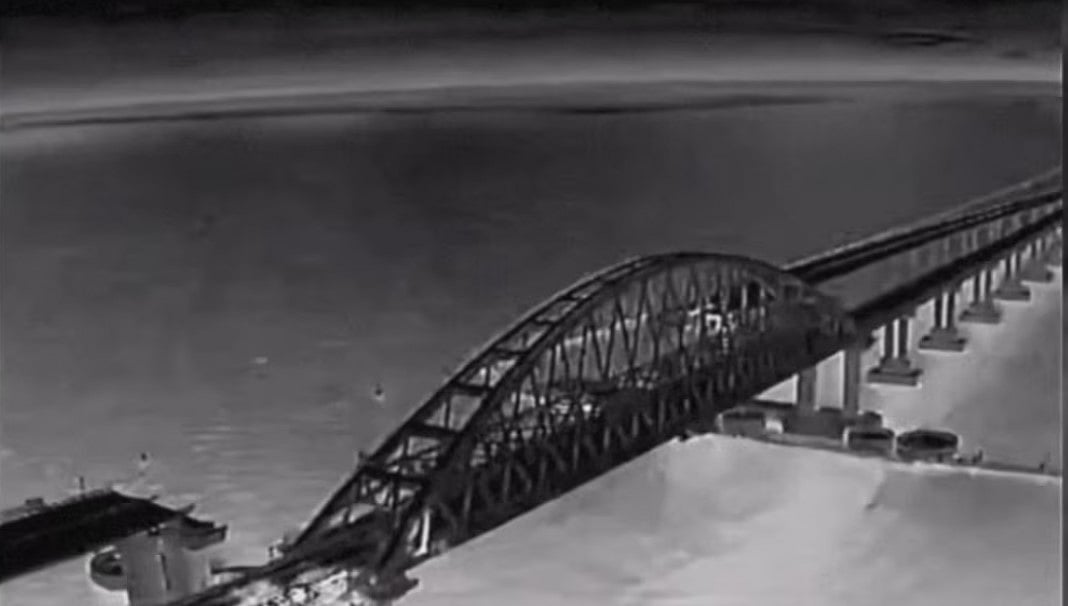
Ukraine has inflicted major damage on the strategically vital bridge connecting Russia to Crimea. Attacks have been carried out in waves there since Monday. Photographs released by Ukrainian officials show a section of the bridge collapsed into the water. President Volodymyr Zelensky said the unprecedented operation had been prepared over several weeks.
Ukraine's military said the road section of the bridge has been rendered inoperative and no vehicles can cross it. The parallel rail section is still standing, but its arch has been damaged. Russia's transport ministry later said some train traffic had resumed.
Zelensky said the attack was the result of a seven-stage operation by the armed forces and security agencies. Before reaching the final target, Ukrainian forces destroyed, step by step, air defence systems, radars, electronic warfare equipment and other designated targets. In one important stage of the operation, several types of Ukrainian-made drones and Flamingo and Neptune cruise missiles were used overnight.
Ukraine's state security agency, the SBU, said the enemy's air defences had been disabled in a planned manner. According to the agency, this proved that no Russian defence system can guarantee the security of illegal structures in occupied territory. Multiple drones also attacked the rail bridge running parallel to the road section at the same time, though photographs showed the rail bridge's arch still standing.
The overnight attack using cruise missiles and drones appears to have caused far more damage than previous strikes. Video showed severe damage to the road section, with parts of the roadway and the arch supporting it protruding from the water below. A large arch of the bridge also appeared to have been destroyed.
The Kremlin said President Vladimir Putin had been briefed on the overnight attack. Kremlin spokesman Dmitry Peskov said the bridge would be rebuilt after the Ukrainian attack and would be “better than before”. He also did not rule out a possible link between the attack and Putin's trip to China. Russia's Investigative Committee confirmed structural damage to the bridge and said a criminal case had been opened on terrorism charges over the attack by Ukrainian armed groups.
According to Russia's defence ministry, the country faced the largest Ukrainian drone attack since the start of the war for a second consecutive day. The ministry claimed 2,256 drones had been shot down.
The attack came at an important moment, as Putin, Donald Trump and Xi Jinping are due to meet on Thursday in Shenzhen, China. Zelensky had warned of major attacks in the days before this meeting. Coming just as Putin seeks to return to the centre of world political attention, the attack could be a source of embarrassment for him.
Meanwhile, Kyiv Mayor Vitali Klitschko said traffic had partially resumed on the Pivnichnyi (Northern) and Pivdennyi (Southern) bridges over the Dnipro River. The two important bridges had been closed after overnight Russian attacks. Shortly before midnight on Monday, loud explosions were heard in Kyiv; Klitschko then said important infrastructure in the city had been damaged and heating and water supplies had been disrupted.
On Tuesday, Zelensky said four ballistic missiles had been fired at the Southern Bridge and three more at the Northern Bridge. Local officials said parts of Kyiv's above-ground metro rail were also damaged in the overnight attack, after civilians had earlier been told to go to shelters. Eight main bridges over the Dnipro connect the eastern and western parts of Kyiv, and an estimated three million residents depend on them to travel from one part of the city to the other.
The Crimea Bridge allows Russian troops heading to the front line to travel by road and rail. Beyond carrying war supplies, the damage is also a major symbolic blow to Moscow. Ukraine has long attacked the bridge but had not been able to disable it permanently. Kyiv is trying to increase Russia's economic losses from the war by attacking oil refineries and depots, while the attack on the Crimea Bridge is an attempt to increase political pressure on Putin.
In 2014, Russia attacked Ukraine's southern Crimean Peninsula and illegally annexed it. The bridge was built afterwards. The infrastructure, built at a cost of $3.6 billion or £2.7 billion, is seen in Russia and Ukraine as a personal pet project of Putin. It was built by his close friend, billionaire Arkady Rotenberg. In May 2018, Putin himself opened the bridge by driving a truck across it.
For Ukrainians, the deeply hated bridge is one of the main symbols sustaining Russia's occupation of their territory. Kyiv resident and engineer Andri told the BBC, “We are drinking champagne!” He said the latest attack would deal a major blow to Russian morale. Some Ukrainians, however, fear Putin may respond by increasing attacks on civilian infrastructure. Andri said he did not know how much worse the Russians could make the situation, since they already attack Ukraine every night with everything they have.
The long-term impact of the attack on the Crimea Bridge is not yet fully clear. However, the risk of a serious transport and logistics crisis for the Russian military has grown considerably. With the arched section collapsed, Crimea's direct road and rail connection with Russia has been severed, at least until the bridge is repaired. A land route still exists through the occupied areas of Ukraine's southern Zaporizhzhia and Kherson regions, although Kyiv has been systematically attacking transport routes in northern Crimea and the bridges and crossings around Chonhar; problems have already appeared in supplying fuel and other equipment along with military goods.
A ferry crossing operates in the Kerch Strait, which connects the Black Sea and the Sea of Azov; the shortfall from the bridge's closure could be partly met by this ferry, but its transport capacity is very limited and the ferry is also at risk of attack. Russia could also keep supplies flowing to Crimea by sea, but that route is risky too, as Ukrainian naval and aerial drones are highly active in the area. In addition, the bridge's debris, especially the huge arch, may be blocking the shipping channel; this could create new problems for the Russian-held Azov Sea ports of Mariupol and Berdiansk.
Russia launched its full-scale invasion of Ukraine in February 2022. Currently, about one-fifth of Ukraine is under Russian occupation. Putin has demanded that Kyiv hand over the areas of the eastern Donbas still under its control. Kyiv has rejected that demand.