US Outage Cluster Was Not an Attack, but Fragile Systems Are the Real Warning, Analysts Say

Over the past week, the United States has suffered one technology outage after another — Microsoft 365 and Outlook going dark, a rare nationwide halt to flights, slow bank transactions and disruption to the National Security Agency's classified network. Analysis says these events were not coordinated sabotage; rather, they are a statistical cluster that exposes real fragility.
According to the report, Microsoft 365 services, including Outlook, went dark worldwide after a latent defect from a July network update surfaced under heavy load. Next, routers at sites in Arkansas and Texas overwhelmed aging air traffic control systems, and the Federal Aviation Administration (FAA) ordered a rare nationwide ground stop. Then Chase and other banks saw transaction slowdowns from a software bug. United delayed departures because of an internal system failure. Finally, reports emerged of disruptions to the National Security Agency (NSA)'s classified internal network.
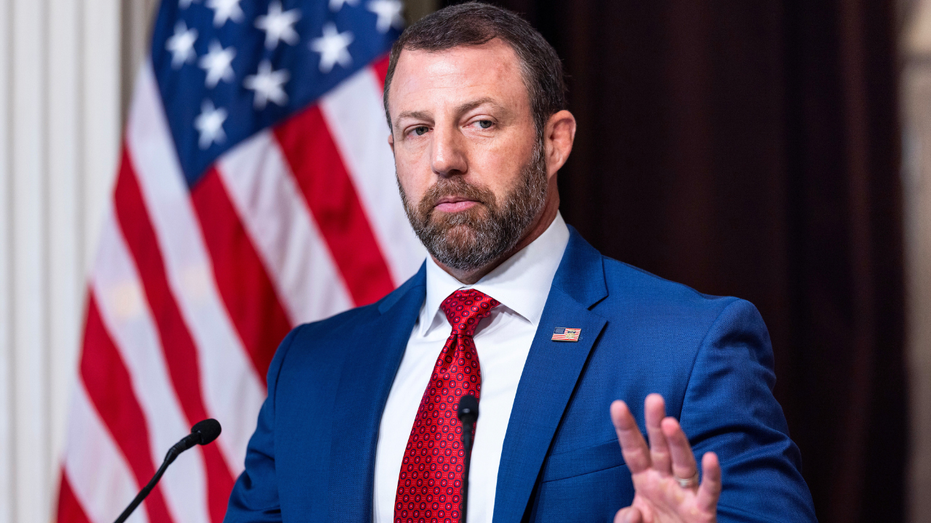
Officials, including Homeland Security Secretary Markwayne Mullin, have stated they are highly confident these were unrelated technical issues, not a cyberattack.
The analysis says that although events this close together feel ominous, the evidence points to a predictable downside of efficiency: concentrated cloud computing dependencies and incompletely tested updates that create single points of failure across email, aviation, finance and more.
But the analysis also warns that the threat is not imaginary. It says that if China or Russia decided to inflict serious damage, the result would not be scattered inconveniences; electricity would fail, water systems would stop, banking and payments would freeze, and cell networks would go dark — all at once. Such an attack would almost certainly accompany or immediately precede kinetic action, most obviously a Chinese move against Taiwan, intended to slow or deter a US response, the analysis says.
According to the analysis, Iran, North Korea, or elements of the Mexican narcostate also have some capacity to harm US critical infrastructure, with Iran being the prime suspect in water system attacks over the past few months.
The analysis further says hostile nations do probe, looking for vulnerabilities, and may even conduct small-scale attacks to test response times. The recent attacks on industrial food freezers and blood banks in Europe and on US military bases are given as examples of gray-zone operations, with the Russians as likely culprits, the analysis says.
China's groundwork is also mentioned in the analysis. Volt Typhoon, assessed as linked to the People's Liberation Army, has pre-positioned access inside US critical infrastructure — energy, water, transportation and communications — with the goal of enabling disruption or destruction in a crisis. Salt Typhoon, tied to China's Ministry of State Security, has focused on intelligence collection, penetrating telecommunications networks to intercept communications and metadata at scale. In the analysis's words, one prepares to break things; the other listens in.
An example discovered during the first Trump administration is also cited in the analysis — a kill switch was found in a high-voltage transformer imported from China.
The analysis also gives information on the high-voltage transformers essential to the power grid. These massive transformers are mostly imported, often from China, with lead times of two to four years. Roughly 70 percent of America's existing units are more than 25 years old. Demand is exploding from data centers, electric vehicles and industrial growth. Startups such as Resolute Grid in Austin, Texas, are responding with domestic production. The firm's CEO, Marcus Owenby, noted, 'Resilience isn't just keeping the lights on. It's how fast you can replace what breaks.'
The analysis concludes that the recent outages are not the opening shots of war. They are a reminder that without power, water, fuel, communications and finance all fail. Domestic manufacturing, strategic stockpiles, faster permitting and a clear preference for American production over adversarial supply chains are mentioned in the analysis as practical steps, not abstractions.