Police Say They Have Sabotage Plot Intelligence Ahead of 19 November Lockdown, Surveillance and Arrests Stepped Up Nationwide

Fresh fears of unrest have arisen around ousted prime minister Sheikh Hasina's announcement of a return to the country and the 19 November lockdown programme. Police and intelligence agencies say they have received information about a major sabotage plan with December in view.
Intelligence sources claim leaders and activists of the banned Awami League and its affiliated organisations are planning coordinated violence, arson and cocktail explosions in the capital and various districts of the country. On the basis of intelligence information, various agencies are examining possible sabotage plans, financing, organisational communication and the activities of field-level workers.
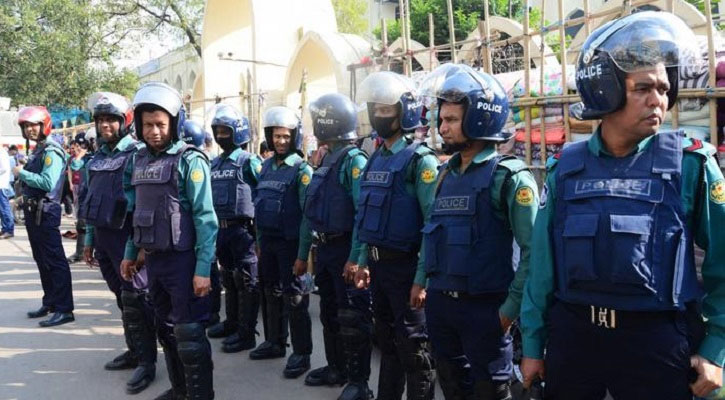
Already, since the start of November, isolated sabotage incidents have occurred in at least 21 districts, including Dhaka, Gopalganj, Tungipara, Natore and Khulna. Law enforcement officials fear these activities may increase further around the 19 November lockdown programme. Surveillance has been increased especially at entry points to the capital, important installations, politically sensitive areas and industrial zones, and members of the police, Border Guard Bangladesh (BGB), Ansar and specialised forces have been deployed.
Dhaka Metropolitan Detective Police (DB) Additional Commissioner Shafiqul Islam told a press conference on Wednesday that 85 cocktail explosions had occurred in the capital in the first 16 days of November. However, he claimed the country's situation remained normal despite these incidents. He said intelligence surveillance had been increased on the basis of information that an organised group is planning sabotage to destabilise the country in December.
According to Police Headquarters, from 7 to 16 November, 49 vehicles were set on fire in various places in the country. In the same period, 59 cocktail explosions occurred. A police vehicle and two police installations were damaged in these incidents. There were 33 cases and 60 people were arrested.
Police Headquarters Assistant Inspector General (Media and Public Relations) Kamrum Munira said that, alongside increased intelligence surveillance, patrols and checkpoints had been strengthened in risky areas. Work is under way through CCTV footage monitoring, cyber surveillance and coordination with intelligence agencies.
The Dhaka Metropolitan Police (DMP) said it had arrested 130 suspected members of the banned organisation in raids in various areas of the capital over the past two days. Torches, cocktails and sticks were also reported recovered from them. Meanwhile, the Special Response Battalion (SRB) said it had recovered 77 cocktail-like objects and gunpowder from an abandoned school building in Santhia, Pabna. The force suspects the explosives may have been prepared for sabotage.
The worst picture of sabotage this month was seen in Gopalganj. Around the banned Chhatra League's 10 November total strike, cocktail explosions occurred in various places in the district town from the previous night. The next day, at Goharadanga Chowrangi crossing in Tungipara, fire was set to block the road and, from a sudden procession, a police vehicle was vandalised and set on fire, disrupting traffic on the Dhaka-Khulna highway. Clashes and blockades also occurred in Kashiani and Sadar upazilas. Police claim 15 unexploded cocktails and seven motorcycles were seized in these incidents.
Outside Gopalganj, sabotage, violence and road blockades were reported in at least 21 districts, including Dhaka, Chattogram, Natore, Khulna, Faridpur, Barguna, Manikganj, Naogaon and Kishoreganj. In Faridpur, a bus driver died in a fire set by miscreants. In Manikganj, 11 leaders and activists of the banned Awami League and its affiliated organisations were arrested over bus arson and cocktail explosions.
Khulna Range DIG's spokesperson and Additional Superintendent of Police (Crime Management) Md Asif Iqbal told Channel i Online that police had arrested 1,434 people in a seven-day special operation in 10 districts of Khulna division. On Wednesday, Khulna Range Police said that in the operation from 11 to 17 November, 462 people were arrested on suspicion of planning, instigating or assisting sabotage and violence, and a further 972 for various crimes. The highest number were arrested in Jashore, 268, followed by Jhenaidah 226, Khulna 204, Satkhira 136, Kushtia 133, Bagerhat 115, Chuadanga 109, Magura 95, Narail 79 and Meherpur 69.
Police say special attention is being given to people's entry and movement in the capital before the lockdown programme. Searches are being carried out at important entry points including Gabtoli, Uttara and Jatrabari. Checkpoints have also been set up at various points in Gazipur, Savar and Narayanganj. Alongside searches of suspicious persons and vehicles, surveillance has been increased around residential hotels, messes and important installations.
Police Headquarters Additional IGP (Crime and Operations) Ahsan Habib Palash said security measures had been strengthened in the capital and across the country on the basis of intelligence agency information. In his view, the banned organisation does not have the capacity to carry out major sabotage, but adequate security measures have been taken considering possible risks. In Gopalganj, 10 platoons of BGB and eight platoons of the Ansar Battalion are deployed; BGB armoured vehicles are also being used for emergencies, and the situation is being monitored through drones and body cameras.
Intelligence officials fear that, instead of large gatherings or processions, sudden attacks, vehicle arson and cocktail explosions may be carried out in small groups. Whether people are being hired for money for such incidents is also under investigation. Former Inspector General of Police Ashraful Huda said where and what kind of incident may occur, who is involved and whether there is organisational communication among them must be identified in advance, and for that, plainclothes police activity as well as the activities of various units and intelligence agencies need to be strengthened.
SRB Director (Law and Media) Wing Commander M Z M Intehab Chowdhury said patrols, checkpoints and intelligence surveillance had been increased at field level to prevent possible sabotage; extra caution is being taken especially in risky areas in the evening and at night, plainclothes members are collecting information, and online rumours and misleading propaganda are also being monitored through cyber monitoring. He said that although there is no major fear around December, the SRB is ready to deal with the situation.