Tense Gopalganj: Police Leave Tungipara, Attacks in Kashiani, More Protests Planned for Lockdown

After two days of violence in Gopalganj, several areas including Tungipara and Kashiani have effectively turned into devastated localities, where the police administration has largely broken down. Although the situation in the district town appeared largely normal by Wednesday evening, a tense atmosphere prevails across the district ahead of Thursday's programme.
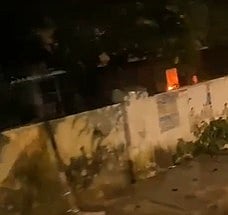
Videos of police personnel leaving Tungipara have spread widely on social media. Fearing attack, most police personnel have left the police station and moved to the district police lines. On Wednesday, Tungipara remained under the control of protesters; there was no police activity there and all work at the police station was closed.
BBC Bangla correspondent Abul Kalam Azad, who visited Gopalganj, reported that the road to Tungipara was closed from the morning because tree trunks had been left across about 8-9 kilometres of road. Local journalists have described the area as now largely a 'devastated locality'.
Meanwhile, in Kashiani, reports said 'mayhem' continued from Wednesday morning until noon. Local journalists said extensive attacks took place on several establishments, including some local BNP offices and several Grameen Bank offices. Chanting 'Joy Bangla', attackers vandalised the thana BNP office and a Grameen Bank office.
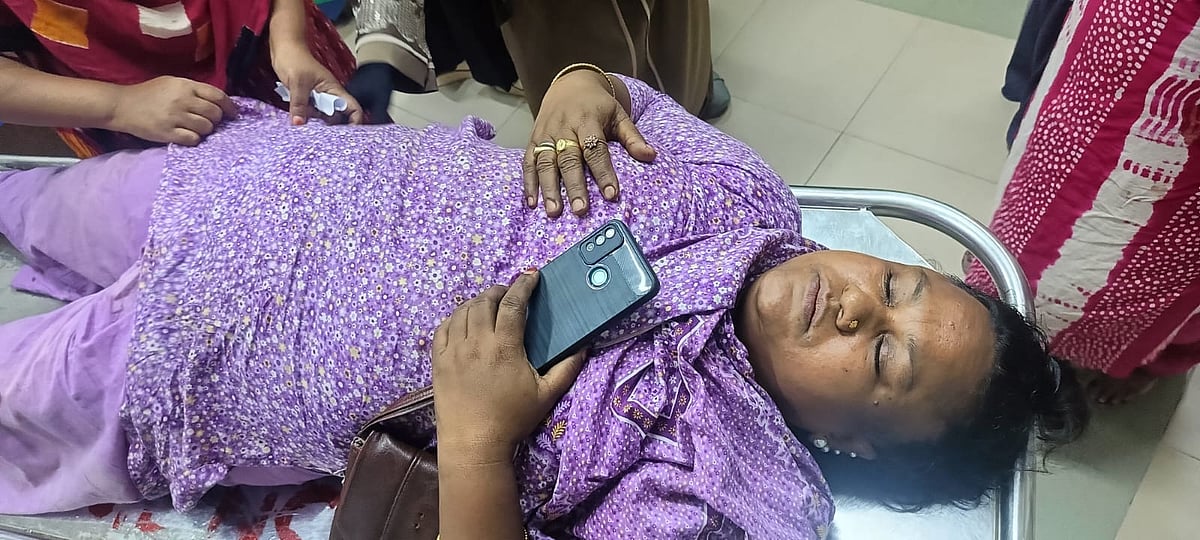
During the attack in Kashiani, the attackers were seen carrying sticks, ramdas, knives and various local weapons. Local journalists said a police member was hacked and injured at the time. In Ramdia of Kashiani, Awami League workers marched and unlocked the Awami League office, which had been closed for the past two years.
Against this backdrop, leaders and activists of the banned Chhatra League held protest marches at various places, including the district town, on Wednesday evening ahead of Thursday's lockdown programme by the Awami League, whose activities have been banned by the government. There were also reports that local Awami League and Chhatra League leaders and activists were preparing for large protests in Thursday's programme.
When the district commissioner, superintendent of police and local administrations of the upazilas were contacted about the overall situation, most of them either did not receive the calls or disconnected them. A few officials said there was 'no situation for them to speak'.
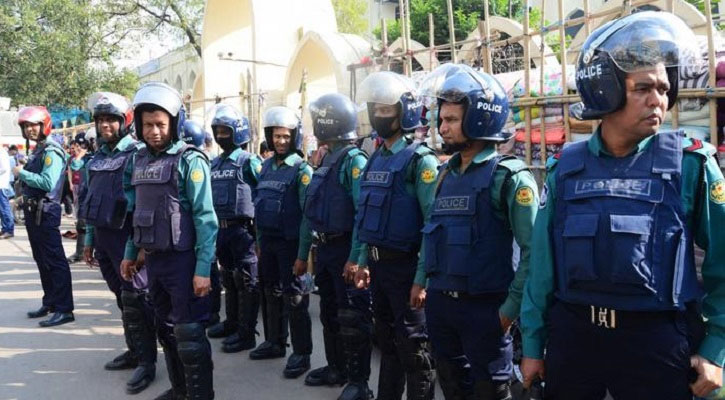
To deal with the situation, 21 platoons of BGB were deployed across the district. From early Wednesday, blockades were set up at various points of the Gopalganj-Pirojpur road by felling tree trunks and burning tyres. Awami League leaders and activists were seen at various points of the road, and Sheikh Mujibur Rahman's March 7 speech was played over microphones.
On the way from Gopalganj to Tungipara, BBC Bangla's Abul Kalam Azad saw the wreckage of at least four burnt vehicles of the law enforcement forces lying at various places along the road.
Most recently, on Tuesday, widespread violence spread in Tungipara centred on the detention of some local individuals. Earlier in the day on Tuesday, police had arrested several Awami League and Chhatra League members accused in the violence of November 10 and 15 in Gopalganj. In the evening, local Awami League leaders and activists surrounded the police station to snatch them away. When police refused to release the detainees, the besiegers attacked the station at one stage.
Local journalists said at least two of the attackers were injured when police fired several rounds to bring the situation under control. At one stage, the Tungipara police station, the house of the local BNP MP and several other establishments were vandalised and set on fire. Police said the detained party leaders and activists held at the station were snatched away.
At around 9pm on Tuesday, after the Tungipara police station was set on fire, the house of BNP member of parliament S M Zilani in the area was also set on fire.
That same night, Home Minister Salahuddin Ahmed spoke in the National Parliament about the situation in Gopalganj. He told parliament that the government does not want to use excessive force and is therefore exercising patience, but that those creating anarchy will certainly be brought under the law in future.
The home minister said: 'Today the fallen fascist force, the mafia force, the so-called Awami League, has become Tungipara Limited. They can only go there and attack a police station, and they have attacked the house of one of our members of parliament. They have attacked the shops of our supporters in the BNP organisation.'
On November 10, around a Chhatra League programme in Gopalganj, the Awami League, whose activities are banned, and the banned Chhatra League were seen taking to the field. After thousands of leaders, activists and supporters joined a large protest march on November 15, the government removed District Commissioner Md Arif-uz-Zaman and Superintendent of Police Md Habibullah.
During the November 15 protest, demonstrators occupied the district Awami League office and opened it. Alongside that, the July memorial at the town's Launchghat area was burnt and a police vehicle was set on fire. Many people were seen with local weapons such as da and ramda, as well as logi-boitha and sticks during the protest, and blockades were set up on several local roads by burning tyres.
Journalists in the district town reported on Wednesday evening that the Chhatra League held another protest march that evening ahead of the November 19 lockdown programme, but no untoward incident took place. Chhatra League leaders and activists also installed a nameplate of Bangabandhu Sheikh Mujibur Rahman Science and Technology University at the local science and technology university; the name had been changed during the interim government. Although joint forces vehicles were seen during the Chhatra League march, the situation was calm.