Hormuz transit insurance hits $64m for a single crossing, US Navy official claims, raising questions over whether the strait is really open

Insurance costs for commercial ships crossing the Strait of Hormuz have soared to $64m for a single transit, a senior United States Navy official has claimed, challenging President Donald Trump's repeated claims that the strait is open for business.
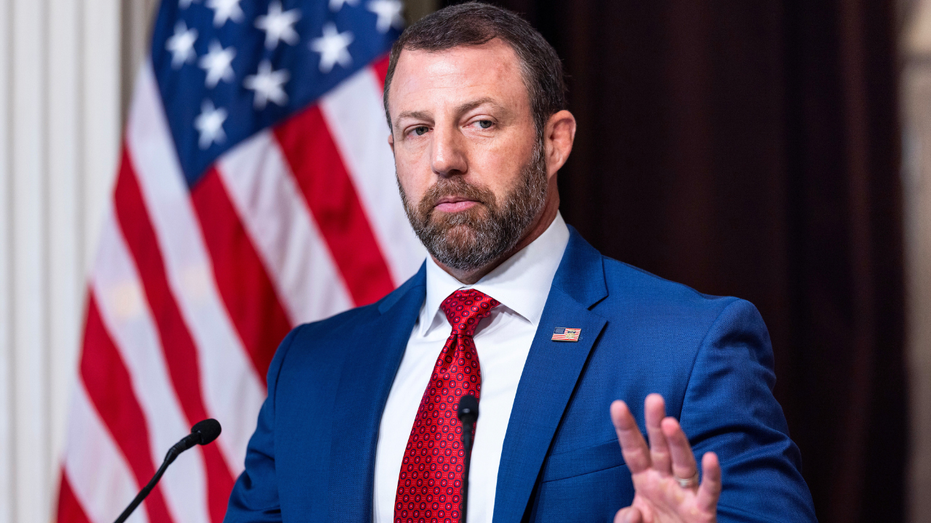
Acting US Navy Secretary Hung Cao made the remarks during a Senate Armed Services Committee confirmation hearing on Tuesday, as lawmakers questioned the cost of the war and its impact on freedom of navigation.
After the US and Israel launched strikes on Iran on February 28, Iran in effect closed the strait, allowing only some ships to pass while targeting those it says are unauthorised. This has raised the risks for shipping in the strait exponentially and caused severe shortages of oil, gas, fertiliser and other essential products from Gulf producers usually shipped via this route.
Cao's claim has not been independently verified and challenges previously reported rises in insurance costs over the course of the nine-month-old conflict.
The remarks come as President Trump insists that the military campaign against Iran is effectively over, and that the US Navy is successfully escorting ships through the strait, even as new attacks on oil tankers and continued restrictions on shipping raise questions about whether one of the world's most important energy waterways is really open.
The strait, the only sea route from the Gulf to the Arabian Sea and the open ocean beyond, carried about one-fifth of the world's oil supplies before the war began.
Although some vessels are still navigating the waterway, shipping remains substantially below pre-war levels, while Iran and the US continue to impose competing restrictions.
During an exchange with Democratic Senator Elissa Slotkin, Cao said insurance costs for commercial vessels had risen dramatically since the conflict began. He initially cited an insurance cost of $54,000 for a single crossing before clarifying that that was what insurance had previously cost, before the war. The cost now, he said, stood at $64m.
Slotkin responded by blaming the war for the increase, arguing that commercial vessels no longer enjoyed the same freedom of navigation they had before the conflict.
Cao also detailed the strain the war has placed on the US Navy, including prolonged deployments, deteriorating conditions and pressure on military resources. 'This war, again, I know it's a strain on our navy,' he told lawmakers.
Democrats accused Cao of being a Trump 'yes man' on the US-Israeli war on Iran, and of downplaying its toll on sailors' mental health after eight suicide attempts on an aircraft carrier. Senator Kirsten Gillibrand, a Democrat from New York, asked him about a sailor who went overboard. Cao told her that sailor was not trying to kill himself and had admitted that, saying he used a life preserver. Gillibrand said Cao was minimising the mental health strain on service members and dismissed his response as 'inhumane'.
Cao's $64m figure appears unusually high, even by the standards of wartime shipping insurance. There is no independently verified evidence that $64m is the current insurance premium for a regular commercial vessel crossing the strait. 'He gave no context. Is he talking about additional premiums for war risk insurance which are set as a percentage of hull value?' Michelle Bockmann, an analyst at maritime intelligence company Windward, told Al Jazeera. 'If so, it depends on the vessel type and the rate paid in order to get proper perspective.'
In July, a report published by S&P Global said that war-risk insurance premiums had climbed to between 7.5 and 10 percent of a ship's hull value, compared with 1 to 3 percent previously. It estimated that insurance for a tanker carrying 270,000 metric tonnes of crude could, therefore, cost approximately $21m. Separately, Reuters reported in September that the cost of moving an oil cargo through Hormuz had risen to roughly $10m-$20m, quoting an executive at Dubai's Emirates National Oil Company (ENOC).
Shipping traffic through the Strait of Hormuz remains approximately 65 percent below pre-war levels, according to the latest weekly report from the United Kingdom Maritime Trade Operations (UKMTO). The UKMTO recorded 308 vessel crossings during the seven days ending November 11.