'Sylhet Tea' brand launched for the world market, with a target of exporting 10 million kg a year
India's Darjeeling and Assam teas and Sri Lanka's Ceylon tea are well known in the world market, but Bangladeshi tea has not yet secured such a place. To change that, the UK-based London Tea Exchange has taken an initiative to popularise Bangladeshi tea worldwide. The company will take more than 10 million kilograms of tea a year from Bangladesh within the next two to three years.
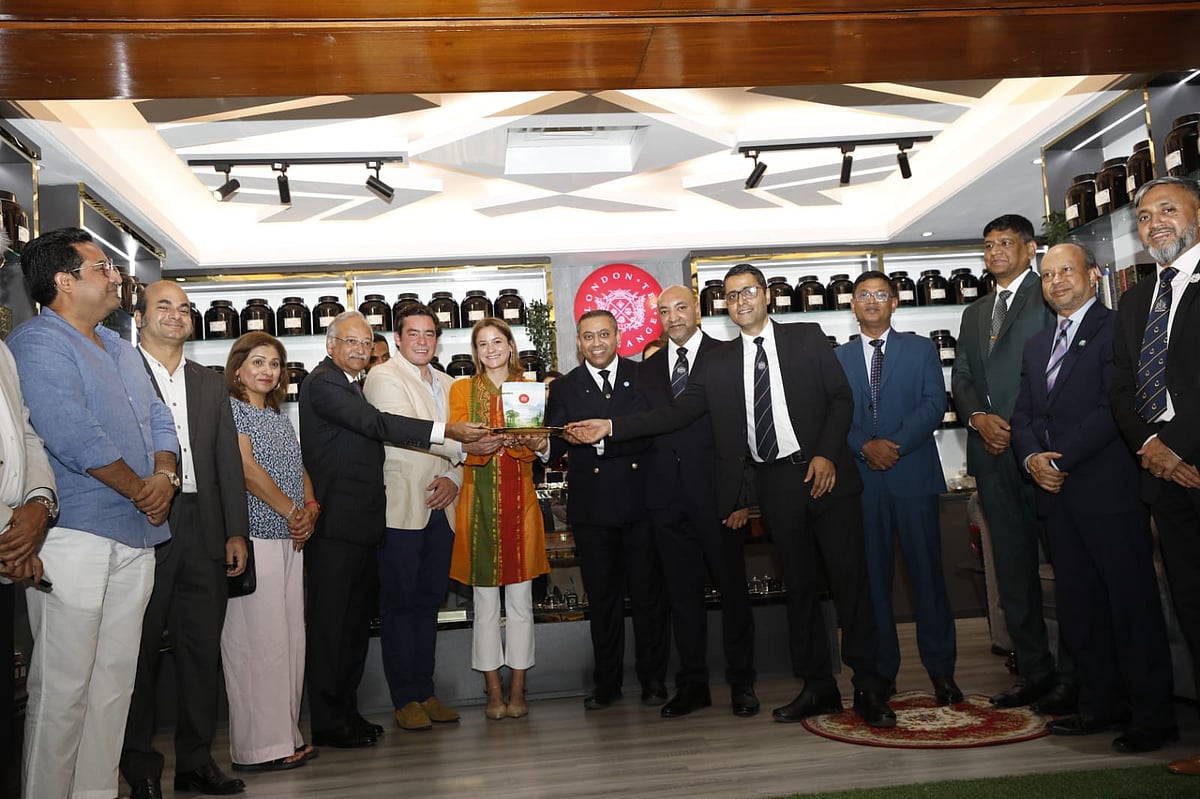
As part of this plan, the London Tea Exchange has launched a new international brand called 'Sylhet Tea'. Portugal's historic Braganza royal family has joined the initiative to build an international brand for Bangladeshi tea. The brand was formally launched on Wednesday at the Sonargaon Hotel in the capital, Dhaka.
Present at the launch were Princess Maria Francisca of the Braganza royal family and her husband Duarte Maria de Sousa Araujo Martins, and Sheikh Aliur Rahman, chairman of the London Tea Exchange Group. Also present were London Tea Exchange director Abdul Mohammad Shalim Mukit, UK lawyer Farhan Khan Farani, journalist Mohammad Tahir Chowdhury, and Kamran T Rahman, chairman of the Bangladesh Tea Parliament and a former president of the Metropolitan Chamber.
The London Tea Exchange said orders for the new brand's tea have already been received from 14 countries, including the United Kingdom, Japan, the United Arab Emirates and the United States. It has also signed a deal with Plaza Premium, which operates international airport lounges. Under that deal, the company plans to supply tea to 700 airport lounges in around 70 countries, where Bangladesh's 'Sylhet Tea' will be served.
London Tea Exchange Group chairman Sheikh Aliur Rahman said: 'Our target is to export more than 10 million kilograms of tea a year from Bangladesh within the next two to three years. We have seen that even after meeting domestic demand, about 14 million kilograms of surplus tea remains in Bangladesh. We want to create the opportunity to export all of that surplus tea to the world market.'
Sheikh Aliur Rahman said he has been working on the plan to introduce Bangladeshi tea to the international market for about five years. He began the initiative's research and development work in 2021. The London Tea Exchange's own office in Bangladesh and its factory in Moulvibazar opened a year ago. It also has an experience centre at the Sonargaon Hotel in the capital.
The London Tea Exchange has no tea garden of its own in Bangladesh. It currently works with 14 tea gardens in the country. Alongside collecting tea from these gardens, it trains workers, managers and factory staff to improve production quality.
The company's chairman Sheikh Aliur Rahman said: 'Five-star hotels in the world's big cities serve Darjeeling, Assam or Ceylon tea. But why is Sylhet or Chattogram tea not available there? This question occupied me for a long time. Later I understood that Bangladeshi tea producers focus mainly on the local market. There is a lack of experience and skills to make products suited to international market demand.'
One of the main problems of Bangladesh's tea industry is the comparatively low price of the tea produced. According to Sheikh Aliur Rahman, because the gardens do not get good prices, there are also limits on raising workers' wages. In Bangladesh, tea usually trades at between 220 and 250 taka per kilogram. But the London Tea Exchange has started paying from 350 taka per kilogram for improved-quality tea.
The London Tea Exchange is making significant investment to expand its business in Bangladesh. It has already set up an office, a showroom and a factory. It is also spending money on training garden workers and improving product quality. Asked about the exact amount of investment, Sheikh Aliur Rahman said: 'We have made significant investment in Bangladesh. There is a plan to take the investment to the level of several million US dollars. But I do not want to disclose a specific figure right now.'
The company's long-term plans include setting up a modern tea testing laboratory in Bangladesh. At present, samples of the tea it collects have to be sent to India or Sri Lanka for testing. Tea that does not meet the standards is not bought.
Discussions are under way on building a model tea estate at three possible sites in Sylhet and Chattogram, Sheikh Aliur Rahman said. However, the initiative has not progressed much so far for various reasons, including garden owners' reluctance to change old production methods. In his view, Bangladesh's tea industry lacks its own international brand. If new entrepreneurs and brands emerge, the export market for this country's tea will also expand.
Sheikh Aliur Rahman believes reforms are needed in three areas to make Bangladesh's tea industry competitive in the international market: easy-term financing, improved packaging, and increasing the skills of workers and managers. In his view, tea should be treated as an agricultural product, and entrepreneurs in the tea industry should receive loan facilities like other agriculture-based enterprises.
Sheikh Aliur Rahman said demand is growing in the world market for value-added teas blended with fruit, flower, spice and herbal ingredients. He said there is a plan to bring various blended teas, including Earl Grey, to market next year under the new 'Sylhet Tea' brand.