A Day in Natore, City of Banalata Sen and Rani Bhabani: From Uttara Ganabhaban to Kanchagolla
The place forever linked with Banalata Sen is called Natore. Yet, remarkably, another powerful woman also lived here. Her name was Bhabani, known as Rani Bhabani.
That was long ago. This woman managed her estate seated before Nawab Alivardi Khan, grandfather of Siraj-ud-Daulah, the Nawab of Bengal. It is said that even the Nawab did not easily speak against her wishes — such was Rani Bhabani's authority. On one side Banalata Sen, who captured hearts; on the other Rani Bhabani, who outmatched all in politics — Natore will probably live in people's minds forever for these two reasons. The taste of its kachagolla may add a little more.
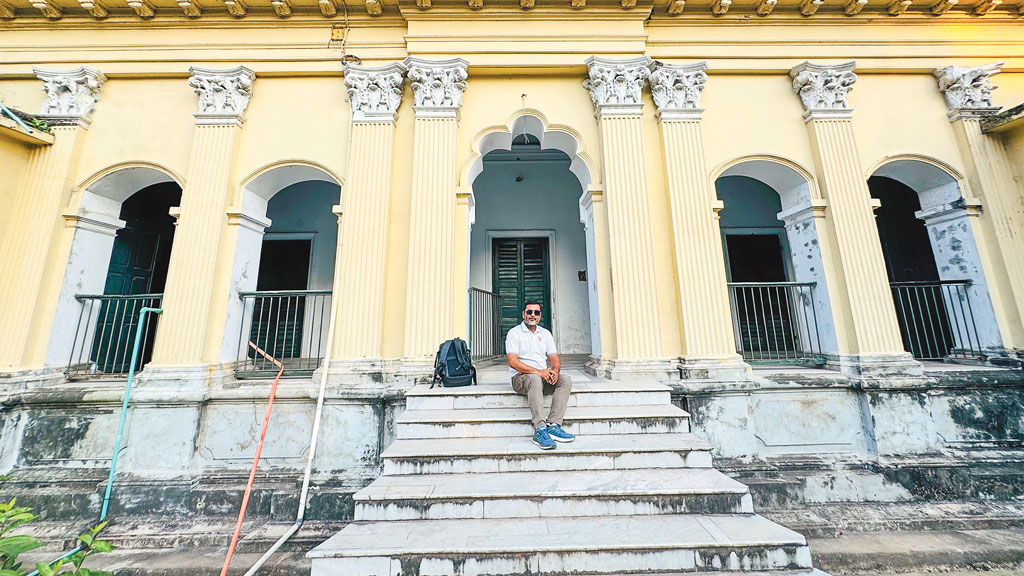
Three kilometres north of Natore town, at Dighapatia, stands Uttara Ganabhaban. It was once a palace of kings; over time the palace has come to be known as Uttara Ganabhaban. Anyone would be struck by its entrance — the ornate gate carries a beautiful clock.
Entering after paying the entry fee, visitors see two wide lakes on either side. Various species of birds live in the tall trees on the quiet lake banks. On the left side of the Ganabhaban, surrounded by natural beauty, stands the Rani Mahal.
Dayaram Roy, founder of the Dighapatia royal family, built the main part of this palace and some adjoining buildings in 1734 on about 43 acres of land. Later, Raja Pramadanath Roy enclosed the palace with a boundary wall and built a total of 12 buildings, large and small, inside, including the richly ornamented main building.
The palace was damaged in a devastating earthquake in 1897. Later, with the help of foreign experts, engineers and painters and local artisans, he rebuilt the palace on 41.5 acres of land; it took about 11 years to complete. Blending Mughal and Western styles, he made the ornamented building a rare royal palace. It houses a museum of objects used by the kings of that era.
Just a five-minute auto-rickshaw ride from Uttara Ganabhaban is Rani Bhabani's house. The founder of the Natore royal family was Raja Ramjiban Roy. Rani Bhabani was married to his adopted son Ramkanta Roy. After Raja Ramkanta's death in 1748, Bhabani took charge of the Natore estate.
Entering this palace, visitors see old buildings, a wide courtyard and halls — they seem to carry one back several hundred years. In the eighteenth century, Bhabani was one of Bengal's most powerful landlords. She also holds a special place in history for education, religious institutions, public welfare and charity. Many structures of this palace, once spread over about 120 acres, have now been lost to time.
If touring the two palaces makes you hungry, you can go to the famous kachagolla shop founded by Madhusudan Pal in the Kalibari area. Kachagolla costs 600 taka per kilogram.
Natore town can be reached by bus or train from any district of the country. From the town, about 3 kilometres by auto-rickshaw or CNG-run auto-rickshaw brings you to Uttara Ganabhaban; the Rajbari is beside it. Natore town has residential hotels of various standards and restaurants for staying and eating; there are also food hotels beside the Ganabhaban.