Rohingya Verdict Is Historic but Enforcement Is in Doubt, Crisis Group's Horsey and HRW React
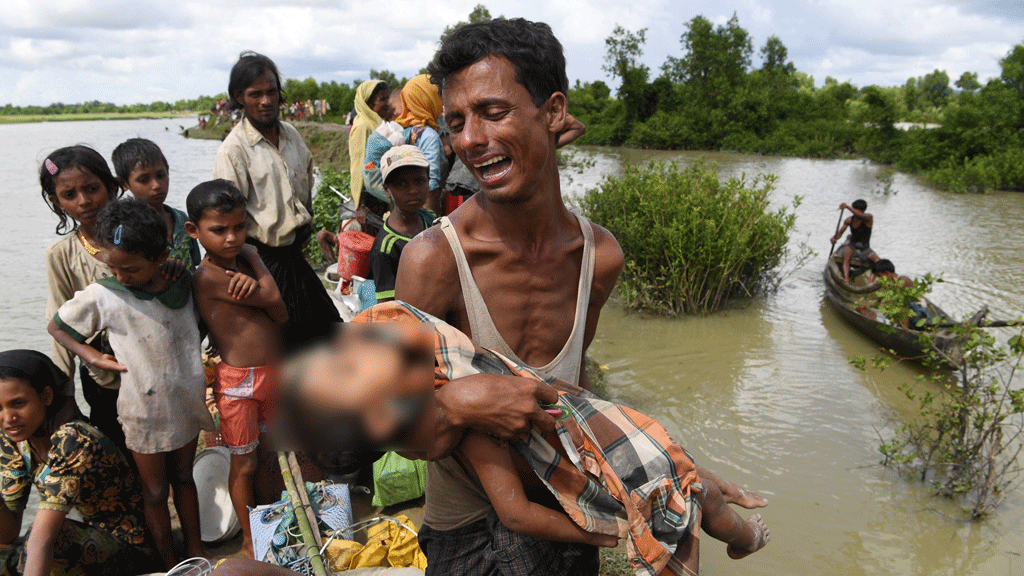
The International Crisis Group has described the International Court of Justice (ICJ) verdict on the Rohingya genocide as historic. However, Richard Horsey, the group's senior adviser on Asia, expressed doubts about the implementation of the verdict and its immediate impact on the lives of the Rohingya.
Reacting on Thursday (19 November) after the ICJ delivered its verdict in the case brought by The Gambia against Myanmar, Richard Horsey said: "This is a historic verdict. The world court has for the first time held a state responsible for genocide. And the person who led those operations is now Myanmar's president."
Human rights organisation Human Rights Watch (HRW) described the verdict as a long-awaited recognition of the Rohingya's suffering. The ICJ delivered its final verdict holding Myanmar responsible for genocide against the Rohingya in the "clearance operations" conducted by the Myanmar military in 2017.
Richard Horsey said: "The Rohingya have waited a long nine years for such a verdict. This verdict will not change their lives quickly. But the crimes committed against them are now established in international legal records. However much Naypyidaw denies it, this truth can no longer be erased."
He also commented on the impact of the verdict on various countries' diplomatic relations with Myanmar's President Min Aung Hlaing. Horsey said governments that roll out the red carpet for Min Aung Hlaing will now be welcoming the head of a state that the international court has held responsible for genocide.
He said most countries would probably maintain relations as before, but presenting those relations as normal diplomatic activity would now become harder.
On implementation, Horsey said the International Court of Justice has no mechanism of its own through which the verdict can be enforced. The important question now, he said, is whether countries that maintain relations with Myanmar are prepared to put any pressure on the country for ignoring the court's verdict.
However, Richard Horsey does not think Min Aung Hlaing's foreign travel will stop because of this verdict. In his view, governments that welcomed him even with the International Criminal Court (ICC) arrest warrant issue before them are unlikely to change their position because of the ICJ verdict.
He also believes the verdict may affect Myanmar's relations with the United Nations. Horsey said Naypyidaw is trying to regain Myanmar's seat at the United Nations in New York, and at such a time this verdict could push the country's relations with the UN into a more defensive position.
Drawing attention to the current situation in Rakhine State, he said most of the areas the Rohingya were forced to flee are now under the control of the Arakan Army. The armed group fighting Myanmar's central government is an organisation of ethnic Rakhines.
In his view, for the Rohingya still living in Myanmar's Rakhine State, how the Arakan Army treats them matters more for their future than anything Naypyidaw says.
Richard Horsey also raised the plight of the Rohingya who have taken shelter in Bangladesh. He said about 1.2 million Rohingya are living in refugee camps in Bangladesh, and their food rations have been cut as international aid funding has fallen.
He expressed hope that the verdict would remind international donors of the Rohingya's plight anew and prompt them to come forward with increased assistance.
Richard Horsey also believes the impact of the ICJ verdict will not remain confined to Myanmar. He said the way the court considered the question of determining genocidal intent will be reviewed with great importance in the ongoing cases against Israel and Russia as well.
According to Richard Horsey, while the verdict is an important milestone of international legal recognition for the Rohingya, its real benefits will depend on the international community's next steps. In particular, creating diplomatic pressure on Myanmar, ensuring the safety of the Rohingya in Rakhine, and increasing international assistance for the refugees sheltered in Bangladesh have now become important issues.