82.6 percent of Rohingya want to return if citizenship and equal rights are ensured: BRAC survey
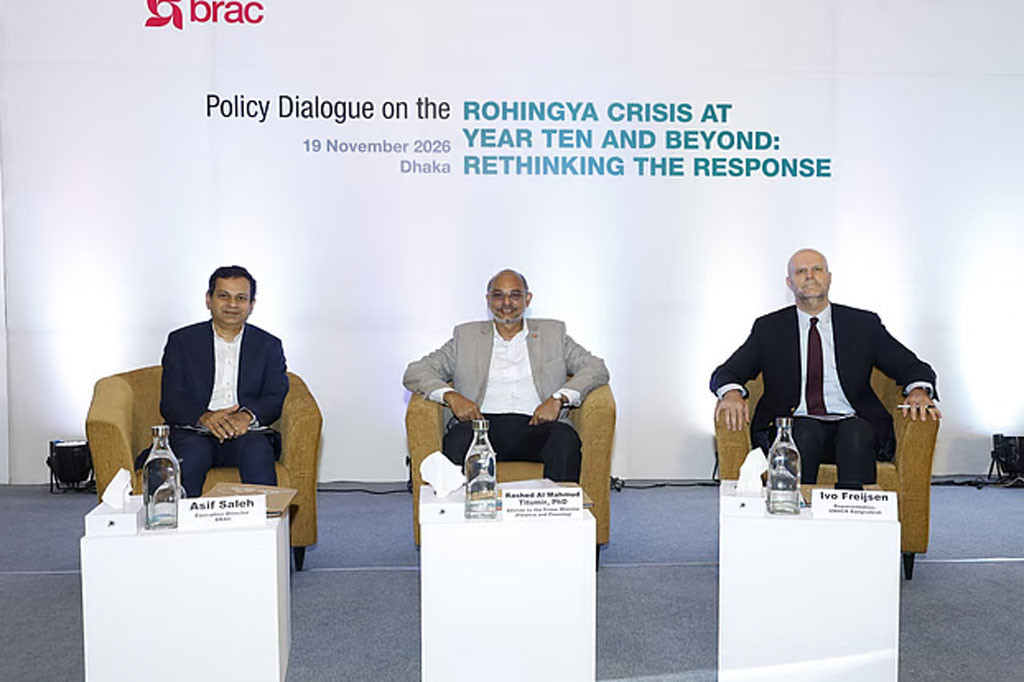
If citizenship and equal rights are ensured in Myanmar, 82.6 percent of Rohingya men and women want to return home from the shelters in Bangladesh. The finding comes from a survey by the non-governmental organisation BRAC.
The survey results were presented on Thursday at a policy dialogue titled 'The tenth year of the Rohingya crisis and beyond: rethinking the response' at a hotel in the capital's Karwan Bazar.
The survey captured young Rohingya people's lives, employment and aspirations regarding repatriation. A total of 576 Rohingya men and women aged 15 to 35 from 12 shelters in Ukhiya and Teknaf took part, among them 291 women and 285 men.
Presenting the survey data at the dialogue, Nafiul Hasan, director of BRAC's Advocacy and Regulatory Affairs division, said that overall 76.7 percent of young Rohingya want to return to Myanmar if specific conditions are met. The share rises to 82.6 percent if citizenship and equal rights are ensured. Even if adequate assistance continues in the camps, 80.2 percent would return if citizenship and rights were ensured.
Without citizenship and with limited employment opportunities, however, only 19.4 percent want to return. Among young women, interest is even lower, at just 8.9 percent.
The survey also found that even if assistance and employment opportunities in the camps were stopped and assistance were offered in Myanmar, 52.6 percent of the young people would still want to stay in the camps.
Alongside views on repatriation, the survey also highlighted young Rohingya people's employment and education crisis. Only 17.9 percent of the young people are currently studying, 38.4 percent are engaged in some livelihood work, and 49.7 percent are in neither study nor work.
The situation of women is worse. Some 84.5 percent of the young women surveyed are engaged in neither study nor work, and only 6.9 percent of women are studying.
The survey found a large difference in repatriation aspirations between young people born in the shelters in Bangladesh and those born in Myanmar. Only 11.9 percent of those born in Bangladesh want to return, while among those born in Myanmar the rate is 84.1 percent.
Speaking as chief guest at the dialogue, Rashed Al Mahmud Titumir, the prime minister's adviser on finance and planning, said: 'The Rohingya's future is in Myanmar. The international community needs a medium-term strategy to build the Rohingya's future in Myanmar. The Rohingya population has grown by 34 percent, but international assistance has fallen by 37 percent.'
Ivo Freijsen, the UN refugee agency UNHCR's representative in Bangladesh, said that with safe, dignified and voluntary repatriation still uncertain, the Rohingya crisis is becoming more urgent and complex by the day.
Nirjhar Adhikari, director of the foreign ministry's Myanmar wing, said the final solution to this crisis is the safe, voluntary, dignified and sustainable repatriation of the Rohingya.
Asif Saleh, executive director of BRAC, which organised the dialogue and the survey, said: 'It seems implementing repatriation will take a long time. That is why adopting a medium-term strategy is essential. Multi-year funding commitments must be secured from donors. For that, a compact or agreement needs to be signed among development partners, donor governments and other relevant stakeholders.'