More than 100 million red crabs march to the sea on Christmas Island as numbers double
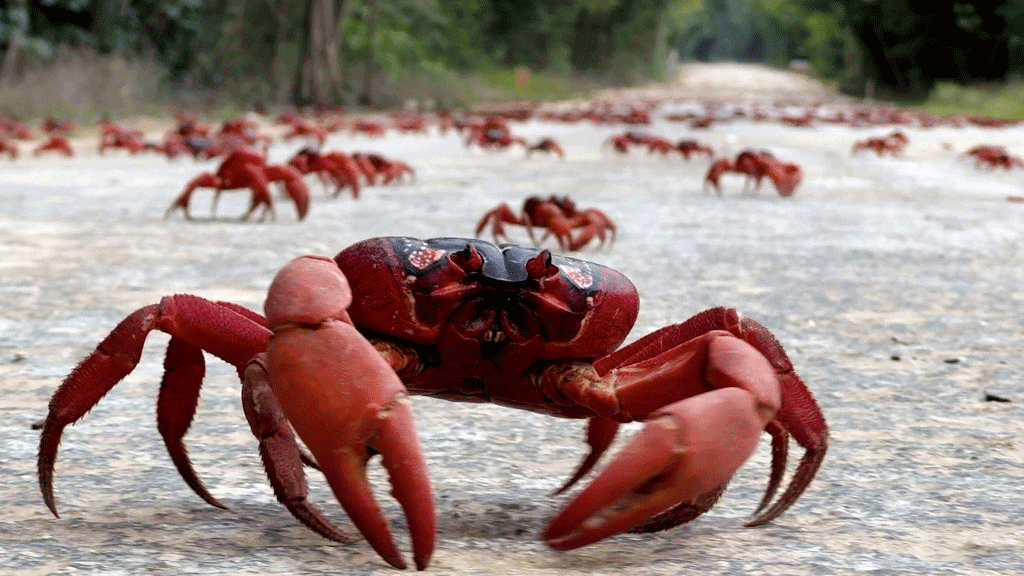
More than 100 million red crabs on Australia's Christmas Island have begun marching in groups from the forest towards the sea. Local conservation workers shared the news this week.
Every year, as the rainy season begins, the island's red crabs set off for the sea. Crossing forests, roads and bridges, the crabs cover entire roads as they move.
Australia's Parks authority says the timing of the migration is set by the position of the moon and the tides. The crabs release their eggs mainly in the last quarter of the moon, as the tide recedes, before sunrise. That is why they leave the jungle for the sea at a specific time each year — the purpose of the red crabs' special journey is reproduction.
Christmas Island is a remote island in the Indian Ocean, located 350 kilometres south of Indonesia and more than 1,000 kilometres from the Australian mainland.
To keep the crabs' huge annual migration safe, local conservation workers have to begin preparations months in advance.
Chris Charters, manager of Christmas Island National Park, said people come to Christmas Island from all over the world to watch the spectacle.
Charters also said long-running conservation work has played an important role in the rise in red crab numbers. Controlling the yellow crazy ant was especially vital for the crabs, as this ant species is the red crab's biggest enemy.
The ants are called 'crazy ants' because when disturbed or excited they run about unusually and rapidly. At one time they occupied the crabs' burrows and took over the habitat of tens of millions of red crabs on the island, displacing huge numbers of them.
After ant control and other measures, red crab numbers rose again. According to conservation workers, the island's crab population was once 50 million; it has now grown to more than 100 million.
Charters said the increase in crab numbers is a sign of their healthy survival. Red crabs play an important role in protecting the island's ecosystem and maintain the balance of the forest, so when crab numbers and health are good, the whole ecosystem benefits.