Drive for Broader Unity to Resist Awami League, All-Party Meeting Possible on 27 or 28 November

An initiative has been taken to build a broader unity of all the political forces that stood for the July mass uprising, in order to prevent the banned Awami League from raising its head again. Both the Prime Minister and the Leader of the Opposition spoke of unity in speeches in the Jatiya Sangsad last Wednesday. After the session, the two leaders then sat in a private meeting inside the Parliament building, after which the unity initiative gained momentum.
It has been learned that an all-party meeting may be held on 27 or 28 November, and a new alliance could also be announced from that meeting.
Sources say the ruling BNP has taken the initiative to create political unity among the parties that were in the anti-fascist movement, and BNP whip A B M Ashraf Uddin Nizan has been given the responsibility of coordinating the matter. The issue was discussed at a private meeting on Wednesday night between Prime Minister Tarique Rahman and Leader of the Opposition Shafiqur Rahman at the Prime Minister's office in the Jatiya Sangsad.
The sources also say the Leader of the Opposition advised the Prime Minister to sit with all the parties that stood for July, and at the same time demanded implementation of the July National Charter in light of the referendum.
Party sources say plans are under way to sit in discussion and meeting with various political parties from the movement and struggle towards the end of next week. As part of that, preparations are being made to draw up an outline for the talks and to organise the meeting. The parties that signed the July Charter are being invited to take part in the possible meeting, and informal contacts have already begun with leaders of other parties from the government's side.
A senior BNP leader, speaking on condition of anonymity on Thursday, said a possible BNP meeting with the political parties could be held on 27 or 28 November, though the venue has not yet been finalised.
Ashraf Uddin Nizan, however, declined to comment when asked about the meeting with the political parties. He said: 'Yesterday (Wednesday) at the party meeting in Parliament I said we have waged movement and struggle against fascism for 17 years. In any crisis of national politics in the coming days, all the forces of the movement will remain united against fascism and hegemony to protect democracy and people's right to speak and freedom of expression, and will resist it. Together with all the parties of the movement and struggle, we will jointly resist any conspiracy, proxy war or sudden attempt at sabotage by them.'
A Jamaat leader, speaking on condition of anonymity, said: 'Our position on sitting in talks with all parties is that there must be a common basis or reference point. That basis will be the July Charter and the referendum. If everyone takes a positive position on this, resolving the rest will become easier.' Although they speak of unity, Jamaat and the NCP have set the condition of the referendum and implementation of the July Charter.
Najibur Rahman, spokesperson of Jamaat's parliamentary party, said there is no scope for any concession on the question of fascism, that all the July forces agree on this, and that fascism must not be allowed to return and its roots must be completely uprooted.
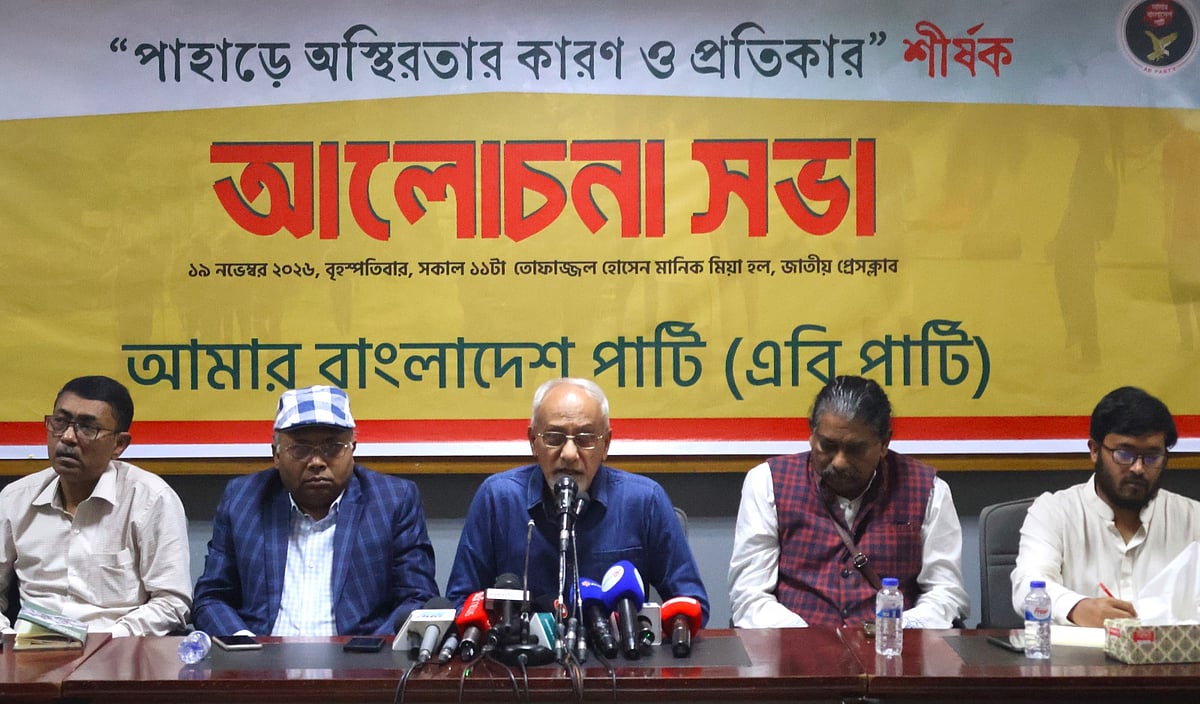
Mojibur Rahman Manju, chairman of the AB Party, a partner in the Jamaat-led 11-party alliance, said: 'We believe national unity is certainly necessary. But not only to confront the Awami League's terrorism; comprehensive national unity is needed in all fields, including rebuilding the state, reforms, abolishing fascism and building a new politics.'
NCP leaders, meanwhile, say that if the government cannot handle the situation alone, the Prime Minister must formally call on the political parties for unity, and at the same time visible steps must be taken to implement the referendum verdict and make the July Charter effective. Sarwar Tushar, joint convener and political council member of the NCP, said the BNP had made no formal or informal contact with them on this matter, and that the party would have its own programme to confront the Awami League's activities.
The National Citizen Party (NCP) has announced a programme of protest marches and rallies across the country on five demands: trial of the Awami League as a terrorist organisation, execution of Sheikh Hasina's death sentence, speeding up the July genocide trial, securing Bangladesh's fair share under the Ganges Treaty, and implementation of the people's verdict in the referendum.
Advocate Ruhul Kabir Rizvi, acting secretary general of the BNP and political adviser to the Prime Minister, said the 'fifth column' and defeated forces engaged in attempts to create instability and sabotage in the country would no longer be spared, and that they would be resisted at every step through the people's combined strength, brought under the law and given the maximum punishment.
From the beginning of 1999, the BNP and Jamaat had waged joint movement and struggle against the Awami League as an alliance, and the two parties remained together for most of the time up to the July mass uprising. After the uprising, however, they became rivals in electoral politics. In the 13th national election and the referendum, the ruling BNP's main rival was the Jamaat-NCP-led 11-party unity. After the election, differences between the BNP and the Jamaat alliance over implementation of the July Charter became pronounced: the BNP favours implementing the charter by amending the constitution, while the Jamaat-NCP alliance wants constitutional reform on the basis of the referendum verdict.
Al Masud Hasanuzzaman, retired professor of the Government and Politics department at Jahangirnagar University, said a growing distance and a tendency to attack each other can be seen between the government and the opposition in parliament. He said the people of the country consider the call for unity that has come in this situation necessary in the existing reality, because if such a chaotic situation continues, people's lives and security will be threatened and the law-and-order situation will deteriorate, and a coordinated leading role on this issue would be positive.