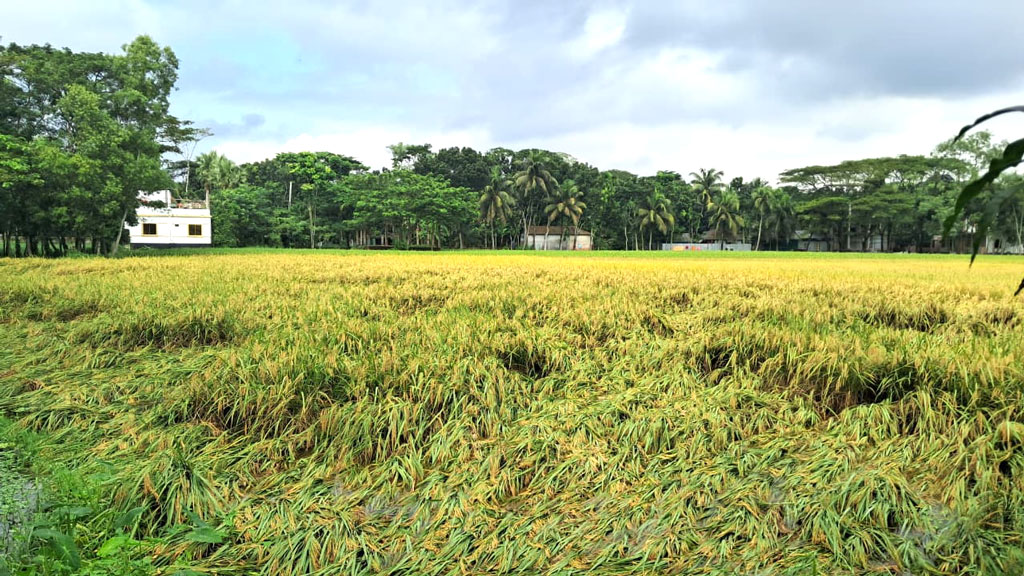
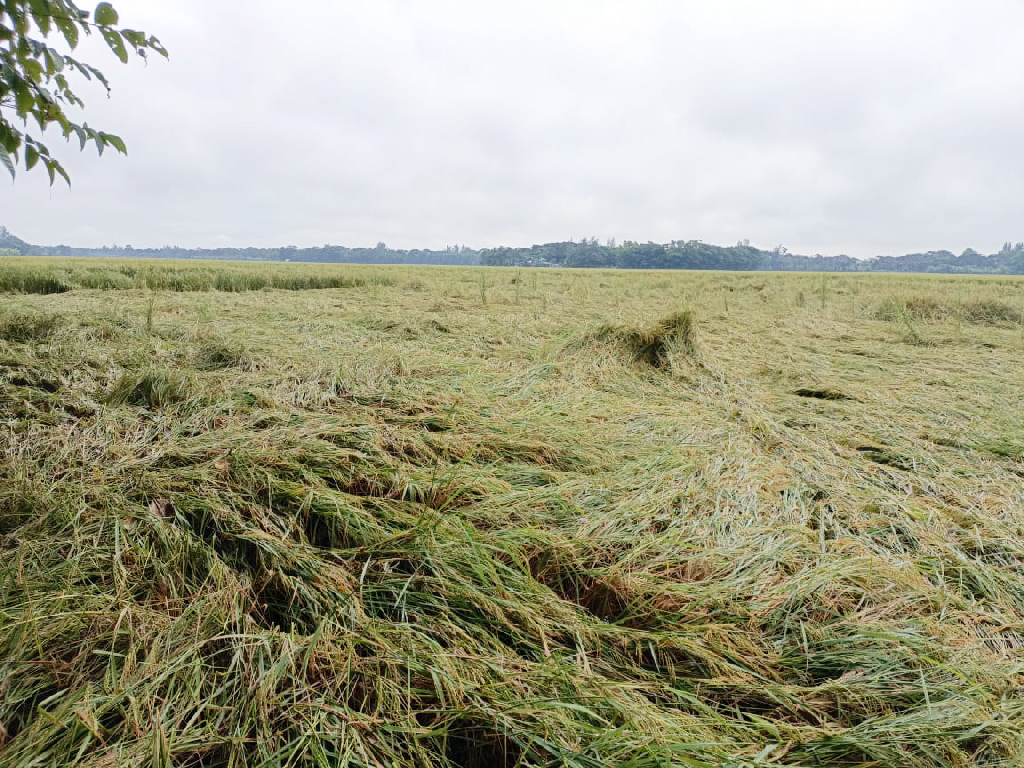
Rajshahi farmer Nur Mohammad develops drought-tolerant rice after seven years of research

Nur Mohammad, a farmer and agricultural researcher from Tanore upazila in Rajshahi, has developed a new drought-tolerant rice variety. Without any institutional degree, he created the variety through seven years of research and effort, crossbreeding local rice varieties.
Those involved say the innovation offers new hope for farming in the drought-prone Barendra region, which faces an acute water crisis. Nur Mohammad said the groundwater level in the Barendra region keeps falling, making the irrigation crisis more severe.
According to him, conventional local varieties can withstand drought but farmers are not interested in growing them because yields are low. He took up the crossbreeding work to overcome that problem.
The new variety has a life cycle of 115 to 120 days. Nur Mohammad claims it suffers very little disease and pest attack. He says that without any artificial irrigation, chemical fertiliser or pesticide, using only natural water, the rice can yield 21 to 22 maunds per bigha (33 decimals of land).
Nur Mohammad had earlier drawn attention by developing two rice varieties named 'Nur-1' and 'Nur-2'. The new variety has not been named yet, he said. He also plans to apply for government recognition.
On Thursday (19 November), a 'field day' and harvest festival for the new variety was held on Nur Mohammad's 15-decimal experimental plot at Gollapara Purba field in Tanore upazila. The development research organisation BARCIK (Bangladesh Resource Centre for Indigenous Knowledge) and 'Nur Mohammad Krishi Pariseba' jointly organised the event.
About 80 farmers, agriculture department officials and researchers from different parts of the Barendra region attended. At a discussion after the field day, hosted by BARCIK programme officer (agriculture) Amrita Kumar Sarkar, agriculture officer Subhash Kumar Mondal and BARCIK's Barendra region coordinator Md Shahidul Islam spoke.
Agriculture officer Subhash Kumar Mondal said, 'As the water level in the Barendra region keeps falling, developing crop varieties that can be produced with less water is now a demand of the time. Nur Mohammad's research has created new possibilities for agriculture in this region.' He said the agriculture department would discuss the matter at higher levels and take steps to provide necessary support.
BARCIK coordinator Md Shahidul Islam demanded that such farmer-led research be included in agricultural policy and that farmer-researchers be given state and institutional recognition.
Seeing the crop in the experimental field, local farmers showed great enthusiasm. Nirmal Chandra, a farmer from Tatiapara village in Tanore, collected 5 kg of seed from Nur Mohammad to grow on his own land next season. Srimati Ashima Rani Haldar, a woman farmer from Gollapara Haldarpara village, believes that if this rice can be grown without irrigation and pesticide, production costs will fall and safe food production will also be ensured.