A sick society killed Twaki; governments changed but the killers remain influential, says Anu Muhammad
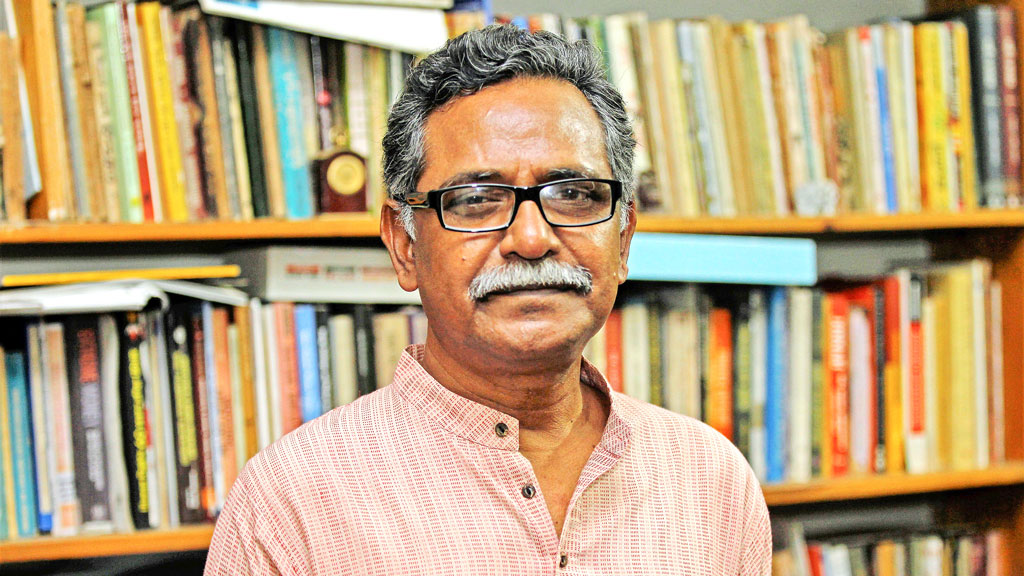
Tanvir Muhammad Twaki was not killed by any illness; rather, a sick society killed him, Professor Anu Muhammad has said. He said that although the political scene has changed and governments have been replaced, the structure of power has remained unchanged, so the Twaki murder has not been tried and the killers are still holding on to influential positions.
He made the remarks on Friday afternoon while speaking at the prize-giving ceremony of the '12th National Twaki Painting and Essay Competition 2026' at the National Museum in the capital. The event was organised by the Santras Nirmul Twaki Mancha.
At the start of his speech, Anu Muhammad raised the hidden potential of children and adolescents, saying a large section of guardians want to raise their children only amid rote learning, guide books and exam pressure, which destroys much of that potential. In such a reality, events like this create opportunities for children's participation and development.
Anu Muhammad said that had Twaki lived, he would himself have taken such initiatives when he grew up. But even though Twaki is no longer here, it is necessary to remember him and his killers, because criminals want people to forget crime and history.
Referring to the birth centenary of poet Sukanta Bhattacharya, he said that just as Sukanta radiated promise and dreams at a young age, Twaki too showed bright examples of creativity, including writing and drawing on the Liberation War, an equal society and people's dreams.
Criticising the remark that 'the law will take its own course', Anu Muhammad said the law never moves on its own course; rather, it is run by the arrogance and signals of power.
He alleged that Twaki was killed to protect the powerful in Narayanganj and to spread fear, because of the movement led by Rafiqur Rabbi against them. Mentioning that the trial process stalled after a statement by the then prime minister in parliament in the past, he said the circle of power had become clear at that time.
Anu Muhammad also raised questions as the Twaki murder has not been tried during the interim government or under the current elected government either. He said that although parties in politically opposing positions have violence and disputes among themselves, how a unity has formed over not holding the trial needs to be examined. He also asked whether there had been any understanding or settlement with influential circles in Narayanganj and the family of Shamim Osman.
Professor Anu Muhammad said that even after the change of government, there has been no major change in the arrangement of power at the lower levels, class interests, the justice system, the police and the bureaucracy; only the faces have changed.
Citing the lack of trials in the Sagar-Runi, Tonu and Munia murders, he expressed concern over ongoing killings, attacks, wholesale cases and mob terror.
Expressing frustration that even after a long time since independence citizens have not found an environment to practise culture, conduct science research and run educational institutions safely, Anu Muhammad nevertheless urged people not to give up. He said Twaki is not only the child of Rafiqur Rabbi and Ronak Rehana; he is the child of the whole of Bangladesh, and characters like Twaki must be taken as a source of strength.