‘Hell Chicken’ Dinosaur Was Skilled at Eating Fruit Like a Parrot, New Study Finds
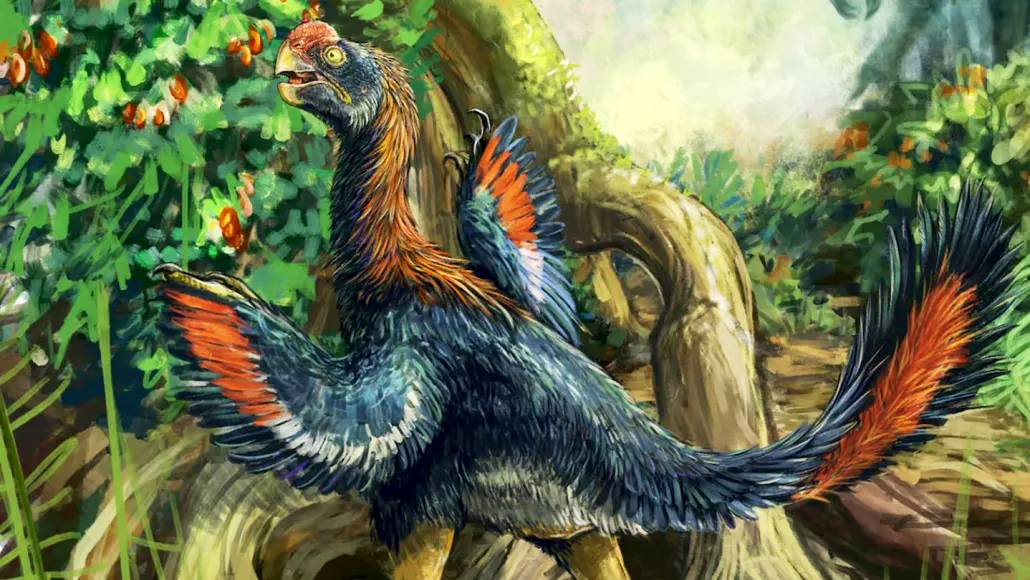
More than 65 million years ago, a small and unusual dinosaur roamed the Earth. Its name is Infernogallus, meaning ‘hell chicken’. It was no fearsome hunter like the carnivorous dinosaurs, but it was remarkably skilled at eating fruit.
In a recently published study, scientists analysed the structure of the dinosaur's jaw and beak and found that, much like a modern parrot, the animal could separate the flesh of a fruit from its large seeds. The study was published on October 10 in the journal Nature Communications.
According to the researchers, this is the first evidence of a special physical adaptation for fruit-eating in a dinosaur that was not a bird.
In 2011, a fossil collector found a large part of the dinosaur's skeleton in eastern Montana in the United States. Palaeontologist David Evans of Canada's Royal Ontario Museum was later informed of the find. Over the following years, four more partial skeletons were discovered in Montana, North Dakota and South Dakota.
The dinosaur belonged to the oviraptorosaurs, a bird-like subgroup of beaked theropods that lived in the Cretaceous period. It weighed an estimated 12 kilograms, about the same as a turkey.
The geological layer in which the fossil was found is called Hell Creek. Combined with its chicken-like appearance, that is how scientists came to name it Infernogallus, or ‘hell chicken’.
Palaeontologist Greg Funston of Stony Brook University in the United States and his colleagues reconstructed the animal's skull and jaw muscles and found that when chewing, it did not move its jaw up and down like other dinosaurs; instead, it slid the jaw back and forth.
According to the researchers, this method matches the feeding technique of modern fruit-eating parrots. They believe the animal used special movements of its tongue and jaw to separate fruit flesh from large seeds.
During the Cretaceous period, flowering and fruit-producing plants were spreading rapidly. Scientists believe plants and animals were evolving in response to each other at that time. The new discovery suggests that much remains unknown about the feeding habits and ecological role of dinosaurs.