US Military Set for First Execution in 65 Years: Fort Hood Shooter Nidal Hasan Faces Firing Squad on December 3
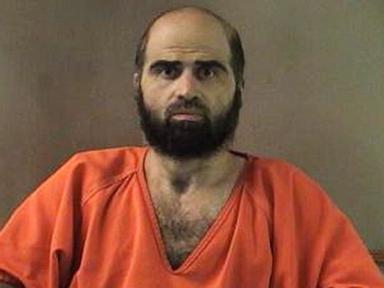
The U.S. Army is set to carry out its first execution in 65 years. Nidal Hasan, the former Army major who killed 13 people at Fort Hood, is set to be put to death next month. The Army has no immediate plans to carry out any other executions at this time, according to two sources with direct knowledge of the matter.
Hasan is scheduled to face a firing squad on December 3 at the same base where he committed the attack, a method the military has not used since 1945. The Army originally planned to use lethal injection, internal documents reviewed by ABC News show.
The four men on the military's death row, including Hasan, are imprisoned at Fort Leavenworth, Kansas. The Army's three other inmates have spent decades on death row for crimes that include murder, rape and an attack on fellow troops in the opening weeks of the Iraq War. None of them has an execution date.
Military courts can impose a death sentence, but the case must go through the Pentagon before the president gives final approval. It is unclear why the Trump administration singled out Hasan. Both the Pentagon and the White House declined to comment on whether they plan to execute any of the other death row inmates after Hasan.
Defense Secretary Pete Hegseth initially planned to livestream Hasan's execution, which would have been the first public execution in the U.S. in nearly a century. Republicans and Democrats questioned the decision to broadcast the shooting death of a prisoner who uses a wheelchair and warned it could fuel anti-American propaganda. The plan was scrapped after President Donald Trump intervened.
Hegseth told The Hill in September 2025 that he is "100% committed to ensuring the death penalty is carried out for Nidal Hasan" because "the victims and survivors deserve justice without delays."
One of the other three inmates is Ronald Gray, a former Army specialist who served as a cook with the 82nd Airborne Division at Fort Bragg, North Carolina. He was convicted in a 1988 military trial on 12 charges, including two counts of premeditated murder and three counts of rape. The attacks involved five women, two of them soldiers. A civilian court separately convicted him on 22 charges and sentenced him to eight life terms. President George W. Bush approved Gray's execution in July 2008; it was scheduled for that December, but a federal judge halted it. Another judge lifted the stay in 2016.
Another is Timothy Hennis, a former Army master sergeant with the 82nd Airborne Division. He was convicted in civilian court in 1986 for raping and murdering a woman and killing her 5-year-old and 3-year-old daughters. His conviction was overturned on appeal, and a second trial ended in acquittal in 1989. Years later, investigators retested evidence using new DNA tools. The acquittal barred another prosecution, but the Army recalled Hennis, who had retired in 2004, to active duty, and a court-martial convicted him and sentenced him to death.
The fourth inmate, former Army Sgt. Hasan Akbar, attacked fellow soldiers at Camp Pennsylvania, Kuwait, in March 2003, during the opening days of the U.S. invasion of Iraq. Akbar, a combat engineer, wounded 14 soldiers and killed two officers. He was convicted in a military court in 2005 on two counts of premeditated murder and three counts of attempted premeditated murder and sentenced to death. In May, Hegseth awarded Purple Hearts at Fort Campbell, Kentucky, to nine veterans wounded in the attack.
Tim Jon Semmerling, the mitigation expert on Hasan's defense team at his 2013 trial, said he believes the number of people Hasan killed at Fort Hood played a part in why he is being executed. "If you believe in the death penalty, it's really difficult to argue against so many people being killed by one person," Semmerling said. He also said he believes Hasan's Muslim faith may have figured into the administration's decision, as may Hasan's stated motive for the attack, which he described as a protest against the U.S. wars in Iraq and Afghanistan.
As the execution approaches, Army officials say they are revising the outdated firing squad procedures, which date back to 1959. John Galligan, a retired Army colonel who has long represented Hasan, said officials at the U.S. Disciplinary Barracks at Fort Leavenworth promised to provide him with the execution protocols but have not done so yet. He wants to know how many soldiers will serve on the firing squad and whether Hasan can make a final statement.
The 1959 procedures allowed prisoners to make reasonable final requests, including a meal, writing materials and access to a chaplain of their faith. On the day of the execution, the prisoner could make a final statement before being hooded and could ask the chaplain to stay until the firing squad was prepared to fire. Hasan was partially paralyzed after police shot him during the Fort Hood attack, and it is unclear how the Army plans to account for his use of a wheelchair. The Army declined to comment on detailed questions about how it plans to carry out the execution.
Hasan could still file a habeas corpus petition, or a judge could delay the execution; it is unclear whether either will happen. In Killeen, Texas, outside the base where Hasan is set to be executed, officials plan to close city offices and public facilities on the day of the execution as a precautionary measure. Schools will also close, and the city has rescheduled trash collection.