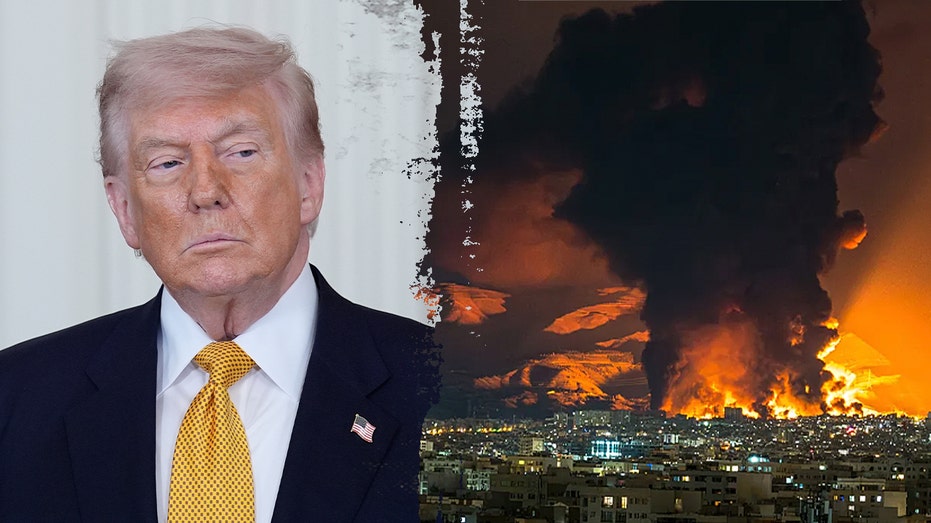
Iran readies 14 oil tankers to breach US blockade as Trump dares Tehran: 'They'll all be at the bottom of the sea'
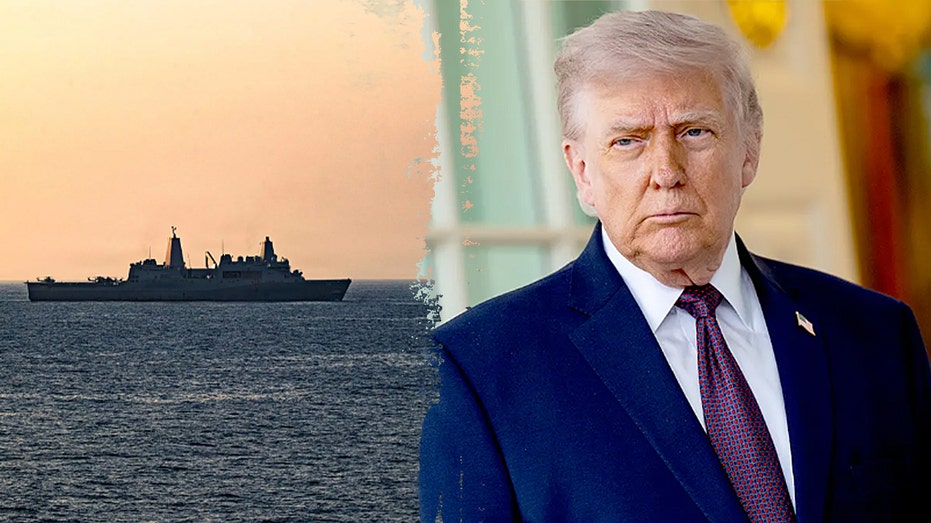
Reports that Iran plans to send more than a dozen tankers through the US blockade of its ports raised fears of a wider conflict on Sunday. A maritime security expert warned of a risky confrontation, and President Donald Trump dared Tehran to test American forces deployed across the Gulf.
Asked whether Iran would attempt to breach the blockade, first imposed in April, Trump told Fox News chief foreign correspondent Trey Yingst: 'I hope they do, they'll all be at the bottom of the sea like the rest of the navy.'
Reports indicated Iran was preparing a convoy of tankers to breach the blockade from Kharg Island, a critical oil export hub that handles most of Iran's crude oil exports. The reported operation would involve tankers sailing from Kharg Island toward the Gulf of Oman, with crews reportedly assigned to the vessels and Iranian flags raised ahead of a possible attempt to breach the blockade.
The assessment followed a 20 November report by Hamshahri, a Tehran municipality-affiliated outlet, claiming Iran had positioned 14 tankers at Kharg Island to breach the blockade.
Charlie Brown, a senior adviser to United Against Nuclear Iran (UANI) and a maritime sanctions enforcement expert, dismissed the reported operation as 'propaganda' and said the plan was unlikely to succeed if ever attempted. 'This supposed plan by the Iranians to suddenly deploy 14 vessels to try to breach the blockade in a convoy — it's farcical,' Brown told Fox News Digital on Sunday. 'The blockade is enforced not merely as a line that is crossed, but the ability of the United States Navy to enforce this blockade extends across the entire Indian Ocean and beyond,' he said.
'If ships try to get out of the area that is managed by the US Navy's 5th Fleet, the US Navy's 7th Fleet is the next area command that has responsibility over the Indian Ocean,' Brown said. 'And they have ships and aircraft that are there right now, and they'll just take up the mission.'
The potential confrontation comes amid rising maritime tensions. The United Kingdom Maritime Trade Operations (UKMTO) reported on Sunday that a tanker was involved in an incident with military forces in the Gulf of Oman, but did not identify the vessel or connect it to the reported Iranian convoy. 'Vessels are advised to consider the latest maritime security information and maintain awareness of the evolving operational environment,' the agency said in an advisory.
The Institute for the Study of War (ISW) also warned Iran could attempt to break the blockade within days as mounting economic pressure leaves Tehran with few options. 'Iran's deteriorating economic situation is increasingly dire, which is forcing Iranian officials to reckon with the necessity of breaking the US blockade,' the institute said in an update. 'Attempting to run the blockade would expose Iran to significant risk that ranges from the destruction of a tanker fleet at minimum to possibly resuming a larger-scale conflict with the United States, or both,' it said, adding that Iran's willingness to accept these risks demonstrates how dire and unsustainable the regime views the current economic situation.
Brown, however, questioned whether Tehran would send the tankers, suggesting the reported operation was an attempt to project defiance rather than a viable strategy. 'This supposed run of the blockade by several Iranian ships that's discussed is most likely propaganda,' he said. He also disputed reports that the tankers were loaded and preparing to depart, citing satellite monitoring of Kharg Island: 'We carefully watched Kharg Island loading by satellite imagery, and there's really no indication that there's been any significant loading there in quite some time.'
Brown said coordinating a 14-vessel convoy would also pose major logistical challenges, requiring lead and trailing ships, coordinated communications and procedures for responding to US military orders. Civilian crews could face significant danger if they refused orders to stop, he warned. He said US forces would likely contact the tankers by radio from Navy ships or aircraft and order them to stop, and refusal could trigger an escalated military response.
In an 18 November advisory, US Central Command (CENTCOM) warned that ships receiving Iranian cargo through ship-to-ship transfers could face interception or seizure, extending the blockade beyond vessels departing Iranian ports, Reuters reported. Brown said US forces have the ships, aircraft and procedures to intercept multiple vessels at once, while the open waters of the Indian Ocean offer more room to manoeuvre than the narrow Strait of Hormuz. 'So if they do try to make an attempt with multiple ships, I'm quite confident all or most — probably all — would be interdicted,' he added.