Memorial at Bangla Academy: Ahmad Rafiq Dreamed of a Knowledge-Based Society Without Exploitation
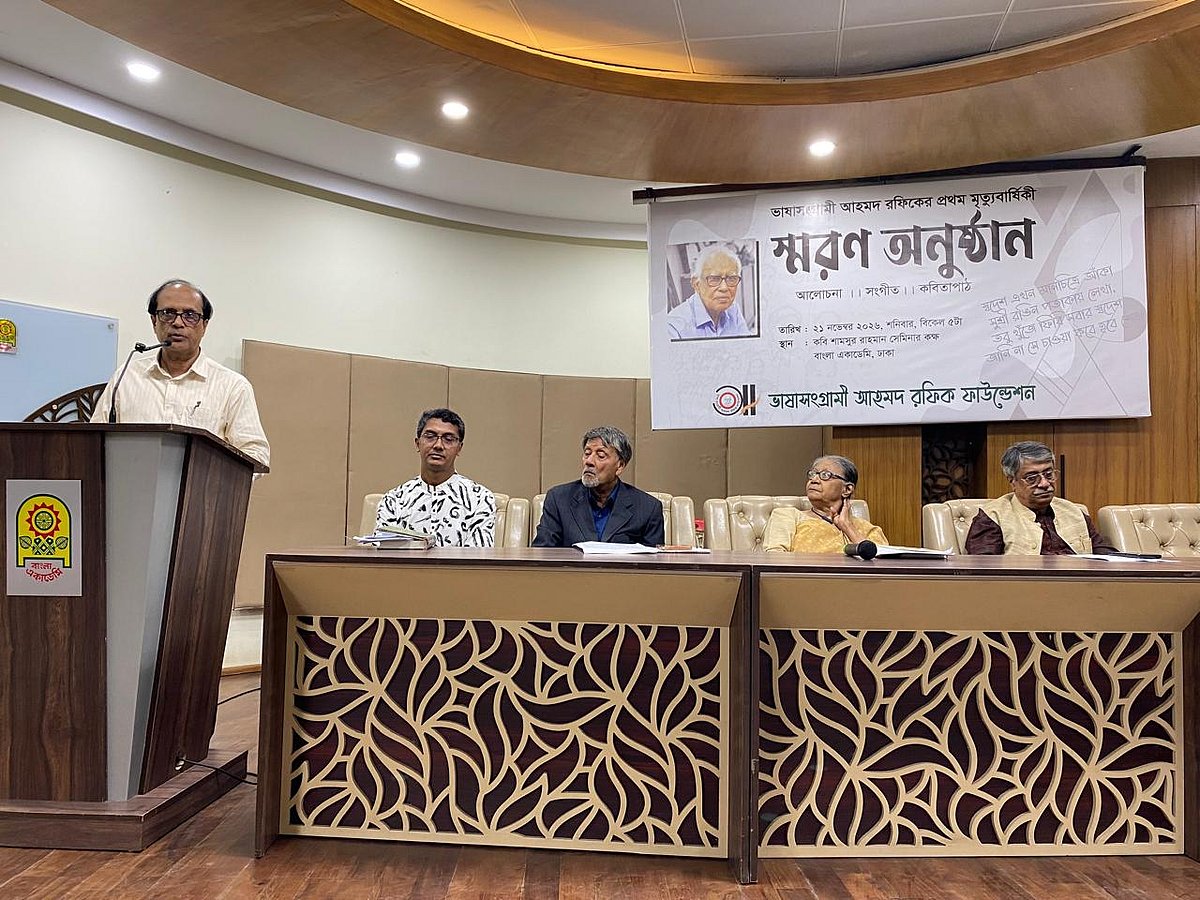
Language movement veteran and essayist Ahmad Rafiq dreamed of building a knowledge-based society free of exploitation and deprivation, speakers said at a memorial meeting marking his first death anniversary. The meeting was held on Saturday evening at the Kabi Shamsur Rahman Seminar Room of Bangla Academy in Dhaka, organised by the Bhasha Sangrami Ahmad Rafiq Foundation.
The programme began with a one-minute silence in memory of Ahmad Rafiq, who died on 2 October last year. Dipa Dutta, a leader of the 1969 mass uprising, presided over the meeting. After the discussion, conducted by Sangram Parishad general secretary Ismail Sadi, his poems were recited and songs were performed.
Professor Syed Azizul Haq said Ahmad Rafiq is mainly introduced as a language movement veteran, but he had many other identities. The language movement changed his life, and a European-style renaissance grew in East Bengal around that movement, which he absorbed into himself.
Syed Azizul Haq added that although Ahmad Rafiq had institutional education in medicine, he made the pursuit of knowledge the path of his life. His writing was multifaceted — he wrote poetry, researched Rabindranath Tagore closely and, without being a literature student, wrote deeply observant criticism of poet Bishnu Dey's difficult poetry.
Professor Bhishmadeb Chowdhury said Ahmad Rafiq learned about Marxist philosophy at a young age and later held it in his heart. He did not express that belief through direct politics; instead he expressed it through his varied writing and research.
His nephew, US-based physician Humayun Kabir, said the progressive and humane lessons he received from his uncle in childhood left a deep mark on his life. He tried many times to take his uncle to the United States, but Ahmad Rafiq did not want to leave the country.
In her chair's speech, Dipa Dutta said Ahmad Rafiq wanted to be Bengali through and through, and establishing the mother tongue at every level was the effort of his whole life. She said his life and work need deeper discussion.
In the closing part of the programme, Irshat Rahman recited Ahmad Rafiq's poems and artists of Bibartan Sangskritik Kendra performed group songs.