Ears really do grow bigger with age: what three decades of studies found
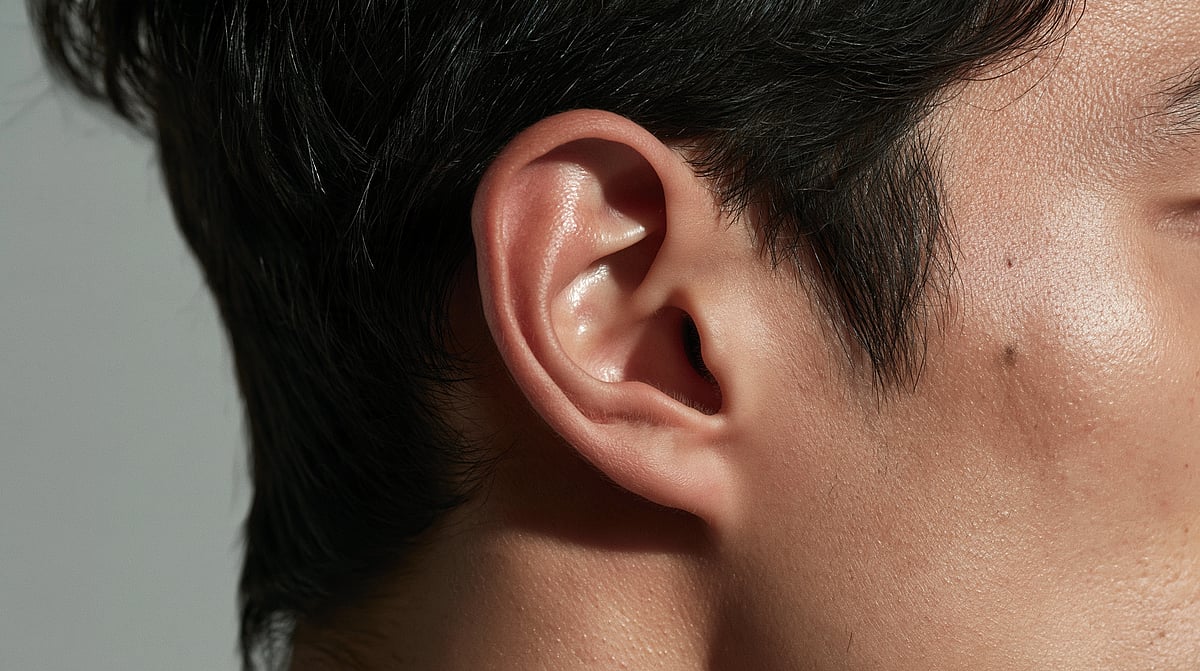
Age leaves its marks on the face, the hair and the skin. Foreheads wrinkle over time and hair turns silver. But a change in another part of the body escapes many people's notice — the ears. Comparing a childhood photograph with one taken in old age makes it clear: ears really do look bigger as people age, and the change is especially noticeable in older men.
It is not merely an optical illusion. Scientists have researched the question. Several studies of older people's ears were carried out in the 1990s, and they found that the size of the ear genuinely changes with age.
In 1997, a team of researchers at Texas Tech University in the United States measured the ear circumference of 100 young people and compared the measurements with those of older people. They found that the circumference of the human ear grows by an average of about 0.51 millimetres a year — roughly 5 millimetres a decade, and about two and a half centimetres over 50 years.
Two years earlier, in 1995, the British Medical Journal published a study titled 'Why do old men have big ears'. Its researchers studied 206 people aged between 30 and 93. By their calculation, the length of the human ear grows by an average of about 0.22 millimetres a year as people age.
A further study by Italian researchers in 1999 found the same trend. They observed that ears grow larger with age and that the change is comparatively more noticeable in men.
But do ears really keep growing throughout life? The answer is a little different. The change cannot quite be called normal growth. Ears do not grow with age the way other organs grow from childhood into adolescence. Instead, the structure and tissue of the ear change over time, so the ear gradually looks longer and more drooping.
Gravity, the ear's own weight, and changes in the skin and connective tissue are behind it. The soft lower part of the ear is called the earlobe. Fat can accumulate in this part with age. Alongside its own weight, the pull of gravity stretches the earlobe downward, and after years of that pull the ear becomes somewhat longer.
In addition, the elasticity of the body's connective tissue decreases with age. A protein called collagen plays an important role in keeping skin and tissue firm. As people age, the body produces collagen more slowly, so skin and surrounding tissue can no longer hold their firmness. The ear is affected too — over the years its tissue sags a little and stretches.
Yet big ears or long earlobes are not seen as a mark of age in every culture. In some places they are a symbol of knowledge, wisdom and dignity. The statues of Gautama Buddha in Buddhist art make the point: in many of them his ears are quite long, with the lobes hanging down. That long earlobe is used not only as a physical feature but also as a symbol of wisdom and deep understanding.